
TCCC FC1 Practice Test
$69.00
- Buy to unlock unlimited access to all Quiz questions.
- After purchase you can print a PDF of the whole quiz at any point. The PDF will contain the questions and the correct answers.
About this Exam
The TCCC FC1 certification is designed for individuals seeking foundational knowledge in Tactical Combat Casualty Care. This course focuses on the simple, essential life-saving skills needed to care for casualties in high-stress, tactical, or emergency situations until professional medical aid arrives. It is ideally suited for all military service members, law enforcement officers, fire and rescue personnel, security professionals, and interested civilians wanting to be prepared to make a critical difference. Earning this certification demonstrates competency in fundamental care principles that prioritize preventing further injury and optimizing survival.
Ready to test your knowledge?
Buy Now to Access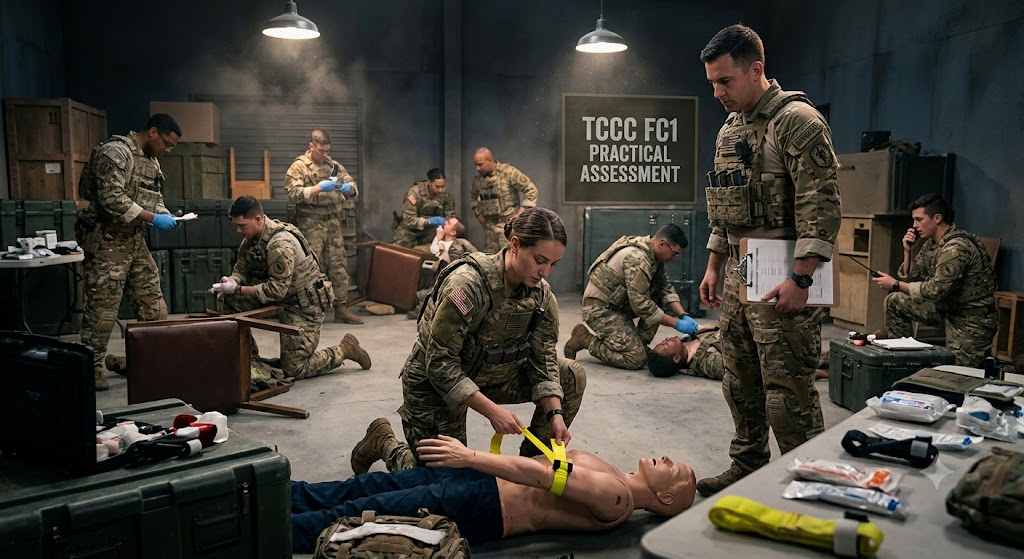
Additional Information
What the Course Entails and Exam Details
The TCCC FC1 course covers the core tenets of care within tactical environments, guiding students through specific phases of care. Students will learn to prioritize treatment based on the phase of operations and the threat. Key topics include identifying and managing life-threatening hemorrhage using direct pressure and modern tourniquets. The syllabus also covers basic airway assessment and maneuvers, recognition of breathing difficulties, and foundational shock prevention techniques. Understanding the importance of the TCCC algorithm for optimizing resource management and maintaining situational awareness is a central component of the training.
What to Expect in the Final Exam
Candidates must successfully complete a combination of written testing and a hands-on practical skills evaluation to obtain the TCCC FC1 certification. The written portion typically consists of multiple-choice questions designed to assess the student's knowledge of the TCCC algorithm, guidelines, and critical decision-making. The practical component requires the precise demonstration of essential life-saving skills, such as tourniquet application and wound packing, often in a simulated high-stress environment. A minimum passing score of 80% is common for the written exam, while the practical assessment requires proficiency in all critical skills without any safety or procedural violations. The combined exam structure ensures candidates can apply critical thinking under pressure and execute vital procedures accurately within specified timeframes.
How to Study and Exam Centers
Thoroughly review the official TCCC guidelines and curriculum provided during your course training. Focus heavily on understanding the TCCC algorithm and the specific sequence of actions for care. Actively practice hands-on skills, ideally with an instructor or partner, simulating realistic scenarios to build muscle memory and speed under pressure. The exam itself is administered by authorized TCCC instructors, and testing typically takes place at established training facilities, dedicated schools, or approved physical training centers. You can generally not take this specific certification exam online; you must schedule it through a licensed TCCC training provider that hosts the required hands-on components.
Job Opportunities from the Course
Holding the TCCC FC1 certification validates essential life-saving skills that are highly valued in various professions and career paths. This training directly enhances qualifications for many frontline roles across security, emergency services, and operational environments. In the public sector, this certification is applicable to careers including Police Officer, Sheriff's Deputy, State Trooper, and SWAT Operator. Within the military, it provides foundational skills for All Service Members and serves as a stepping stone for Combat Lifesavers (CLS) and Combat Medics. The certification also opens doors in the private sector for Private Security Contractor, Security Officer, Emergency Medical Technician (EMT), Paramedic, Firefighter, and Executive Protection Specialist roles where the ability to manage trauma is crucial.
Frequently Asked Questions
Reviews
5.0
Based on 0 reviews
Leave a Review
No reviews yet. Be the first to review!