
Surface Water Rescue Technician Practice Test
$69.00
- Buy to unlock unlimited access to all Quiz questions.
- After purchase you can print a PDF of the whole quiz at any point. The PDF will contain the questions and the correct answers.
About this Exam
The Surface Water Rescue Technician certification is an essential credential for emergency responders, public safety personnel, and search and rescue (SAR) team members.
This course is designed for individuals who may be required to perform shore-based or in-water rescues in moving or static surface water environments, including rivers, lakes, streams, and areas affected by flooding.
It equips professionals with the specialized knowledge, techniques, and safety protocols needed to execute effective rescues while minimizing risk to themselves and the subjects.
Ready to test your knowledge?
Buy Now to Access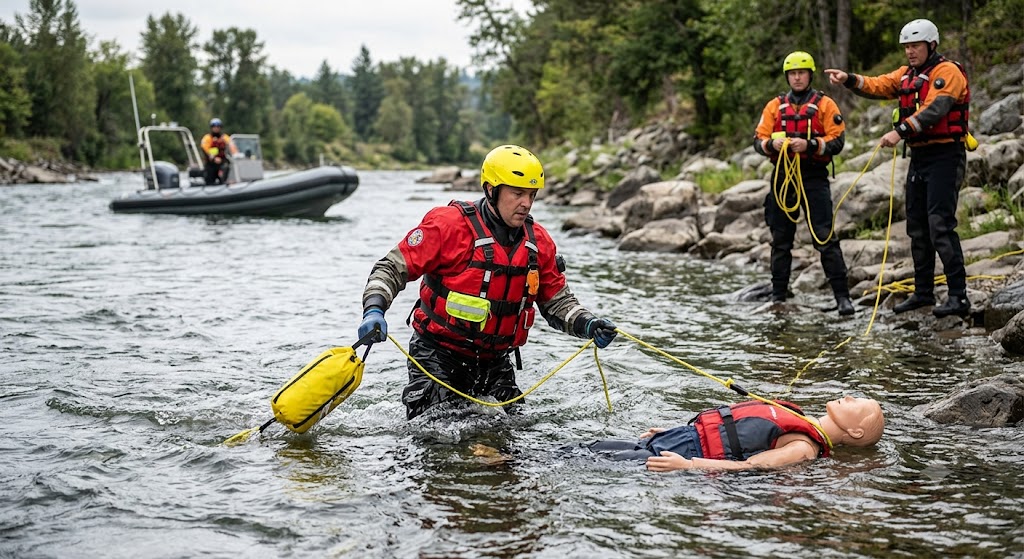
Additional Information
What the Course Entails and Exam Details
The comprehensive curriculum for the Surface Water Rescue Technician course combines classroom instruction with extensive hands-on, practical field training in dynamic water environments.
Key topics covered include:
Water hydrology and understanding river features (eddies, hydraulics, currents).
Scene assessment and size-up protocols.
Risk management and the "Rescuer Safety First" philosophy.
Specialized rescue equipment operation (ropes, throwing bags, personal flotation devices (PFDs), helmets, and thermal protection).
Shore-based rescue techniques (reach and throw philosophy).
In-water rescue techniques (shallow water crossing, swimming rescues, contact rescues).
Boat-based rescue operations (using inflatable rescue boats or specialized craft).
Patient assessment and stabilization in water.
Standard Operating Procedures (SOPs) for water rescue incidents.
What to Expect in the Final Exam
To achieve certification, candidates must successfully complete both a written examination and a practical skills evaluation.
The written exam typically consists of multiple-choice questions covering theoretical knowledge, safety protocols, and hydrology. A passing score (often 70% or higher) is required to proceed.
The practical skills assessment is a crucial component, where candidates must demonstrate proficiency in executing critical rescue techniques under the observation of qualified instructors.
Skills evaluated may include rope handling, executing proper throwing techniques, performing swimming rescues, operating rescue boats (if applicable to the specific course level), and managing patient transport in moving water.
This is often a pass/fail evaluation based on safe and correct implementation of the techniques taught during the course.
Candidates should be prepared for a physically demanding practical exam that requires confidence in the water.
How to Study and Exam Centers
Preparation for the Surface Water Rescue Technician exam involves a combination of studying course materials and, most importantly, practicing practical skills.
Review Course Materials Thoroughly: Study the student manual, presentations, and any handouts provided during your training.
Practice Knots and Ropework: Proficiency in essential knots and rope handling is vital and frequently tested.
Physical Conditioning: Ensure you are in good physical condition, as in-water rescue work can be physically strenuous.
Take Practice Exams: Utilize resources like online practice tests to familiarize yourself with the types of questions asked in the written portion of the exam.
Review Practical Skills: Mentally rehearse the steps for various rescue techniques, focusing on safety checkpoints.
Regarding exam centers, this certification is not typically offered at standard testing centers like Pearson VUE.
Instead, the certification and testing are administered by accredited training organizations, state fire academies, law enforcement training facilities, or specialized rescue schools authorized by certifying bodies such as the International Association of Water Rescue Professionals (IAWRP) or state-level public safety agencies.
Check directly with your training provider or department to register for upcoming courses and examination dates.
Job Opportunities from the Course
Achieving the Surface Water Rescue Technician certification opens doors to several rewarding career paths in public safety and emergency response.
Specific job titles that benefit from or require this certification include:
Firefighter (specifically on technical rescue or water rescue teams).
Search and Rescue (SAR) Technician.
Law Enforcement Officer (especially for marine patrol or swiftwater response units).
EMS Professional (paramedics or EMTs operating in flood-prone areas).
Park Ranger / Conservation Officer.
Industrial Safety Specialist (working near open water sources).
Disaster Response Specialist (specializing in flood response).
Commercial Rafting/Guiding Safety Professional.
Frequently Asked Questions
Reviews
5.0
Based on 0 reviews
Leave a Review
No reviews yet. Be the first to review!