
Routing TCP/IP Practice Test
$69.00
- Buy to unlock unlimited access to all Quiz questions.
- After purchase you can print a PDF of the whole quiz at any point. The PDF will contain the questions and the correct answers.
About this Exam
This Routing TCP/IP practice test is an essential evaluation tool for individuals aiming to achieve or maintain a foundational to advanced understanding of core networking protocols. The practice exam, inspired by prestigious industry certifications, assesses competence in fundamental routing concepts and TCP/IP protocol suite operations. It is specifically designed for network administrators, systems engineers, and anyone pursuing roles that require managing complex IP networks. Taking this test validates your ability to configure, troubleshoot, and optimize IP routing environments, demonstrating readiness for real-world scenarios and major certification exams in the networking field.
Ready to test your knowledge?
Buy Now to Access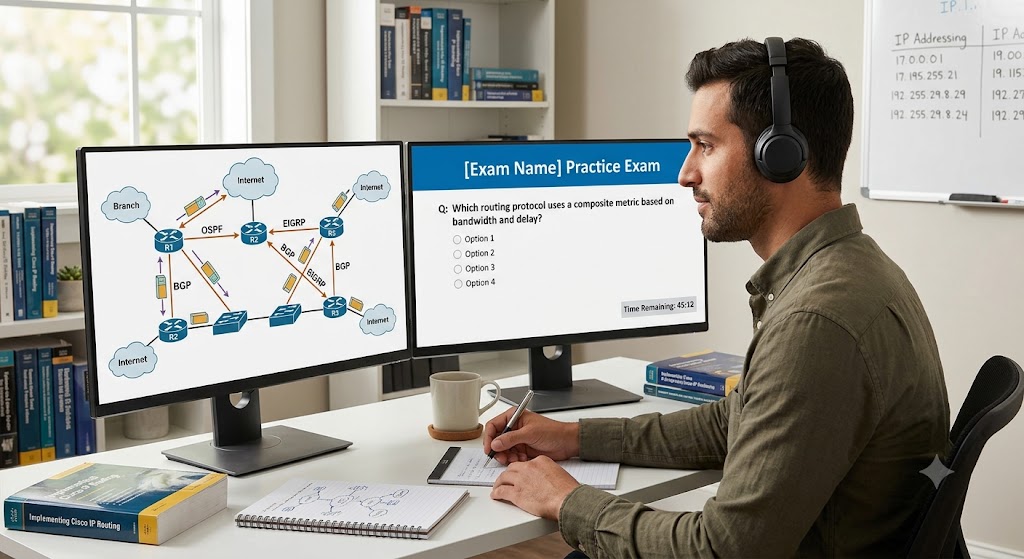
Additional Information
What the Course Entails and Exam Details
The content structure behind this practice exam mirrors the objectives typically found in leading advanced networking courses and certifications. It comprehensive covers:
In-depth IPv4 and IPv6 addressing, including subnetting and VLSM.
The entire TCP/IP model, focusing on the network, transport, and application layers.
Advanced operation of dynamic routing protocols: OSPF (Open Shortest Path First), EIGRP (Enhanced Interior Gateway Routing Protocol), and BGP (Border Gateway Protocol).
Routing redistribution between different protocols and policy-based routing.
Network address translation (NAT) and security considerations in routing environments.
Troubleshooting methodologies using standard command-line tools to diagnose complex connectivity issues.
What to Expect in the Final Exam
While not a replacement for an official proctored test, this practice exam is a realistic simulation. Users should expect a combination of multiple-choice questions, scenario-based problem-solving, and potentially interactive simulation questions where a network topology is provided and troubleshooting or configuration is required. The passing score varies by implementation, but generally aiming for 80% or higher indicates a solid understanding. There are no strict prerequisites, but a basic grasp of networking terminology is highly recommended. The simulation is typically timed to match the duration of professional exams (e.g., 90-120 minutes) to help with pacing. All standard exam rules apply: no notes, no unauthorized assistance, and a quiet testing environment are recommended for a truly representative experience.
How to Study and Exam Centers
Preparation for success involves a multi-faceted approach. First, utilize this practice test multiple times to identify weaknesses and track progress. Complement simulation with structured learning from authoritative networking textbooks, online courses, or authorized training materials (like Cisco Press for CCIE or similar advanced routing guides). Invest in a virtual lab environment (e.g., GNS3 or EVE-NG) to gain hands-on experience by building and configuring complex network topologies yourself—this is crucial for advanced routing certification success. For official proctored exams, candidates typically register through Pearson VUE to schedule appointments at authorized physical testing centers globally, or utilize approved online proctoring options where available for remote testing from home or office.
Job Opportunities from the Course
Mastering Routing TCP/IP opens doors to specialized and high-demand roles within the IT infrastructure sector. Achieving certifications associated with this skill set (like advanced Cisco Certified Specialist or professional-level certifications) makes professionals highly competitive for roles such as:
Network Engineer
Advanced Network Administrator
Network Architect
Systems Integration Specialist
Security Operations Center (SOC) Analyst
Infrastructure Consultant
Technical Support Engineer (Level 3)
Solutions Architect specializing in networking
Frequently Asked Questions
Reviews
5.0
Based on 0 reviews
Leave a Review
No reviews yet. Be the first to review!