
Advanced Firefighter Technician Practice Test
$69.00
- Buy to unlock unlimited access to all Quiz questions.
- After purchase you can print a PDF of the whole quiz at any point. The PDF will contain the questions and the correct answers.
About this Exam
The Advanced Firefighter Technician certification is an elite designation designed for seasoned firefighting professionals ready to transition from foundational operations to complex, high-stakes tactical and specialized roles. This advanced certification validates a firefighter's mastery over sophisticated fire behavior, technical rescue disciplines, hazardous materials mitigation, and command-level decision-making. It is not for entry-level personnel; rather, it targets experienced firefighters seeking to lead special operations teams, become company officers, or specialize in technical rescue and complex suppression scenarios.
Ready to test your knowledge?
Buy Now to Access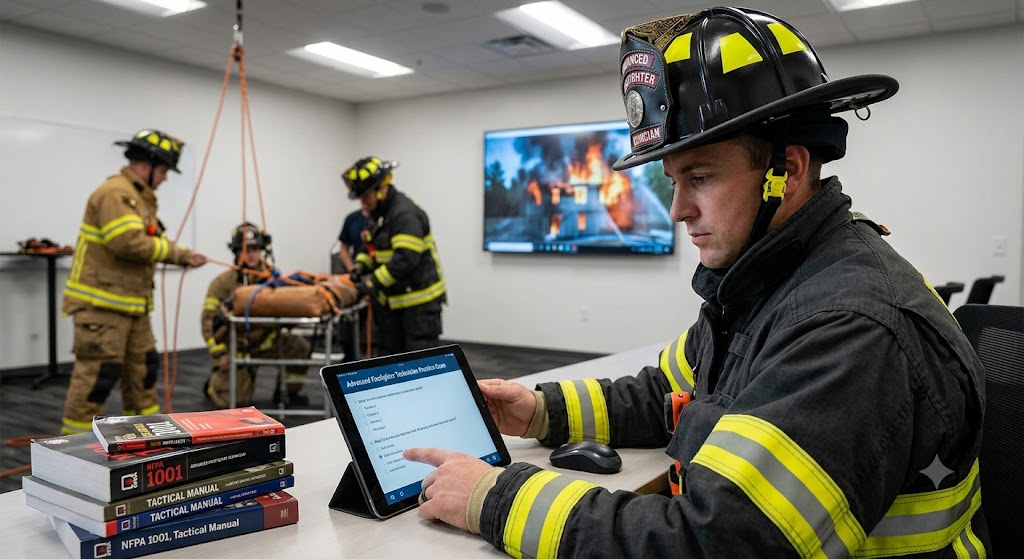
Additional Information
What the Course Entails and Exam Details
The comprehensive Advanced Firefighter Technician curriculum
builds upon core firefighting knowledge, plunging into the tactical depth
required for dynamic incident environments. Key areas of focus typically
include:
- Advanced
Fire Behavior and Reading Smoke: Mastering fire dynamics, ventilation-controlled
flow paths, and identifying smoke indicators to predict rapid fire
progression.
- Tactical
Operations: Command sequencing for offensive interior attacks,
defensive exterior operations, and transitions, including comprehensive
incident size-up.
- Technical
Rescue Fundamentals: Introductory and intermediate skills in vehicle
extrication, machinery rescue, confined space awareness, and rope rescue
systems.
- Hazardous
Materials Operations: Advanced recognition, identification, and
defensive mitigation strategies for complex chemical, biological, and
radiological releases.
- Building
Construction and Collapse: In-depth analysis of how different building
types react under fire stress and identifying potential collapse hazards.
- Rapid
Intervention and Mayday: Protocols for establishing and operating a
Rapid Intervention Team (RIT) and navigating complex firefighter survival
scenarios.
- Fire
Hydraulics and Pumping Operations: Mastering flow calculations and
pump setups for large-scale or multi-jurisdictional water supply
challenges.
What to Expect in the Final Exam
The final examination for the Advanced Firefighter
Technician is a multi-phased, rigorous process designed to test both
theoretical knowledge and practical application under stress. While specific
formats can vary slightly by jurisdiction or accrediting body, a standard exam
includes:
- Written
Knowledge Test: This typically consists of 100 to 150 multiple-choice
questions. It includes detailed situational judgment questions, forcing
candidates to apply tactical principles to complex scenarios. Expect a
significant emphasis on fire behavior, hazardous materials chemistry,
technical rescue protocols, and command structures.
- Practical
Skills Assessment: This is the cornerstone of the certification.
Candidates must demonstrate proficiency in several hands-on evolutions,
which may include RIT operations, complex hose deployment, vehicle
extrication, setting up technical rescue systems, and conducting an active
incident command size-up.
- Time
Limits and Passing Score: Both the written and practical portions are
timed. A passing score of 70% or 80% or higher on the written exam is
typical. The practical exam is often graded on a pass/fail basis for
critical tasks, meaning failure in a mandatory safety step can result in
failure of the entire assessment.
How to Study and Exam Centers
Effective preparation for the Advanced Firefighter
Technician exam requires a multifaceted approach that merges classroom study
with high-fidelity practical practice.
- Actionable
Study Strategies:
- Utilize
a Tactical Study Guide: Focus on resources that emphasize the why
behind tactical decisions, not just the how. Look for materials
from reputable fire service organizations or State Fire Marshals.
- Create
Realistic Scenarios: Practice writing out 360-degree size-ups for
diverse building types and fire conditions. Work through the strategy and
tactics for multiple scenarios.
- Form
a Study Group: Collaborate with other experienced firefighters to
debate tactical choices and share specialized knowledge, particularly in
HazMat or rescue disciplines.
- Simulate
the Practical: Dedicate time on the drill ground to running full
scenarios, especially RIT deployment, complex hose lays, and technical
rescue setups under timed, low-visibility, or high-stress conditions.
- Take
Advanced Practice Exams: Utilize timed Advanced Firefighter
Technician Practice Tests to build your mental endurance and identify
knowledge gaps in advanced theory and situational judgment.
- Exam
Centers: The final certification exam is rarely offered through open
commercial testing centers. Instead, it is usually administered directly
by authorized entities such as:
- State
Fire Marshal’s Offices
- Accredited
Regional Fire Academies
- Specialized
Technical Rescue Training Centers
- Authorized
Community College Fire Science Programs
Job Opportunities from the Course
Earning the Advanced Firefighter Technician certification
unlocks significant career advancement and opens doors to elite specialized
teams. Potential job opportunities and career paths include:
- Special
Operations Technician: Join dedicated teams focusing on Hazardous
Materials, Technical Rescue (Rope, Confined Space, Trench), or Urban
Search and Rescue (USAR).
- Company
Officer: This certification is often a prerequisite or highly
preferred qualification for promotion to Lieutenant or Captain,
demonstrating the tactical competency needed to lead crews in complex
incidents.
- Fire
Investigator: Advanced knowledge of fire behavior, origin, and cause
determination is vital for this specialized, detail-oriented role.
- Fire
Service Instructor: Become a certified instructor to teach advanced
courses, sharing your expertise with the next generation of firefighters.
- Safety
Officer: Step into crucial roles as an Incident Safety Officer or
Department Safety Officer, using advanced knowledge to prevent
line-of-duty injuries.
Advanced Firefighter Technician Practice Exam Image
Here is the comprehensive, SEO-optimized study guide article
and accompanying image.
Advanced Firefighter Technician Practice Exam
Description
The Advanced Firefighter Technician certification is an
elite designation designed for seasoned firefighting professionals ready to
transition from foundational operations to complex, high-stakes tactical and
specialized roles. This advanced certification validates a firefighter's
mastery over sophisticated fire behavior, technical rescue disciplines,
hazardous materials mitigation, and command-level decision-making. It is not
for entry-level personnel; rather, it targets experienced firefighters seeking
to lead special operations teams, become company officers, or specialize in
technical rescue and complex suppression scenarios.
What the Course Entails and Exam Details
The comprehensive Advanced Firefighter Technician curriculum
builds upon core firefighting knowledge, plunging into the tactical depth
required for dynamic incident environments. Key areas of focus typically
include:
- Advanced
Fire Behavior and Reading Smoke: Mastering fire dynamics, ventilation-controlled
flow paths, and identifying smoke indicators to predict rapid fire
progression.
- Tactical
Operations: Command sequencing for offensive interior attacks,
defensive exterior operations, and transitions, including comprehensive
incident size-up.
- Technical
Rescue Fundamentals: Introductory and intermediate skills in vehicle
extrication, machinery rescue, confined space awareness, and rope rescue
systems.
- Hazardous
Materials Operations: Advanced recognition, identification, and
defensive mitigation strategies for complex chemical, biological, and
radiological releases.
- Building
Construction and Collapse: In-depth analysis of how different building
types react under fire stress and identifying potential collapse hazards.
- Rapid
Intervention and Mayday: Protocols for establishing and operating a
Rapid Intervention Team (RIT) and navigating complex firefighter survival
scenarios.
- Fire
Hydraulics and Pumping Operations: Mastering flow calculations and
pump setups for large-scale or multi-jurisdictional water supply
challenges.
What to Expect in the Final Exam
The final examination for the Advanced Firefighter
Technician is a multi-phased, rigorous process designed to test both
theoretical knowledge and practical application under stress. While specific
formats can vary slightly by jurisdiction or accrediting body, a standard exam
includes:
- Written
Knowledge Test: This typically consists of 100 to 150 multiple-choice
questions. It includes detailed situational judgment questions, forcing
candidates to apply tactical principles to complex scenarios. Expect a
significant emphasis on fire behavior, hazardous materials chemistry,
technical rescue protocols, and command structures.
- Practical
Skills Assessment: This is the cornerstone of the certification.
Candidates must demonstrate proficiency in several hands-on evolutions,
which may include RIT operations, complex hose deployment, vehicle
extrication, setting up technical rescue systems, and conducting an active
incident command size-up.
- Time
Limits and Passing Score: Both the written and practical portions are
timed. A passing score of 70% or 80% or higher on the written exam is
typical. The practical exam is often graded on a pass/fail basis for
critical tasks, meaning failure in a mandatory safety step can result in
failure of the entire assessment.
How to Study and Exam Centers
Effective preparation for the Advanced Firefighter
Technician exam requires a multifaceted approach that merges classroom study
with high-fidelity practical practice.
- Actionable
Study Strategies:
- Utilize
a Tactical Study Guide: Focus on resources that emphasize the why
behind tactical decisions, not just the how. Look for materials
from reputable fire service organizations or State Fire Marshals.
- Create
Realistic Scenarios: Practice writing out 360-degree size-ups for
diverse building types and fire conditions. Work through the strategy and
tactics for multiple scenarios.
- Form
a Study Group: Collaborate with other experienced firefighters to
debate tactical choices and share specialized knowledge, particularly in
HazMat or rescue disciplines.
- Simulate
the Practical: Dedicate time on the drill ground to running full
scenarios, especially RIT deployment, complex hose lays, and technical
rescue setups under timed, low-visibility, or high-stress conditions.
- Take
Advanced Practice Exams: Utilize timed Advanced Firefighter
Technician Practice Tests to build your mental endurance and identify
knowledge gaps in advanced theory and situational judgment.
- Exam
Centers: The final certification exam is rarely offered through open
commercial testing centers. Instead, it is usually administered directly
by authorized entities such as:
- State
Fire Marshal’s Offices
- Accredited
Regional Fire Academies
- Specialized
Technical Rescue Training Centers
- Authorized
Community College Fire Science Programs
Job Opportunities from the Course
Earning the Advanced Firefighter Technician certification
unlocks significant career advancement and opens doors to elite specialized
teams. Potential job opportunities and career paths include:
- Special
Operations Technician: Join dedicated teams focusing on Hazardous
Materials, Technical Rescue (Rope, Confined Space, Trench), or Urban
Search and Rescue (USAR).
- Company
Officer: This certification is often a prerequisite or highly
preferred qualification for promotion to Lieutenant or Captain,
demonstrating the tactical competency needed to lead crews in complex
incidents.
- Fire
Investigator: Advanced knowledge of fire behavior, origin, and cause
determination is vital for this specialized, detail-oriented role.
- Fire
Service Instructor: Become a certified instructor to teach advanced
courses, sharing your expertise with the next generation of firefighters.
- Safety
Officer: Step into crucial roles as an Incident Safety Officer or
Department Safety Officer, using advanced knowledge to prevent
line-of-duty injuries.
Frequently Asked Questions
Reviews
5.0
Based on 0 reviews
Leave a Review
No reviews yet. Be the first to review!