
TDSHS Asbestos Air Monitoring Technician Practice Exam
$69.00
- Buy to unlock unlimited access to all Quiz questions.
- After purchase you can print a PDF of the whole quiz at any point. The PDF will contain the questions and the correct answers.
About this Exam
Are you looking to build a vital career protecting public health and safety during essential building projects? The TDSHS Asbestos Air Monitoring Technician certification is your mandatory pathway to work in Texas. It is designed for individuals who will be responsible for measuring and documenting airborne asbestos fiber levels before, during, and after abatement activities in public buildings. By ensuring air quality meets strict state and federal standards, these technicians play a critical role in verifying that environments are safe for worker re-entry and general re-occupancy. This practice exam is the perfect tool for students currently enrolled in an approved training course, or those about to take their final course exam, to test their knowledge and build confidence.
Ready to test your knowledge?
Buy Now to Access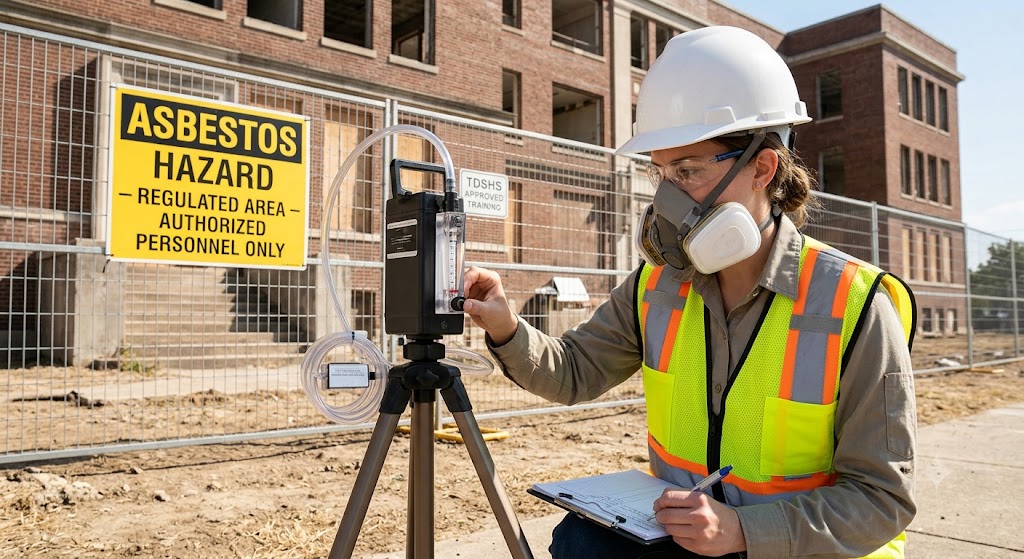
Additional Information
What the Course Entails and Exam Details
To become a licensed Asbestos Air Monitoring Technician in Texas, you must first complete a 24-hour, TDSHS-approved training course. This multi-day program provides a comprehensive foundation in both the practical and regulatory aspects of the role. A crucial component of this journey is passing the comprehensive exam at the end of the course, which is what this practice material is designed to prepare you for.
The typical course syllabus and final exam cover essential topics, including:
Regulations and Legal Requirements: A deep dive into Texas Department of State Health Services (TDSHS) rules, as well as relevant federal OSHA and EPA regulations.
Health Effects of Asbestos: Understanding the risks, diseases associated with exposure, and how proper monitoring mitigates these dangers.
Asbestos Types and Properties: Recognizing the physical characteristics of different asbestos materials.
Air Sampling Equipment: Learning to operate, calibrate, and maintain high- and low-volume sampling pumps, as well as the correct use of cassettes and tubing.
Sampling Methodologies: Proper procedures for collecting background, area, personal, and clearance samples.
Calculations and Data Analysis: Mastering the math needed for flow rate, sample volume, sample duration, and Time-Weighted Average (TWA) calculations.
Chain of Custody and Recordkeeping: Essential skills for documenting data, maintaining precise sample logs, and ensuring legal compliance.
This practice exam mimics the coverage and difficulty of the actual test you will face, allowing you to identify any weak points in your understanding of these critical areas.
What to Expect in the Final Exam
The actual course final exam you must pass to earn your training certificate—which you then submit to TDSHS for licensing—is a formal, proctored assessment taken on the final day of your 24-hour training course.
Here is a breakdown of what you can typically expect:
Format: The exam is almost universally multiple-choice.
Number of Questions: You can expect approximately 50 questions.
Passing Score: The required minimum passing score is 70%.
Time Limit: You will typically be given a specified time to complete the test, often around 2 hours, though this can vary slightly by training provider.
Rules: The final exam is closed-book. You will not be allowed to use course manuals or personal notes, reinforcing the need for thorough study and practice.
How to Study and Exam Centers
Effective preparation is the key to passing your TDSHS-approved training course on your first attempt. Our dedicated practice exam is an invaluable component of your study plan, allowing you to test your recall of information in a simulated test environment. We recommend a structured approach:
Utilize Practice Tests: Take this practice exam multiple times. Do not just look for the correct answer; understand why the other options are incorrect. Use your score and review to pinpoint exact sections of your course material that require more focus.
Simulate Exam Conditions: For a few attempts, set a timer for 2 hours and take the practice exam without consulting any notes. This will help you manage test-day anxiety and gauge your true readiness.
Review Course Materials and Regulations: Your training course manual is your primary resource. Pay close attention to definitions, calculation formulas, and specific regulatory threshold values. The TDSHS Texas Asbestos Health Protection Rules are public and worth reviewing.
Form a Study Group: Collaborating with other students from your training course can provide fresh perspectives and a collaborative learning environment.
Exam Centers: It is important to note that you do not register for this exam at a general third-party testing center like Pearson VUE. The official exam is administered directly by the TDSHS-approved training provider (authorized school) where you complete your required 24-hour course. When you select your training school, they will manage the scheduling and delivery of the final exam as part of your program.
Job Opportunities from the Course
Earning your licensing from TDSHS opens doors to essential and well-paying specialized roles. This certification is a required credential for a variety of job titles within the environmental science, construction, and public safety sectors.
Here are the specific job opportunities unlocked by completing the course and becoming a licensed technician:
Asbestos Air Monitoring Technician (AMT): The primary and direct role, responsible for setting up, running, and documenting air samples on abatement project sites.
Asbestos Project Monitor: Often a more senior version of an AMT who oversees multiple facets of an abatement project, verifying that the contractor adheres to all safety plans and regulations, and conducting final visual and air clearance testing.
Environmental Field Technician: A broader role where an AMT license is often a required or highly preferred specialty, enabling you to conduct air quality work on sites where other environmental hazards (like mold, lead, or silica) are also being managed.
Industrial Hygiene Technician: Working under the supervision of a Certified Industrial Hygienist (CIH), you would conduct various types of exposure monitoring, with asbestos air sampling being a core responsibility in renovation and demolition contexts.
Safety and Compliance Officer: For larger construction or environmental firms, a licensed AMT can specialize in ensuring internal company compliance and project-specific adherence to all safety plans and regulations.
Frequently Asked Questions
Reviews
5.0
Based on 0 reviews
Leave a Review
No reviews yet. Be the first to review!