
Tactical Planning Corporal's Course Practice Test
$69.00
- Buy to unlock unlimited access to all Quiz questions.
- After purchase you can print a PDF of the whole quiz at any point. The PDF will contain the questions and the correct answers.
About this Exam
The Tactical Planning Corporal's Course is a pivotal professional military education (PME) requirement designed specifically for Marine Corps Corporals. This course is engineered to transition motivated Marines from followers to small-unit leaders by instilling essential leadership skills and tactical proficiency. This practice exam is an invaluable resource for Marines preparing to challenge the academic and decision-making rigor of the actual course. It is designed for Corporals (and motivated Lance Corporals) seeking to master the fundamentals of leading Infantry Marines in combat and garrison environments, ensuring they are mentally prepared for the curriculum ahead. Mastering this material is a prerequisite for those ready to shoulder the responsibility of ethical and effective leadership.
Ready to test your knowledge?
Buy Now to Access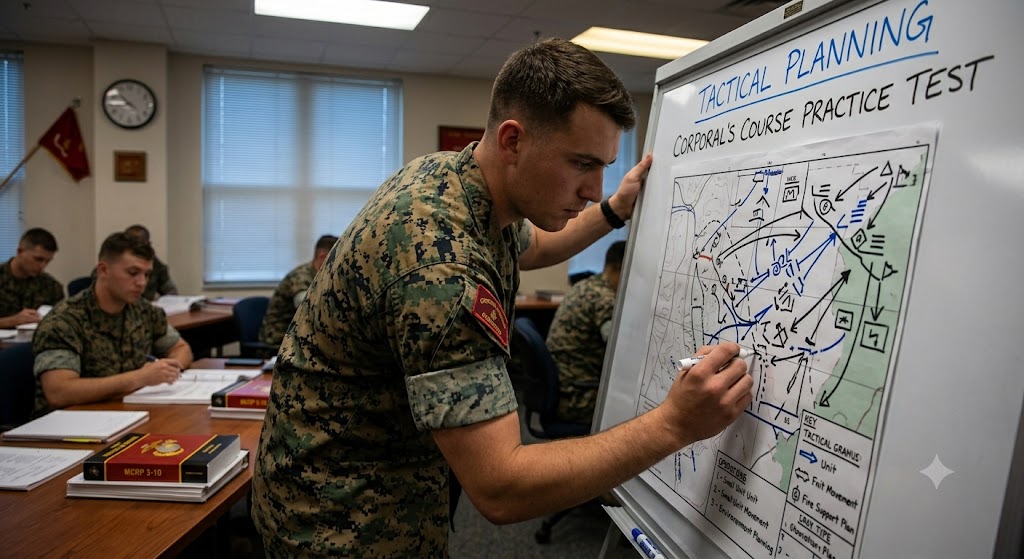
Additional Information
What the Course Entails and Exam Details
This comprehensive course covers several essential tactical domains. Students develop a deep understanding of standard operational orders and the essential Troop Leading Procedures (TLPs) required to execute complex assignments under pressure. Core competencies include detailed terrain analysis and map reading, basic communication protocols and equipment usage, coordinating small-unit fire and maneuver tactics, and conducting critical risk management assessments before deployment. The course final exam evaluates both doctrinal knowledge and practical scenario analysis.
What to Expect in the Final Exam
The Tactical Planning Corporal's Course final exam often combines multiple formats to rigorously test competency. A substantial portion consists of multiple-choice and short-answer questions focused on established doctrine, tactics, and operational procedures. Candidates may also be required to analyze a complex operational scenario and generate a comprehensive tactical plan, such as a full five-paragraph Operational Order (OPORD) draft. Passing requirements are typically strict, often requiring a score of 70% to 80% to demonstrate proficiency. The exam is often strictly timed, demanding quick decision-making under simulated pressure.
How to Study and Exam Centers
Preparation for this challenging exam requires diligent study and active practical application. Candidates should dedicate significant time to reviewing field manuals, doctrinal publications, and course materials. Utilizing active recall strategies, such as creating detailed flashcards for key acronyms, TLPs, and standard operating procedures (SOPs), is highly effective. Practical application is equally crucial; students should practice drafting tactical plans and OPORDs based on diverse practice scenarios, focusing on clear communication and addressing all potential risks. Candidates are encouraged to form study groups to discuss tactical problems and peer-review each other's plans. Authorized testing often takes place in controlled classroom environments at specific military installations or law enforcement training academies, rather than general public testing centers. Consult your chain of command or academy coordinators for exact location details and scheduling protocols.
Job Opportunities from the Course
Successful completion of this course and passing the subsequent final certification significantly enhances career progression opportunities within your organization. This certification directly validates leadership readiness and unlocks numerous advanced roles, including:
Corporal (Active Leadership Roles): Directly assuming command and responsibility for a fire team or squad-level unit.
Assistant Squad Leader: Providing vital support to the Squad Leader in tactical planning and execution.
Team Leader (Specialized Units): Leading specialized reconnaissance, logistics, or security teams.
Tactical Training Instructor: Mentoring newer service members in basic tactical principles.
Opportunities for further advanced leadership courses and promotions.
Frequently Asked Questions
Reviews
5.0
Based on 0 reviews
Leave a Review
No reviews yet. Be the first to review!