
T-6 Aerospace Physiology Practice Test
$69.00
- Buy to unlock unlimited access to all Quiz questions.
- After purchase you can print a PDF of the whole quiz at any point. The PDF will contain the questions and the correct answers.
About this Exam
The T-6 Aerospace Physiology program is a cornerstone of primary pilot training, particularly for those operating the Beechcraft T-6 Texan II aircraft. It represents the vital intersection of human biology and high-performance aviation. This rigorous curriculum is designed specifically for military student pilots, flight surgeons, and aerospace physiology technicians. Its main goal is to ensure they can manage the unique physiological stressors encountered in flight.
Ready to test your knowledge?
Buy Now to Access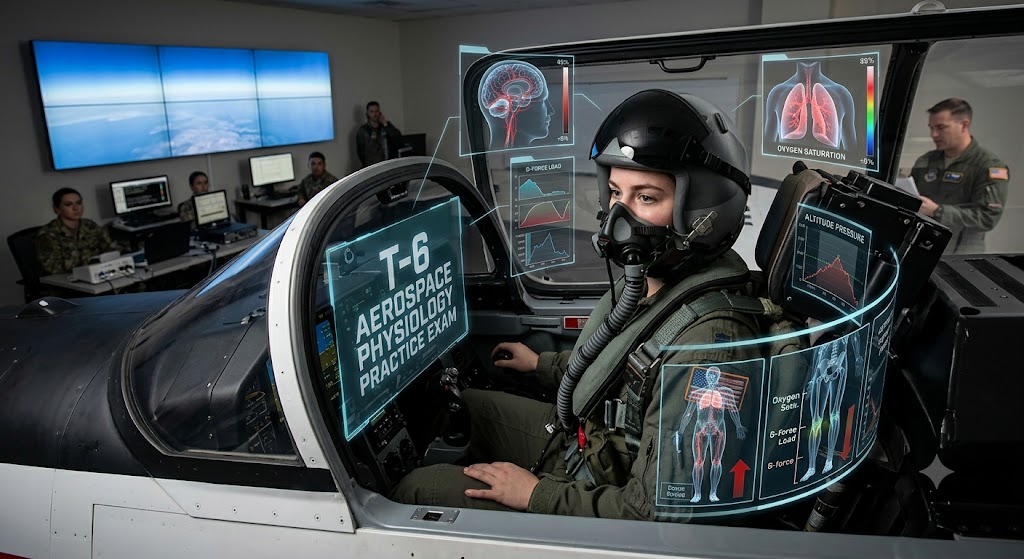
Additional Information
What the Course Entails and Exam Details
Mastering this material means becoming an expert on the human body's limitations in extreme environments. The course curriculum is comprehensive, breaking down complex medical concepts into operational knowledge. Key topics covered include the characteristics of the atmosphere and gas laws essential for flight. Students study the mechanisms of hypoxia (oxygen deficiency) and hyperventilation, along with the protocols to identify and correct them. A major component focuses on acceleration forces (G-forces), teaching students techniques to maintain consciousness during high-G maneuvers. Additional modules explore the dangerous effects of spatial disorientation and decompression sickness. Finally, trainees learn the practical use of oxygen systems and aircraft egress procedures.
What to Expect in the Final Exam
The final assessment for T-6 Aerospace Physiology is demanding, reflecting the critical nature of the subject. The written examination typically consists of a high volume of multiple-choice and true/false questions. These questions are scenario-based, requiring you to apply physiological principles to real-world operational challenges.
You should be prepared for a substantial time limit, encouraging quick thinking under pressure. While passing scores can vary slightly by training command, students must achieve a high minimum percentage, often around 80% to 90%, reflecting a zero-fail mentality in safety-critical knowledge. Crucially, the training often includes a mandatory practical phase, such as experiencing hypoxia in a hypobaric (altitude) chamber.
How to Study and Exam Centers
Success on this test requires more than rote memorization; it requires a deep functional understanding. Start by thoroughly studying official curriculum handbooks and technical manuals provided during training. Utilize dynamic study tools, such as the comprehensive T-6 Aerospace Physiology Practice Tests, to identify your weak points. We advise simulating the exam environment by timing your practice sessions and eliminating distractions. For critical topics like G-tolerance, visualization and practicing the Anti-G Straining Maneuver (AGSM) are highly recommended.
As this is a component of a larger aviation program, the physical examinations are administered at authorized military Undergraduate Pilot Training (UPT) bases. For civilians seeking associated certifications, testing often occurs at specialized authorized testing centers, such as those affiliated with the Aerospace Medical Association (AsMA). Many modernized commercial practice resources are available entirely online through dedicated educational portals.
Job Opportunities from the Course
Completing the T-6 Aerospace Physiology curriculum is an essential milestone that unlocks the most prestigious careers in aviation. This knowledge is mandatory for military personnel entering roles such as Military Pilot (Air Force, Navy, Marine Corps), Aerospace Physiology Technician, and Flight Surgeon. Furthermore, this training provides an exceptional foundation for civilian careers, including: Commercial Airline Pilot, Aerospace Research Scientist, Flight Safety Officer, and Civilian Aerospace Physiology Instructor. The discipline you master here ensures you are ready to excel in high-stakes environments.
Frequently Asked Questions
Reviews
5.0
Based on 0 reviews
Leave a Review
No reviews yet. Be the first to review!