
Swiftwater Rescue Technician Practice Test
$69.00
- Buy to unlock unlimited access to all Quiz questions.
- After purchase you can print a PDF of the whole quiz at any point. The PDF will contain the questions and the correct answers.
About this Exam
The Swiftwater Rescue Technician (SRT) certification is a crucial credential for emergency responders, including firefighters, search and rescue personnel, and swiftwater guides. This course is specifically designed for individuals who may be required to perform rescues in moving water environments. The training equips participants with the essential knowledge and technical skills necessary to safely navigate and manage dynamic water rescue situations. By completing this certification, technicians are prepared to recognize hydrology hazards, utilize specialized rescue equipment, and execute self-rescue and victim-rescue techniques effectively.
Ready to test your knowledge?
Buy Now to Access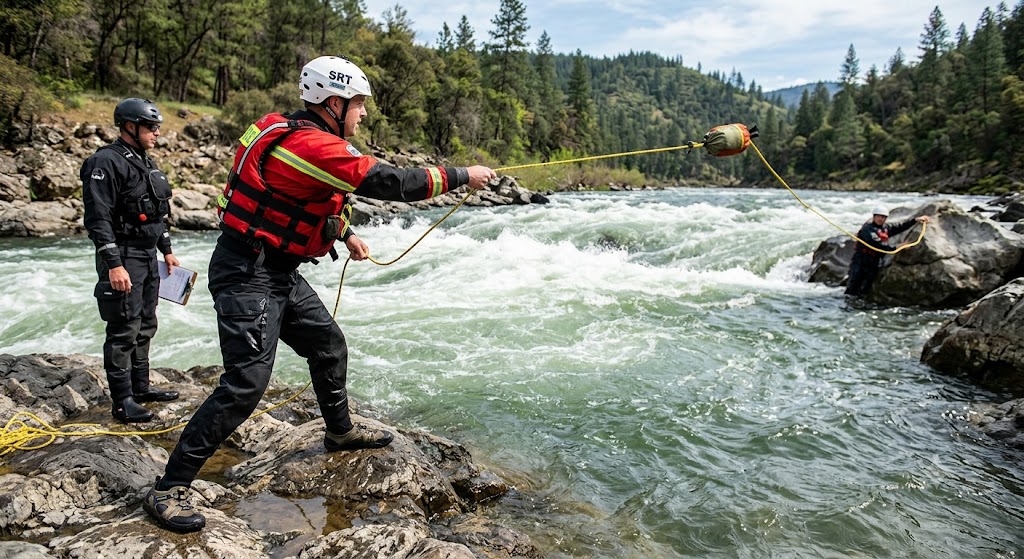
Additional Information
What the Course Entails and Exam Details
The Swiftwater Rescue Technician course combines comprehensive classroom instruction with rigorous hands-on practical training. Key topics covered include the dynamics of moving water (hydrology), identifying river hazards, and the principles of scene management. Participants also learn specialized technical rescue skills, such as knot tying, constructing rope systems, utilizing throw bags, and managing in-water scenarios like shallow water crossings and boat handling in current.
The certification exam generally consists of two distinct components: a written test and a practical skills assessment. The written portion assesses theoretical knowledge of swiftwater rescue principles, safety protocols, and hydrology. The practical assessment evaluates the student's ability to demonstrate physical competency and technical proficiency in real-time rescue scenarios conducted in moving water.
What to Expect in the Final Exam
In the written exam, students can typically expect a series of multiple-choice questions covering topics such as hydrology hazards, technical rescue equipment usage, and incident command structures for water emergencies. A passing score, often around 80% or higher, is required to proceed.
The practical component is a pass/fail evaluation where instructors observe students executing essential skills in a swiftwater environment. Students must successfully demonstrate tasks like defensive and aggressive swimming in current, properly deploying a throw bag to a moving target, and participating in team-based rescue scenarios. Specific time limits or equipment requirements may apply to certain practical skills, making physical conditioning and consistent practice vital for success.
How to Study and Exam Centers
To prepare effectively, students are strongly encouraged to thoroughly review their course manuals, practice technical skills repeatedly (such as knot tying and throw bag deployment), and participate actively in all hands-on training sessions. Taking reputable practice tests can also help familiarize students with the format and types of questions they will encounter on the written exam. Consistent physical conditioning is also important, as the practical portion is physically demanding.
Unlike some standardized certifications taken at centers like Pearson VUE, the Swiftwater Rescue Technician exam is typically administered directly through the authorized training provider upon completion of the course. These courses are often offered by specialized rescue organizations, fire academies, or search and rescue agencies. These exams take place both in a classroom setting and at designated swiftwater training sites, often involving natural rivers or specialized swiftwater channels.
Job Opportunities from the Course
Earning the Swiftwater Rescue Technician certification opens doors to various rewarding career paths, including:
Firefighter (specifically for specialized water rescue teams)
Search and Rescue (SAR) Technician (working for state or local agencies)
Emergency Medical Services (EMS) personnel (operating in flood-prone or recreational water areas)
Whitewater Rafting Guide or Kayak Instructor
Park Ranger (assigned to areas with significant water features)
Disaster Response Specialist (focusing on flood and swiftwater incidents)
Law Enforcement Marine Unit Officer
Frequently Asked Questions
Reviews
5.0
Based on 0 reviews
Leave a Review
No reviews yet. Be the first to review!