
Surface Water Quality Exam 1 Practice
$69.00
- Buy to unlock unlimited access to all Quiz questions.
- After purchase you can print a PDF of the whole quiz at any point. The PDF will contain the questions and the correct answers.
About this Exam
The Surface Water Quality Exam 1 is a foundational certification designed for individuals entering the fields of water treatment, environmental science, and natural resource management. This exam assesses essential knowledge regarding the principles of monitoring, protecting, and maintaining the quality of surface water sources, such as rivers, lakes, and reservoirs. It is typically required for entry-level water treatment plant operators (Class I or Grade 1), environmental technicians, and watershed specialists who are responsible for ensuring public health and compliance with environmental regulations.
This certification validates your understanding of fundamental concepts in hydrology, basic water chemistry, microbiology, and regulatory frameworks. Successfully passing this exam demonstrates your competency in core competencies required to safely and effectively manage vital surface water resources.
Ready to test your knowledge?
Buy Now to Access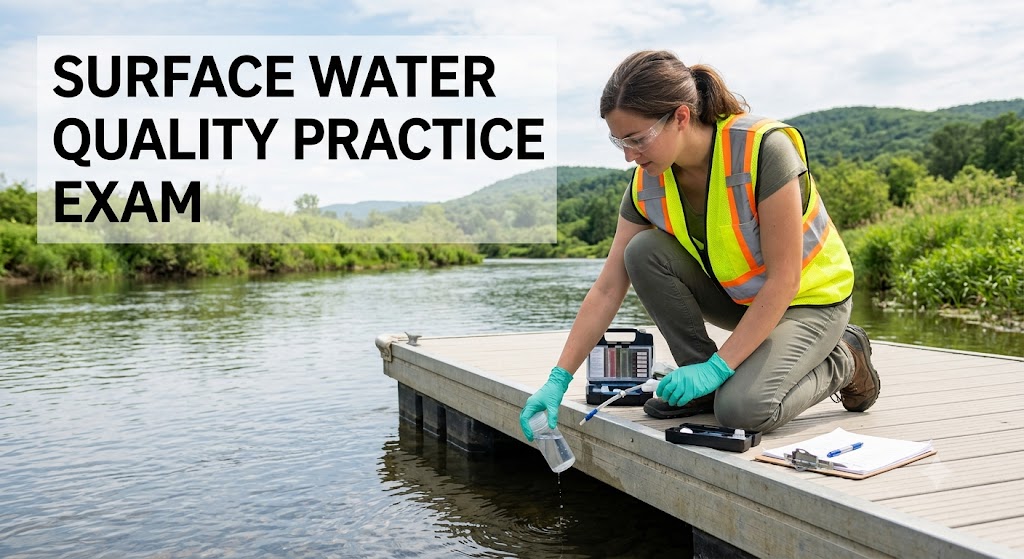
Additional Information
What the Course Entails and Exam Details
To prepare for the Surface Water Quality Exam 1, candidates typically engage in comprehensive study covering several core curriculum areas. The exam curriculum generally entails:
Introduction to Surface Water Hydrology: Understanding the water cycle, watershed characteristics, and flow dynamics in rivers and streams.
Fundamental Water Chemistry: Basic concepts including pH, alkalinity, dissolved oxygen, turbidity, and common water contaminants.
Basic Microbiology: An overview of waterborne pathogens, indicators like E. coli, and the basics of disinfection.
Surface Water Regulations: Key components of the Safe Drinking Water Act (SDWA) and state-specific regulations pertaining to surface water monitoring and protection.
Water Quality Sampling and Field Analysis: Techniques for collecting representative water samples, properly preserving them, and conducting basic field tests using standard equipment.
Basic Water Math: Practical calculations related to flow rates, detention times, and chemical dosage.
Safety Procedures: Essential safety protocols for working around water bodies, handling chemical reagents, and using field equipment.
What to Expect in the Final Exam
The Final Surface Water Quality Exam 1 is designed to be a standardized, objective assessment of entry-level knowledge. It typically follows a multiple-choice format, requiring candidates to select the single best answer from several options.
The exam usually consists of 50 to 100 questions covering the topics outlined in the curriculum. The time allotted for the exam is generally between 2 and 3 hours, providing sufficient time for careful consideration of each question.
Candidates are typically required to achieve a passing score of at least 70% to receive certification. The exam is often closed-book, and use of reference materials or electronic devices (other than a basic non-programmable calculator, if permitted) is strictly prohibited. Specific rules regarding permitted materials should be confirmed with the testing administrator.
How to Study and Exam Centers
Preparation is crucial for success on the Surface Water Quality Exam 1. Actionable study strategies include:
Utilize Official Study Guides: Focus your preparation on the specific manuals and training materials recommended by your state’s environmental agency or certifying body.
Engage in Practice Exams: Regularly taking practice quizzes and exams is one of the most effective ways to familiarize yourself with the question format, assess your understanding, and improve time management.
Form Study Groups: Collaborating with peers can help clarify difficult concepts and provide mutual support.
Understand Regulatory Language: Pay close attention to definitions and specific regulatory requirements mentioned in your study materials.
The Surface Water Quality Exam 1 is often administered by state-level environmental protection or health departments. Registration typically occurs through these specific state agencies. Testing locations vary but commonly include:
Computer-Based Testing (CBT) Centers: Many states partner with professional testing services like Pearson VUE or PSI to administer exams at various testing centers.
Authorized Training Providers: Some environmental training schools or community colleges may serve as authorized testing sites.
State Environmental Agency Offices: Exams may be offered periodically at designated state offices.
Consult your state’s certification board for specific registration procedures and a current list of approved testing centers.
Job Opportunities from the Course
Earning the Surface Water Quality Exam 1 certification opens doors to various entry-level career paths in both the public and private sectors.
Potential job titles and career opportunities include:
Water Treatment Plant Operator I / Grade 1 Operator: Operating and maintaining equipment used to treat surface water for public consumption.
Water Quality Technician: Collecting samples, conducting field and laboratory analysis to monitor the quality of surface water sources.
Environmental Compliance Inspector: Ensuring facilities and projects adhere to surface water regulations.
Watershed Management Technician: Assisting in monitoring and protecting water resources within a specific watershed.
Field Sample Collector: Traveling to various surface water sites to collect samples for analysis.
Laboratory Assistant (Water Focus): Assisting in testing and analysis within a water quality laboratory environment.
Frequently Asked Questions
Reviews
5.0
Based on 0 reviews
Leave a Review
No reviews yet. Be the first to review!