
ServSafe Practice Test Chapter 9 – Safe Facilities and Pest Management
$69.00
- Buy to unlock unlimited access to all Quiz questions.
- After purchase you can print a PDF of the whole quiz at any point. The PDF will contain the questions and the correct answers.
About this Exam
The ServSafe program is the premier food safety training and certification program for the restaurant and foodservice industry. Chapter 9, "Safe Facilities and Pest Management," is a crucial component of the ServSafe Manager curriculum. This chapter is designed for foodservice managers, supervisors, and any staff responsible for maintaining the cleanliness, structural integrity, and pest-free status of a food handling establishment. Understanding these principles is vital not only for passing the ServSafe Manager exam but also for ensuring the health and safety of your customers and the long-term success of your business by preventing contamination and maintaining regulatory compliance.
Ready to test your knowledge?
Buy Now to Access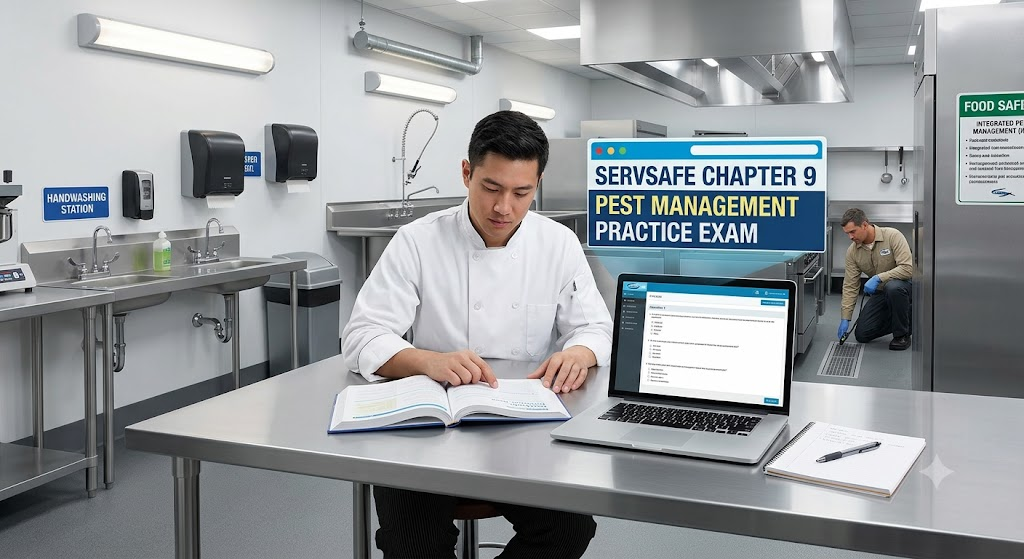
Additional Information
What the Course Entails and Exam Details
This section focuses on the physical facility itself and how to keep it clean, safe, and free from pests. Key topics covered in the comprehensive Chapter 9 course and practice test include:
Designing a Safe Facility: Workflow and layout for efficient cleaning and contamination prevention, including selecting appropriate flooring, wall, and ceiling materials.
Equipment Selection and Installation: Guidelines for choosing equipment that is easy to clean (NSF/ANSI certified) and installing it correctly to prevent dirt and pests.
Utilities and Building Systems: Managing water sources (potable and non-potable), plumbing systems (preventing cross-connections and backflow), lighting requirements (intensity and safety), and ventilation systems.
Facility Maintenance: Establishing cleaning schedules and procedures to prevent the buildup of grime and eliminate pest harborages.
Integrated Pest Management (IPM): The core principles of IPM, including:
Denying Pests Access: Methods for sealing the building and inspecting incoming shipments.
Denying Pests Food, Water, and Shelter: Proper cleaning and sanitation practices.
Working with a Pest Control Operator (PCO): The importance of professional partnership, choosing a reputable PCO, and preparing for treatments.
Identifying Pests: Recognizing common signs of rodents, cockroaches, flies, and other potential food pests.
What to Expect in the Final Exam
The official ServSafe Manager Certification exam, which this Chapter 9 material prepares you for, is a comprehensive assessment that covers all relevant food safety topics. Here is what you need to know about the final exam:
Format: Multiple-choice questions.
Number of Questions: 90 (usually, including un-scored pilot questions).
Time Limit: 2 hours.
Passing Score: Typically around 70-75% (the exact score may vary slightly by exam form).
Proctoring: The exam must be taken in the presence of an authorized ServSafe Proctor.
Results: Instant results for online exams; paper exams are typically graded within 10 business days. While this specific study guide focuses on the Chapter 9 practice material, it prepares you for a significant section of the full final exam that validates your food safety knowledge on safe facility design and effective pest management.
How to Study and Exam Centers
To succeed on your ServSafe exam, particularly in the Safe Facilities and Pest Management section, consider these effective study strategies:
Review Chapter 9 in Detail: Thoroughly read and take notes on Chapter 9 in the ServSafe Manager Book. Pay close attention to definitions, specific plumbing terms (backflow, air gap), and the steps of Integrated Pest Management.
Take Practice Tests: Actively engage with multiple practice questions specifically focused on Chapter 9. Analyze which concepts you consistently miss and revisit those sections in your study materials. Practice tests like this one are invaluable for building familiarity with the question style.
Use Study Aids: Create flashcards for key terms (NSF, ANSI, cross-connection, PCO, harborage). Watch educational videos that visualize facility maintenance and pest identification.
Apply the Knowledge: Walk through your own foodservice facility and identify potential areas of concern, such as improper plumbing, insufficient lighting, or potential entry points for pests. This practical application reinforces learning.
Where to Take the Final Exam:
The final proctored ServSafe Manager Certification exam can be taken at various authorized locations:
Online: Through an authorized computer-based testing center, such as Pearson VUE, which offers convenient online scheduling.
At Your Workplace: Many companies have certified proctors on staff who can administer the exam to employees.
Authorized Classrooms and Schools: Enroll in a ServSafe training course at local community colleges, restaurant associations, or authorized private training organizations, which often include the proctored exam as part of the course.
Job Opportunities from the Course
Obtaining your ServSafe Manager Certification, with strong knowledge in facility safety and pest management, demonstrates your commitment to food safety and positions you for several leadership and specialized roles in the hospitality and foodservice industry. Career paths that highly value this certification include:
Chef / Sous Chef
Restaurant Manager / General Manager
Food and Beverage Director
Catering Manager
Dietary Manager (Healthcare/Institutional)
Health Inspector / Food Safety Auditor
Hospitality Operations Manager
School Nutrition Director
Grocery Store Manager
Quality Assurance Specialist
Frequently Asked Questions
Reviews
5.0
Based on 0 reviews
Leave a Review
No reviews yet. Be the first to review!