
Category F Aquatic Pest Practice Exam
$69.00
- Buy to unlock unlimited access to all Quiz questions.
- After purchase you can print a PDF of the whole quiz at any point. The PDF will contain the questions and the correct answers.
About this Exam
Description
The Aquatic Pest Management (Category F) Certification is a specialized credential designed for individuals who apply pesticides or manage pests in aquatic environments.
This certification is essential for professionals who maintain the health and safety of bodies of water, including lakes, ponds, reservoirs, rivers, and canals.
It is designed for commercial applicators, government employees, and environmental managers who need to control aquatic weeds, algae, and other aquatic pests while minimizing impact on water quality and non-target organisms.
Earning this certification demonstrates your competence in the safe and effective management of aquatic ecosystems, ensuring compliance with state and federal regulations.
Ready to test your knowledge?
Buy Now to Access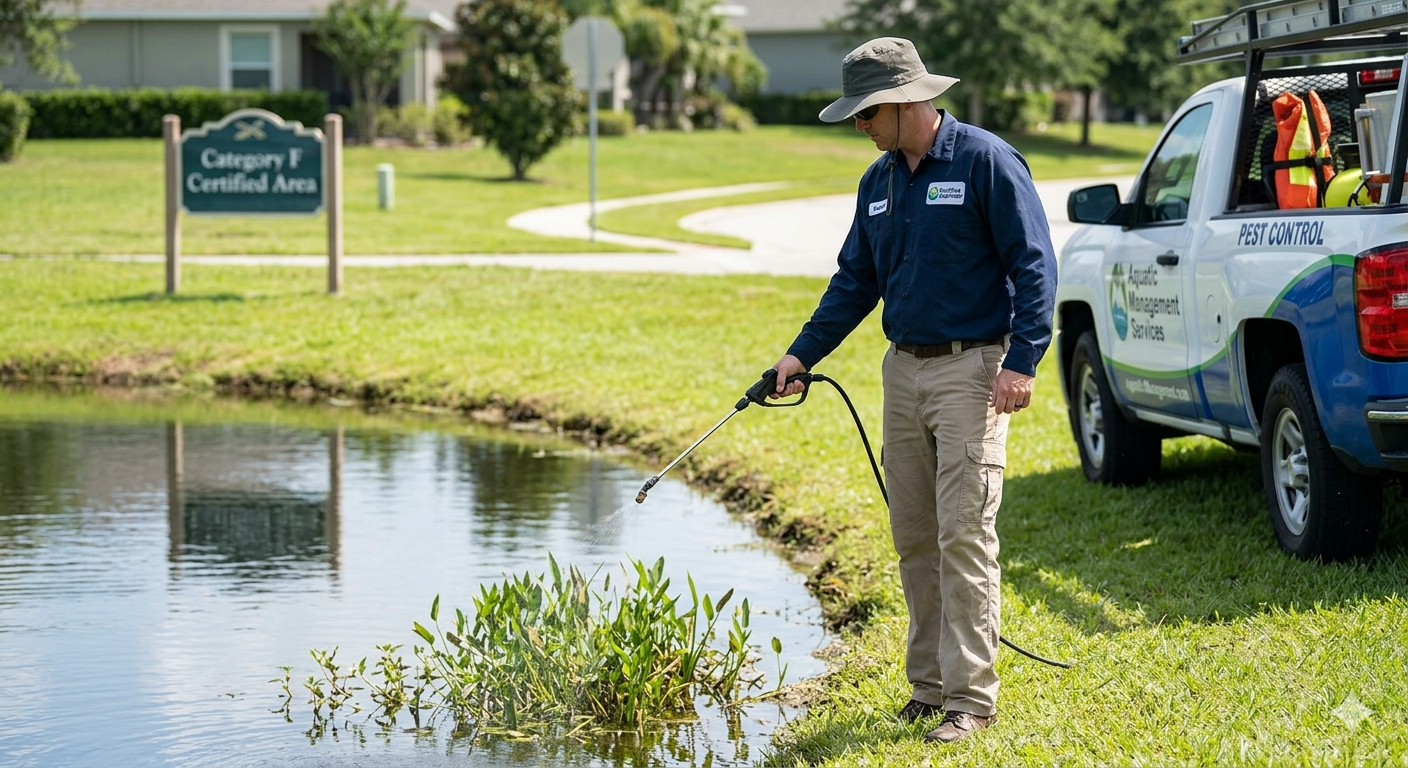
Additional Information
What the Course Entails and Exam Details
To prepare for the Category F exam, candidates must master a core curriculum focused on the complexities of aquatic environments. The course usually entails detailed study of the following key topics:
Pest Identification: Recognizing common aquatic weeds (submerged, emergent, and floating), algae types, and other invasive species.
Aquatic Ecology: Understanding the dynamics of water bodies, including dissolved oxygen, pH, and the lifecycle of aquatic organisms.
Integrated Pest Management (IPM): Applying a strategy that combines biological, mechanical, cultural, and chemical control methods.
Pesticide Safety and Handling: Best practices for mixing, loading, applying, and storing aquatic labeled pesticides, including the use of Personal Protective Equipment (PPE).
Regulations and Laws: Federal and state laws governing pesticide use in or near water, including the Clean Water Act and specific National Pollutant Discharge Elimination System (NPDES) permits.
Equipment and Calibration: Understanding the operation and proper maintenance of sprayers, granular applicators, and boat-mounted system, and how to calibrate them accurately for different water volumes.
The exam itself is rigorous, testing your ability to solve practical problems and apply regulations in real-world scenarios.
What to Expect in the Final Exam
The Category F certification exam is typically a proctored, closed-book assessment. Here is what you can generally expect:
Format: The exam predominantly consists of multiple-choice questions, but it may also include true/false, matching, and problem-solving scenarios related to calculations for dosage and water volume.
Passing Score: A passing score is usually 70% or higher. It is essential to verify the exact requirement with your specific state’s dynamic licensing agency.
Time Limit: Candidates are generally allotted 2 to 3 hours to complete the exam.
Specific Rules: You will need a valid government-issued photo ID to enter the testing center. No reference materials, cell phones, or programmable calculators are allowed in the testing room. Simple calculators are often permitted.
How to Study and Exam Centers
Preparation is crucial for success. Start with these actionable study strategies:
Utilize Official Manuals: Focus your study on the official state-approved applicator training manual for Category F. This is the primary source of all exam questions.
Take Practice Tests: Regularly use Category F practice exams to identify knowledge gaps and simulate the test-taking experience. Pay attention to dynamic calculation problems.
Form Study Groups: Collaborating with colleagues can help clarify difficult ecological or regulatory concepts.
Exam Centers:
The exam is usually administered by your state’s Department of Agriculture or a leading third-party testing service.
Many states now offer the convenience of taking the exam at specialized commercial testing centers (such as Pearson VUE) that are located in major cities.
Additionally, authorized agricultural extensions or community colleges frequently host scheduled testing sessions. You must register in advance through your state's pesticide licensing portal to secure a spot.
Job Opportunities from the Course
Earning your Category F certification opens doors to several rewarding career paths in environmental and utility management.
Aquatic Pesticide Applicator
Water Quality Technician
Pond and Lake Management Specialist
Wetland Restoration Technician
Aquatic Invasive Species Coordinator
Industrial Vegetation Management (IVM) Specialist
Right-of-Way (ROW) Applicator (when managing canals and drainage)
State or Municipal Environmental Inspector
Irrigation District Manager
These roles are found within private lake management companies, state departments of natural resources, municipal water treatment utilities, and environmental consulting firms.
Frequently Asked Questions
Reviews
5.0
Based on 0 reviews
Leave a Review
No reviews yet. Be the first to review!