
Science Olympiad Anatomy and Physiology Practice Test
$69.00
- Buy to unlock unlimited access to all Quiz questions.
- After purchase you can print a PDF of the whole quiz at any point. The PDF will contain the questions and the correct answers.
About this Exam
The Science Olympiad Anatomy and Physiology event is one of the most popular and rigorous biology competitions for middle and high school students across the United States. This dynamic event challenges teams to demonstrate an in-depth understanding of the human body, its complex systems, and how they interact. This practice exam and guide are designed specifically for students preparing for Regional, State, or National tournaments, helping them to refine their knowledge, practice active recall, and gain the competitive edge needed to medal. It provides a realistic simulation of the types of questions and station-based challenges teams will encounter.
Ready to test your knowledge?
Buy Now to Access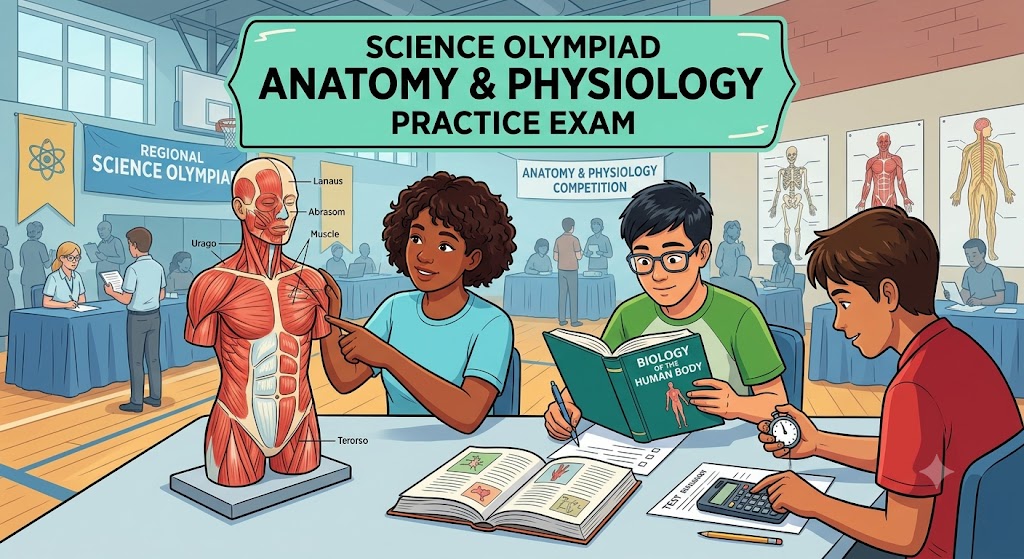
Additional Information
What the Course Entails and Exam Details
The event focuses on a rotation of human body systems each year, typically covering two or three systems in depth. Common topics include the skeletal, muscular, integumentary (skin), nervous, endocrine, respiratory, digestive, and immune systems. Students must delve into detailed anatomy – memorizing names of bones, muscles, organs, and microscopic structures. Furthermore, they need a profound grasp of physiology – understanding how these systems function, interact, and respond to various conditions, including specific diseases and disorders. The core details revolve around mastering these specific, pre-determined systems and the diseases affecting them.
What to Expect in the Final Exam
While not a standard certification exam, the Science Olympiad Anatomy and Physiology competition functions as the "final exam." It takes place in a supervised tournament setting, typically organized as a written exam, which may include multiple-choice questions, short answers, labeling complex diagrams, and data analysis problems. Often, the event features practical "stations" where teams rotate through timed exercises, identifying anatomical models, histology slides, or responding to scenario-based questions. The final score is determined by total points earned, with top teams placing first, second, etc., rather than achieving a "passing" mark. These competitions generally have a time limit of approximately 50-60 minutes per event.
How to Study and Exam Centers
Effective preparation requires a multi-pronged approach.
Start by thoroughly reviewing the current year's official Science Olympiad rules and the list of body systems covered.
Utilize comprehensive biology and anatomy textbooks as foundational resources.
Practice identifying structures using flashcards, online anatomy tools, and detailed anatomical charts.
Solve old tests from previous regional, state, and national Science Olympiad competitions to understand question formats and difficulty.
Study diseases and conditions associated with the designated systems extensively.
Regarding "Exam Centers," these competitions are held physically at hosting schools, universities, or convention centers for regional, state, and national tournaments. Unlike professional certifications, you do not register through Pearson VUE; instead, you register through your school's Science Olympiad team to participate in officially scheduled tournaments.
Job Opportunities from the Course
Participation and success in the Science Olympiad Anatomy and Physiology event provide an exceptional foundation and significant competitive advantage for numerous careers in the health and biological sciences. While not a direct path to employment itself, it signals to future academic programs and employers a strong dedication, advanced knowledge, and analytical skill set in these fields. Consider these exciting career paths that this experience can inspire:
Physician (MD/DO): Diagnosing and treating illnesses in human patients.
Physician Assistant (PA): Practicing medicine as part of a healthcare team.
Nurse Practitioner (NP) / Registered Nurse (RN): Providing patient care, education, and support.
Physical Therapist: Helping patients improve movement and manage pain.
Veterinarian: Applying anatomical and physiological knowledge to animals.
Biomedical Researcher: Conducting studies to advance medical science and treatments.
Public Health Specialist: Improving community health through education, policy, and research.
Medical Laboratory Scientist: Performing complex diagnostic tests in healthcare settings.
Frequently Asked Questions
Reviews
5.0
Based on 0 reviews
Leave a Review
No reviews yet. Be the first to review!