
Rutgers Anatomy 2 Practice Test
$69.00
- Buy to unlock unlimited access to all Quiz questions.
- After purchase you can print a PDF of the whole quiz at any point. The PDF will contain the questions and the correct answers.
About this Exam
The Rutgers Anatomy 2 course is a rigorous and detailed exploration of the structure and function of the human body, typically focusing on advanced systems beyond the basics. This course is essential for students pursuing degrees in healthcare, such as nursing, physical therapy, pre-medicine, and other allied health professions. Understanding the intricacies of the human body is fundamental for success in these demanding fields. A strong performance in this course demonstrates a solid foundation for further clinical studies.
Ready to test your knowledge?
Buy Now to Access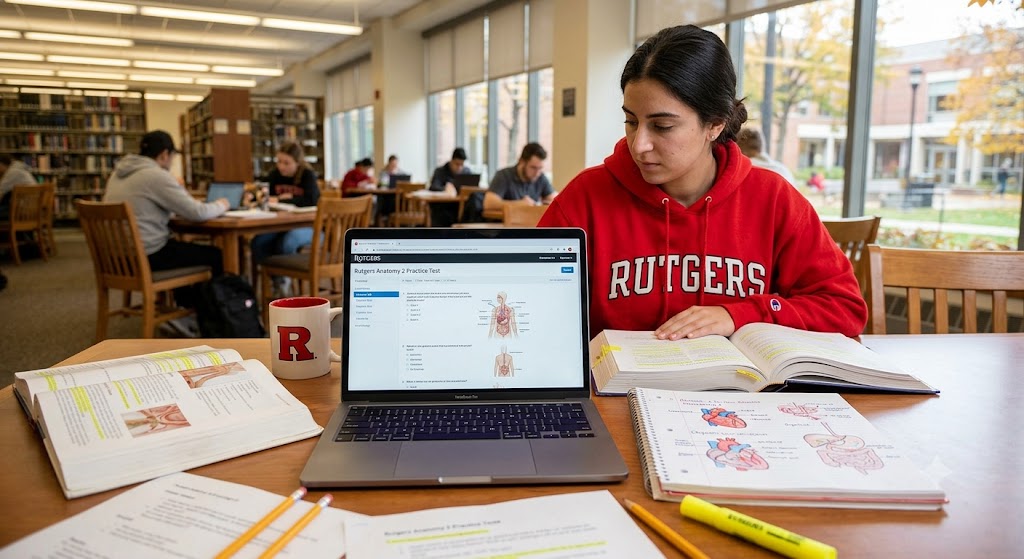
Additional Information
What the Course Entails and Exam Details
This comprehensive course typically covers complex body systems, such as the cardiovascular, respiratory, digestive, urinary, reproductive, and endocrine systems. Students delve into the gross and microscopic anatomy of these systems, along with their physiological functions and interactions. The exam assesses a student's grasp of anatomical terminology, structure identification, and the underlying physiological processes that maintain homeostasis.
What to Expect in the Final Exam
The actual Rutgers Anatomy 2 final exam is typically a comprehensive assessment, often combining multiple-choice questions, diagram labeling, and potentially short-answer questions. It demands both factual recall of anatomical structures and an understanding of their function. Students should expect a timed exam that covers all material presented throughout the semester. Passing score requirements are determined by the Rutgers University biology or allied health department and are detailed in the course syllabus.
How to Study and Exam Centers
Effective studying for Anatomy 2 requires a combination of active recall and visual learning. Students are encouraged to:
Regularly review lecture notes and textbooks.
Utilize practice exams and quizzes to test their knowledge and identify weak areas.
Study anatomical diagrams and models extensively.
Form study groups to discuss complex topics and quiz each other.
Take advantage of laboratory sessions and resources.
Regarding exam locations, official Rutgers course exams are held in designated university lecture halls or testing centers on campus. Practice materials and simulated tests, like the one referenced here, are typically accessible online to aid in preparation.
Job Opportunities from the Course
A strong understanding of Anatomy 2 is foundational for numerous careers in the health sciences, including:
Registered Nurse (RN)
Physician Assistant (PA)
Physical Therapist (PT)
Occupational Therapist (OT)
Exercise Physiologist
Medical Laboratory Scientist
Surgical Technologist
Frequently Asked Questions
Reviews
5.0
Based on 0 reviews
Leave a Review
No reviews yet. Be the first to review!