
Rope Rescue Technician Practice Test
$69.00
- Buy to unlock unlimited access to all Quiz questions.
- After purchase you can print a PDF of the whole quiz at any point. The PDF will contain the questions and the correct answers.
About this Exam
Embarking on the journey to become a certified Rope Rescue Technician is a challenging and rewarding step in a career focused on safety and technical skill. This certification, often based on rigid standards like NFPA 1006 for professional qualifications, validates your ability to operate safely and effectively in complex rope-based rescue scenarios. It is designed for personnel within fire and emergency services, search and rescue teams, industrial environments, and other specialized sectors where work or rescue must be performed in high-angle, low-angle, or confined space situations. The successful technician demonstrates mastery in technical rigging, patient care in high-stakes environments, and complex team-based rescue coordination. A practice test is an invaluable first step in assessing your knowledge and preparing for the comprehensive examinations to come.
Ready to test your knowledge?
Buy Now to Access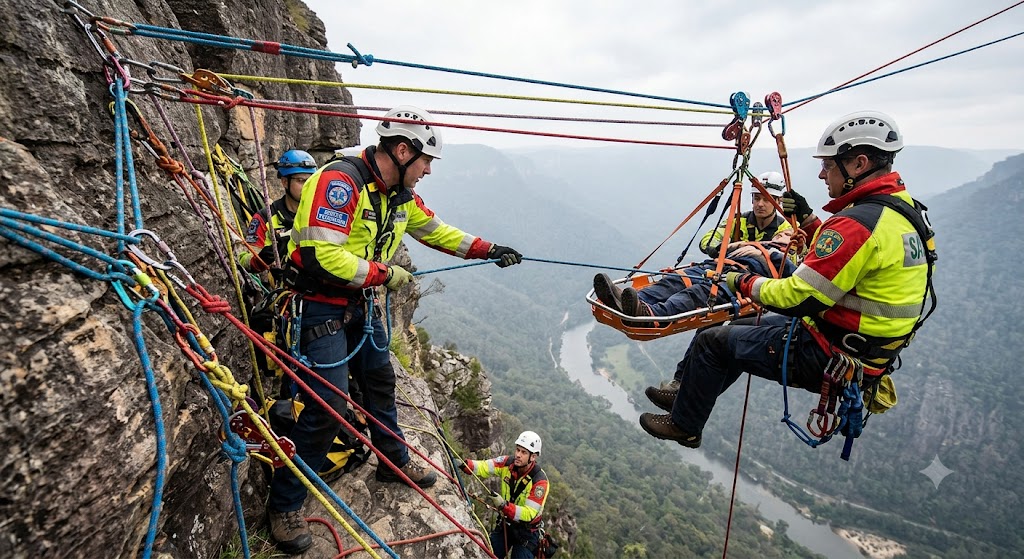
Additional Information
What the Course Entails and Exam Details
A comprehensive Rope Rescue Technician course builds upon foundation levels of rope work, delving deep into advanced technical systems and procedures. The training typically includes a blend of classroom instruction and extensive hands-on scenario work.
Core topics and skills you should expect to master and be tested on include:
Advanced technical rigging, including complex anchoring and load management.
Advanced mechanical advantage systems (including compound and complex configurations).
Multiple patient transport systems, litter management, and patient care while suspended.
Vertical and horizontal rescues, including edge management and artificial high directionals.
Ascending, descending, and changeover maneuvers with advanced techniques (knot passing, aid climbing principles).
Operation as part of a high-angle rescue team, including site management and safety leadership.
Understanding and application of relevant safety standards (such as specific NFPA chapters).
Thorough equipment knowledge, inspection, and maintenance procedures.
What to Expect in the Final Exam
The final certification exam for a Rope Rescue Technician is rarely just a multiple-choice test; it is designed to thoroughly evaluate your competency. Candidates typically face a two-part assessment:
Written Examination: A comprehensive multiple-choice and/or short answer test assessing your knowledge of theory, standards, calculations (e.g., force, mechanical advantage), safety protocols, and general technical principles. Passing scores can vary, but generally fall between 70-80%.
Practical Skills Evaluation: This is the heart of the technician exam. You must demonstrate proficiency in several critical, often scenario-based, practical skills in a controlled but realistic environment. You will be observed by certified examiners and must perform key tasks safely, efficiently, and within specific performance and safety parameters. These may include setting up a full rescue system for a simulated casualty, managing edge operations, or safely converting systems. Safety critical errors can result in immediate failure, emphasizing the zero-tolerance nature of the industry. Expect strict requirements for personal protective equipment (PPE) and a set timeframe for practical scenarios.
How to Study and Exam Centers
Preparation is key for both the written and practical portions of this challenging certification.
Actionable Study Strategies:
Review Your Course Materials: Go over all manuals, standard operating procedures, and training guides from your initial course.
Hands-on Practice: Don’t just study the diagrams; practice knot tying, pulley systems, and simple rigging in a safe environment. The more reps, the better.
Master the Standards: Familiarize yourself thoroughly with the relevant sections of NFPA 1006 and any specific standards from your testing body.
Utilize Practice Exams: Multiple practice tests are essential for both written knowledge and improving your critical thinking and time management. Review wrong answers meticulously with explanations.
Join a Study Group: Collaborative study and practical practice can reveal different perspectives and techniques.
Exam Centers and Testing Methods: Rope Rescue Technician exams, particularly the mandatory practical components, are administered at accredited training facilities, fire academies, and authorized testing centers. When you register for your training, the training provider will typically coordinate the associated Pro Board or IFSAC written and skills testing. For specific certification bodies (like SPRAT or IRATA for work-at-height or organization-specific programs), exams are conducted at their own approved centers or through authorized schools. While initial study resources and practice exams can be accessed through various online portals, the official written and all practical tests are held under strict physical supervision at these dedicated centers. Ensure you confirm the specifics for your region and certification path with the local authorities or authorized training provider.
Job Opportunities from the Course
A Rope Rescue Technician certification opens doors to specialized roles across various sectors:
Technical Rope Rescue Specialist / Team Leader
Firefighter (with specialized rescue team designation)
Search and Rescue (SAR) Team Member
Industrial Rescue Team Member (e.g., in factories, chemical plants, wind farms)
Utility Line Worker / Technician (often requiring technical rope access and rescue skills)
Construction Safety Officer (focusing on work at heights and complex rigging sites)
Film & Entertainment Industry Rigging Specialist
High-Altitude Work Specialist (telecommunications, inspection, maintenance)
Rescue & Training Instructor (after gaining sufficient field experience)
Frequently Asked Questions
Reviews
5.0
Based on 0 reviews
Leave a Review
No reviews yet. Be the first to review!