
Residential HVAC Installation Practice Exam
$69.00
- Buy to unlock unlimited access to all Quiz questions.
- After purchase you can print a PDF of the whole quiz at any point. The PDF will contain the questions and the correct answers.
About this Exam
The Residential HVAC Installation Certification is a vital step for individuals pursuing a career as a modern HVAC professional specializing in home climate systems. This comprehensive practice exam is specifically designed to prepare aspiring technicians for the rigorous certification process that validates their fundamental knowledge and practical understanding of residential heating, ventilation, and air conditioning systems. Successful completion of the actual exam demonstrates to employers that the technician possesses the critical skills required to perform accurate and code-compliant installations. The course is ideal for entry-level technicians, graduates of HVAC technical programs, and professionals seeking a recognized credential to advance their careers in the competitive residential service industry.
Ready to test your knowledge?
Buy Now to Access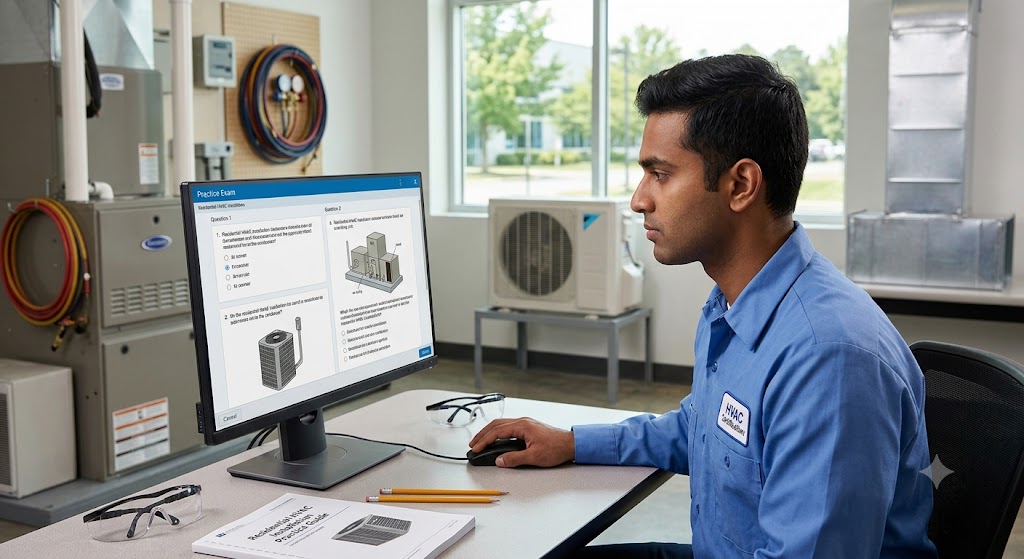
Additional Information
What the Course Entails and Exam Details
The preparatory coursework and subsequent examination focus on the core principles and procedural steps essential for professional residential HVAC installation. This curriculum comprehensively covers thermodynamics, basic electricity and circuitry, residential structural analysis for load calculations, and the various components of heating (furnaces, boilers), cooling (air conditioners), and heat pump systems. Key topics include meticulous safety protocols, proper tool usage, refrigerant handling, ductwork design and installation fundamentals, local and national building codes, system sequence of operation, control wiring, and necessary diagnostics for commissioning and testing installations for optimal efficiency and performance.
What to Expect in the Final Exam
The final certification exam typically follows a standardized format to thoroughly evaluate candidate competence. Expect a comprehensive set of multiple-choice questions administered within a set time limit, which often ranges from 90 minutes to two hours depending on the certifying body. These questions will cover a broad spectrum of technical knowledge, critical thinking scenarios, and application of safety practices. While specific requirements can vary between organizations, a passing score generally falls around 70% to 75%. The exam environments are controlled, requiring identification, and often prohibit any outside resources or materials.
How to Study and Exam Centers
Effective preparation for the Residential HVAC Installation Practice Exam requires a balanced study approach combining academic review and practical exposure. Utilize multiple practice exams to familiarize yourself with the question format, timing, and areas of knowledge you need to strengthen. Dive deeply into HVAC textbooks, manufacturer service manuals, and installation instructions for major equipment. Leverage online study groups, flashcards for key terms and concepts, and if possible, seek hands-on practice through apprenticeships or lab work. The actual exams are administered through various platforms; common locations include professional testing centers (like Pearson VUE or Prometric), online proctoring services, authorized HVAC technical schools, community colleges, and testing sessions facilitated by major industry associations and unions.
Job Opportunities from the Course
Earning the Residential HVAC Installation Certification significantly enhances career prospects and earning potential. Here is a list of job titles and paths that this certification can unlock or support:
Residential HVAC Installation Technician
Apprentice HVAC Installer
HVAC Service Technician Trainee
Lead HVAC Installer (after gaining experience)
HVAC Ductwork Specialist
HVAC Sales Representative (entry level)
Facilities Maintenance Technician (focused on residential or light commercial)
HVAC Quality Control Inspector
HVAC System Designer (in training or associate role)
Energy Auditor (specializing in residential HVAC efficiency)
HVAC Contracting Business Owner (after combining certification with business acumen)
Frequently Asked Questions
Reviews
5.0
Based on 0 reviews
Leave a Review
No reviews yet. Be the first to review!