
Residential Electrical Practice Test
$69.00
- Buy to unlock unlimited access to all Quiz questions.
- After purchase you can print a PDF of the whole quiz at any point. The PDF will contain the questions and the correct answers.
About this Exam
The Residential Electrical Practice Test is a comprehensive assessment tool designed for aspiring residential electricians preparing for licensure. This certification is essential for individuals seeking to work legally on electrical systems within single-family homes and multi-family residential complexes. The exam evaluates a candidate's understanding of key concepts, local and national safety codes, and fundamental electrical theories. It is a critical milestone for anyone aiming to establish a stable career as a qualified residential electrician, ensuring they possess the necessary knowledge to perform their duties safely and efficiently.
Ready to test your knowledge?
Buy Now to Access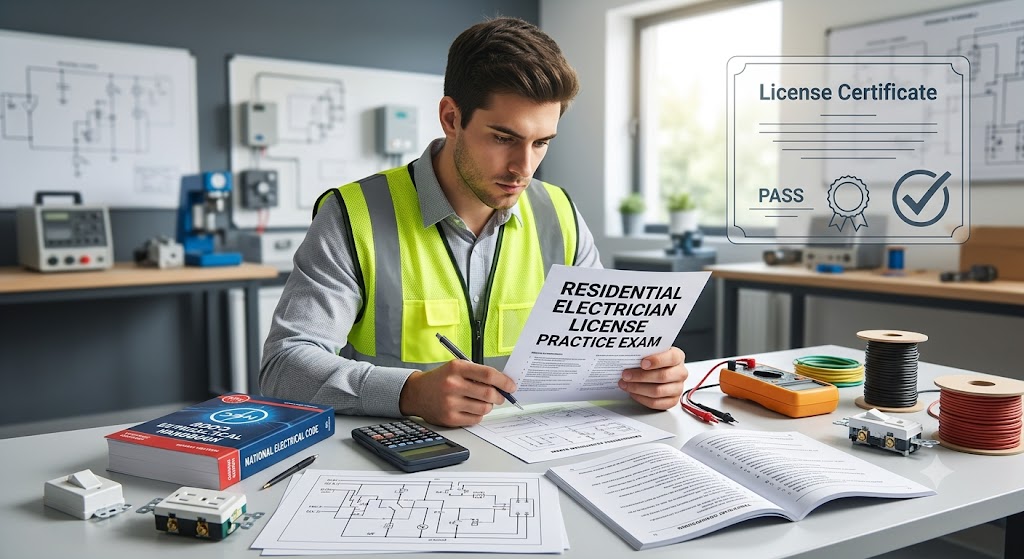
Additional Information
What the Course Entails and Exam Details
The core curriculum leading to this exam, often covered in accredited apprentice programs or trade school courses, includes extensive training in fundamental electrical principles and practices. Key focus areas typically encompass blue print reading, basic circuit design, residential wiring methods, service installations, grounding and bonding requirements, and the fundamental laws of electricity. The actual licensing exam details will vary by state or jurisdiction but commonly feature hundreds of multiple-choice questions focusing heavily on the accurate application of the National Electrical Code (NEC) specifically for residential settings. Understanding code-compliant practices for installing, maintaining, and troubleshooting electrical systems in homes is paramount.
What to Expect in the Final Exam
In the final licensing exam, candidates can expect a rigorous, multi-hour assessment often conducted in a computer-based format. The majority of questions will be multiple-choice, covering a wide spectrum of code knowledge, safety protocols, load calculations, and practical troubleshooting scenarios within a residential context. A passing score is typically required to be around 70-75%, though this can differ significantly between different licensing boards. The time limit is substantial, reflecting the depth and complexity of the questions. Crucially, the exam is often open-book, allowing candidates to reference the NEC, emphasizing the importance of quick navigation and application of code rules rather than pure memorization.
How to Study and Exam Centers
The most effective study strategy for this exam is a combination of structured learning and extensive practical application. Dedicate considerable time to carefully reading the specific chapters and sections of the National Electrical Code (NEC) that are most relevant to residential installations. Take numerous practice tests, like this comprehensive practice exam, to familiarize yourself with the question formats, time management, and code referencing. Utilize flashcards for key definitions, code sections, and electrical formulas. To take the official licensing exam, you must typically register through your state's licensing board or a designated testing partner like Pearson VUE, which administers the tests at physical testing centers or sometimes through secure online portals.
Job Opportunities from the Course
Successfully passing this residential electrician licensure exam significantly enhances your career prospects and earning potential. Achieving this certification qualifies you for several key job opportunities:
Licensed Residential Electrician Residential Wiring Specialist Home Renovation Electrician Electrical Service Technician (Residential) Maintenance Electrician (Residential Properties) Home Inspector (Electrical Systems Specialization) After gaining additional experience and meeting specific local requirements, you can also leverage this qualification to pursue advanced certifications to become a journeyman or master electrician, further unlocking opportunities for higher pay, leadership roles like electrical foreman, or even starting your own residential electrical contracting business.
Frequently Asked Questions
Reviews
5.0
Based on 0 reviews
Leave a Review
No reviews yet. Be the first to review!