
Remote Control Operator (RCO) Practice Test
$69.00
- Buy to unlock unlimited access to all Quiz questions.
- After purchase you can print a PDF of the whole quiz at any point. The PDF will contain the questions and the correct answers.
About this Exam
The Remote Control Operator (RCO) certification is a vital qualification for professionals operating complex, unmanned machinery across various critical industries.
This certification is designed for individuals working in logistics, port operations, manufacturing, and heavy equipment sectors where precision, safety, and efficiency are paramount.
The exam validates a candidate's ability to safely maneuver, monitor, and maintain advanced remote control systems used for devices like overhead cranes, automated guided vehicles (AGVs), and locomotive systems within industrial environments.
By obtaining this certification, operators demonstrate that they possess the technical knowledge and practical skills necessary to minimize operational risks and optimize productivity.
Ready to test your knowledge?
Buy Now to Access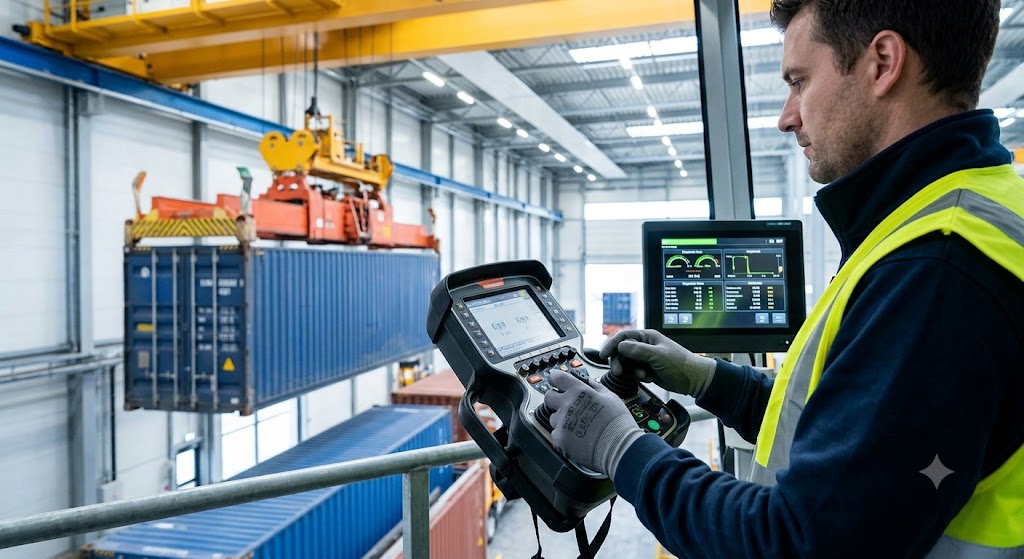
Additional Information
What the Course Entails and Exam Details
A comprehensive RCO course covers a spectrum of technical subjects and safety protocols. The core syllabus typically includes understanding radio frequency (RF) and infrared control technologies, interpreting system diagnostic feedback, and mastering operational safety guidelines specific to the machinery being controlled.
Candidates will study regulations related to industrial remote control, standard emergency procedures, and preventative maintenance checklists for both the transmitters and receivers.
The course often includes practical, hands-on training components that allow candidates to simulate real-world operational scenarios in a controlled environment.
This structure ensures that the final exam evaluates both the theoretical understanding of engineering principles and the practical application of safe operating procedures.
What to Expect in the Final Exam
The final exam for the RCO certification is usually divided into two distinct components: a written (or computer-based) knowledge assessment and a practical skills demonstration.
The written exam often consists of 50–100 multiple-choice questions focusing on safety protocols, equipment limitations, regulatory compliance, and troubleshooting scenarios.
A typical time limit is 90 to 120 minutes, and the passing score usually ranges between 75% and 85%, depending on the specific certifying body or jurisdiction.
The practical component requires candidates to perform a series of standard operational maneuvers, safely demonstrating their ability to start up, shut down, and precisely control the specific machinery using only the remote interface.
How to Study and Exam Centers
Effective preparation for the RCO exam requires a balanced approach. Utilize the study guides and operator manuals provided during your training course as your primary resource.
Taking several timed [Remote Control Operator (RCO) Practice Tests] is crucial for familiarizing yourself with the types of multiple-choice questions you will encounter and identifying areas where your knowledge may be lacking.
Focus heavily on practical application: if possible, spend extra hours during training practicing the mandatory operational maneuvers until they become second nature.
For the written portion, RCO exams are frequently administered through specific, authorized testing platforms like industrial training centers, state-certified schools, or occasionally through large-scale online assessment portals.
Physical testing for the practical component must be completed at an authorized, specialized facility that has the exact machinery (e.g., a certified RCO overhead crane) required for the evaluation.
Job Opportunities from the Course
Earning an RCO certification significantly enhances your employability in high-demand industrial sectors.
Graduates with this qualification are eligible for a variety of specialized roles, including:
Remote Control Locomotive Operator
Industrial Overhead Crane Operator (RCO Specialization)
Automated Guided Vehicle (AGV) Fleet Operator
Gantry Crane Operator
Logistics and Container Terminal Operator
Heavy Equipment Teleoperator (in Mining or Construction)
Port Authority Equipment Operator
Manufacturing Process Operator (utilizing remote systems)
Frequently Asked Questions
Reviews
5.0
Based on 0 reviews
Leave a Review
No reviews yet. Be the first to review!