
IAHCSMM CRCST Practice Test – Chapter 3 Anatomy for Sterile Processing Technicians
$69.00
- Buy to unlock unlimited access to all Quiz questions.
- After purchase you can print a PDF of the whole quiz at any point. The PDF will contain the questions and the correct answers.
About this Exam
The Healthcare Sterile Processing Association (HSPA), formerly known as IAHCSMM, offers the Certified Registered Central Service Technician (CRCST) certification, which is recognized globally as the gold standard for professionals in the field of sterile processing. This certification is designed for individuals who are responsible for cleaning, disinfecting, sterilizing, and distributing medical instruments and equipment, ensuring patient safety and effective healthcare delivery. Aspiring sterile processing technicians must demonstrate comprehensive knowledge and skills across numerous domains. This practice exam specifically targets "Chapter 3: Anatomy for Sterile Processing Technicians," a fundamental component of the broader certification curriculum. It is intended for students and professionals preparing for the comprehensive CRCST exam, helping them to focus on and master the crucial anatomical concepts that are directly relevant to instrument identification, surgical procedures, and optimal sterilization practices. Gaining a strong grasp of human anatomy is paramount for any sterile processing technician looking to excel in their role and ensure the highest standards of patient care.
Ready to test your knowledge?
Buy Now to Access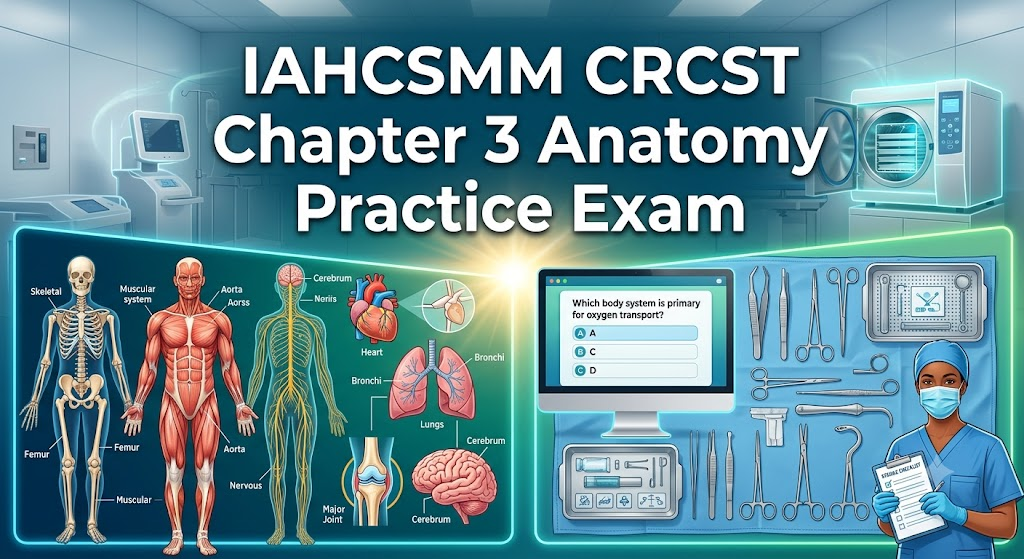
Additional Information
What the Course Entails and Exam Details
While the full CRCST certification course covers over 20 diverse chapters including microbiology, infection control, decontamination processes, sterilization methods, and equipment management, this Chapter 3 focus is all about understanding the human body structure and function from a sterile processing perspective.
Expect your study of Chapter 3 to delve into:
Major human body systems: detailed overviews of the skeletal, muscular, circulatory, respiratory, nervous, digestive, urinary, reproductive, endocrine, and integumentary systems.
Foundational anatomical terminology: learning the language used by healthcare professionals to precisely describe body parts and locations.
The relationship between anatomy and medical instrumentation: understanding how specific body structures and common surgical procedures dictate the design and use of corresponding medical instruments.
The clinical relevance of anatomical knowledge: grasping how your understanding of anatomy impacts effective cleaning, assembly, and sterilization, thereby directly contributing to patient safety.
Remember, this practice exam and study guide are specific to reinforcing your knowledge of Chapter 3. They are part of a comprehensive preparation strategy that must encompass all other critical subjects within the complete CRCST curriculum to ensure overall success on the final, official certification exam.
What to Expect in the Final Exam
The official HSPA CRCST certification exam is a comprehensive, computer-based assessment typically administered at authorized Prometric testing centers. You should expect around 150 multiple-choice questions covering all content domains within the entire CRCST curriculum. Students are generally allotted three hours to complete the examination. Your final result will be reported simply as Pass or Fail, rather than a specific numerical score. While the passing standard is rigorous, specific passing percentages can vary between exam versions, emphasizing the need for thorough preparation across all topics. Questions related to Chapter 3 anatomy will be integrated throughout the test alongside questions from all other subject areas. Utilizing targeted practice exams, like one for Chapter 3, allows you to focus on specific knowledge gaps and reinforce key concepts, effectively building your confidence for the broad range of questions you will encounter in the final, comprehensive certification exam. This practice test does not exactly replicate the entire full exam but serves as a crucial building block in your study plan.
How to Study and Exam Centers
Effective preparation is essential for succeeding in both this Chapter 3 focus and the full CRCST certification. To optimize your study efforts, consider the following strategies:
Prioritize official materials: thoroughly read and study the current IAHCSMM/HSPA textbook and associated workbooks, specifically Chapter 3 for this focus. This is your primary resource for accurate, testable information.
Utilize diverse study aids: create flashcards for key anatomical terms, body systems, and related medical terminology. Use visual aids like diagrams and models to enhance your understanding of body structures.
Practice actively: take multiple practice exams, including this one, to familiarize yourself with the question format and identify areas needing improvement. Repeatedly taking practice tests and reviewing explanations for incorrect answers can significantly boost your score.
Engage with others: join online study groups, forums, or local study sessions to discuss challenging concepts, share tips, and gain different perspectives. Teaching a concept to someone else is a powerful way to reinforce your own understanding.
Consistent review: don't cram. Schedule regular, dedicated study sessions over a realistic timeframe to allow for spaced repetition and better information retention.
Regarding exam centers, you cannot take the official full CRCST certification exam online from home. After registering through the HSPA website and ensuring you meet all eligibility requirements (which may include practical experience), you will be able to schedule your appointment at an authorized Prometric testing center. Prometric operates numerous professional, secure testing facilities in various locations, providing accessible options for candidates. Be sure to carefully review all scheduling and identification procedures provided upon registration.
Job Opportunities from the Course
Successfully earning your full CRCST certification unlocks a variety of rewarding and vital career opportunities within the healthcare industry. These positions are essential for the safe and efficient operation of surgical services, clinics, and other patient care areas. Here are some specific job titles and career paths this certification enables:
Sterile Processing Technician
Central Service Technician
Instrument Processing Technician
Medical Instrument Technician
Sterile Processing Supervisor / Manager (with experience)
Endoscopy Technician (often involves sterile processing knowledge)
Surgical Technology Specialist (with additional training or certs)
Sterile Processing Educator or Trainer
Sterile Processing Quality Assurance Specialist
By dedicating yourself to understanding critical subjects like anatomy and passing the comprehensive CRCST exam, you are building the foundation for a stable and meaningful career path in healthcare support services, playing a crucial role in preventing infections and ensuring positive patient outcomes across various medical settings. The anatomical knowledge reinforced by this study guide is a fundamental skill that will serve you well throughout your sterile processing career. Good luck with your studies!
Frequently Asked Questions
Reviews
5.0
Based on 0 reviews
Leave a Review
No reviews yet. Be the first to review!