
ASCP Technologist in Chemistry (C) Practice Exam
$69.00
- Buy to unlock unlimited access to all Quiz questions.
- After purchase you can print a PDF of the whole quiz at any point. The PDF will contain the questions and the correct answers.
About this Exam
The ASCP Technologist in Chemistry (C) certification is a prestigious credential for medical laboratory professionals specializing in the chemical analysis of blood and bodily fluids. This designation, awarded by the American Society for Clinical Pathology (ASCP) Board of Certification (BOC), validates advanced proficiency in complex diagnostic testing, quality control, and laboratory management within the field of clinical chemistry. Achieving this certification is crucial for career advancement, demonstrating dedication to quality patient care and technical mastery. This study guide and practice exam are designed to help you prepare effectively, identify knowledge gaps, and build the confidence necessary to succeed on this rigorous examination.
Ready to test your knowledge?
Buy Now to Access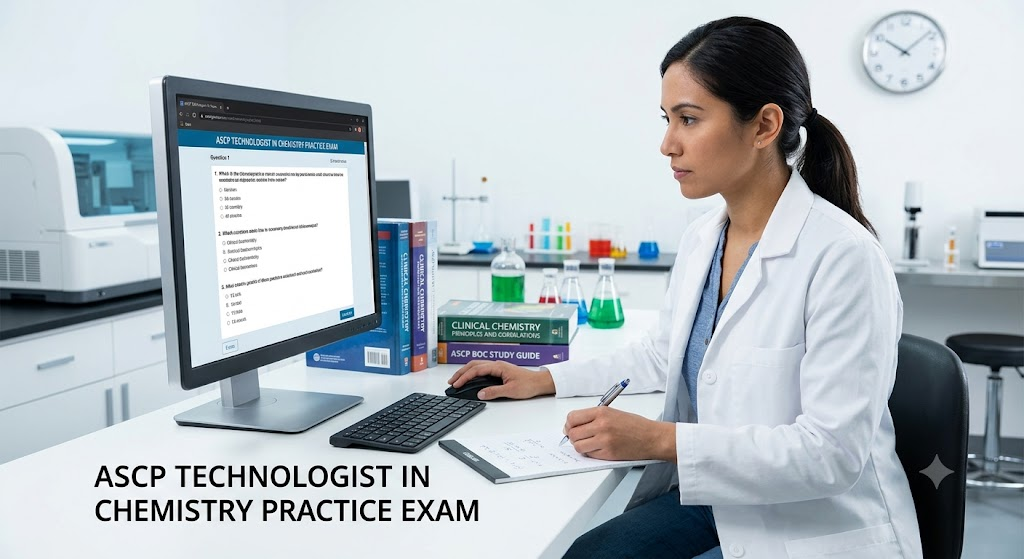
Additional Information
What the Course Entails and Exam Details
The Technologist in Chemistry certification program and subsequent examination cover a comprehensive scope of clinical biochemistry. The "course" in this context refers to the body of knowledge and practical experience that candidates must possess to pass the exam, reflecting the requirements of modern clinical laboratories. The core competencies and topics that you can expect to be covered on both the practice exam and the actual ASCP C exam include:
Clinical Biochemistry: Principles and procedures for testing various analytes in blood, urine, and other bodily fluids.
Instrumentation and Methodologies: Comprehensive knowledge of techniques such as spectrophotometry, chromatography (GC, HPLC), mass spectrometry, electrophoresis, and automated chemistry systems.
Quality Control and Assurance: Advanced concepts of statistical quality control, proficiency testing, instrument calibration, method validation, and troubleshooting laboratory errors.
Pathophysiology: Linking chemical test results to disease states, such as diabetes mellitus, cardiovascular disease, renal dysfunction, liver disease, and endocrine disorders.
Therapeutic Drug Monitoring (TDM) and Toxicology: Understanding pharmacokinetics, drug interactions, and methods for measuring drug levels and toxic substances.
Acid-Base Balance and Blood Gases: Interpretation of blood gas data and concepts related to respiratory and metabolic acid-base imbalances.
Lipids, Proteins, and Carbohydrates: Detailed analysis of lipid profiles, protein electrophoresis, carbohydrate metabolism, and associated disorders.
Laboratory Operations: Basic management principles, safety protocols (OSHA), and regulatory compliance (CLIA).
The ASCP BOC recommends reviewing their specific Content Guideline for the Technologist in Chemistry examination for the most up-to-date and granular breakdown of topics.
What to Expect in the Final Exam
The official ASCP Technologist in Chemistry (C) examination is a Computer Adaptive Test (CAT). This means that the difficulty of the questions adjusts based on your previous answers. The exam consists of approximately 100 multiple-choice questions.
Format: Computer Adaptive Testing (CAT) Multiple-Choice
Number of Questions: 100
Time Limit: 2 hours and 30 minutes
Passing Score: A scaled score is calculated. While specific passing scores vary slightly by exam administration, it is typically set around a scaled score of 400.
Rules: The exam is administered under strict proctored conditions. No outside study materials, calculators (unless integrated into the testing software), or electronics are permitted. Standardized test center protocols apply.
Using a practice exam structured like the actual CAT format is one of the most effective ways to understand the pacing and nature of the adaptive testing environment.
How to Study and Exam Centers
A dedicated study plan is essential for success on the Technologist in Chemistry exam. Combining various study methods maximizes retention and understanding.
Use the Practice Exam Regularly: Take the ASCP Technologist in Chemistry Practice Exam multiple times. Analyze your results to pinpoint areas where you consistently struggle. This allows you to focus your study efforts on your weakest topics.
Review Official ASCP Resources: The ASCP BOC offers study guides, reading lists, and content guidelines that are highly recommended. These resources provide insight into the exact knowledge base being tested.
Consult Standard Textbooks: Use widely recognized clinical chemistry textbooks for deep dives into specific methodologies and pathophysiological concepts. Common references include "Tietz Textbook of Clinical Chemistry and Molecular Diagnostics."
Active Learning Techniques: Create flashcards for reference ranges, diagnostic criteria, and instrumentation principles. Form or join a study group to discuss complex concepts and quiz each other.
Focus on Problem Solving: Practice calculations related to dilutions, standardizations, and quality control statistics. The exam often requires applying knowledge rather than just recalling facts.
The final ASCP Technologist in Chemistry (C) certification exam is administered at Pearson VUE testing centers worldwide. Pearson VUE offers secure, computer-based testing environments. To take the exam, you must first apply and be approved by the ASCP BOC. Once eligible, you will receive instructions on scheduling your appointment at a convenient Pearson VUE center through their online portal. There are generally no specific authorized schools or other testing locations beyond these dedicated proctored centers.
Job Opportunities from the Course
Obtaining the ASCP Technologist in Chemistry certification opens doors to specialized roles and increased responsibilities within the clinical laboratory setting. It is highly valued by employers and often leads to career advancement. Specific job titles and career paths this certification unlocks include:
Clinical Laboratory Technologist (Chemistry Specialty)
Medical Laboratory Scientist (with advanced chemistry focus)
Chemistry Section Supervisor or Lead Technologist
Point-of-Care Testing (POCT) Coordinator
Laboratory Quality Assurance/Quality Control Specialist
Clinical Research Associate (in biochemistry/diagnostic trials)
Field Application Specialist (for laboratory instrumentation companies)
Hospital Chemistry Lab Manager or Director (with significant experience)
Technical Consultant for laboratory regulations and compliance.
Good luck with your preparation for the ASCP Technologist in Chemistry (C) certification exam! This practice exam is a vital step toward achieving this significant career milestone.
Frequently Asked Questions
Reviews
5.0
Based on 0 reviews
Leave a Review
No reviews yet. Be the first to review!