
APES Aquatic Pollution Practice Test
$69.00
- Buy to unlock unlimited access to all Quiz questions.
- After purchase you can print a PDF of the whole quiz at any point. The PDF will contain the questions and the correct answers.
About this Exam
The APES Aquatic Pollution Practice Exam is a critical assessment designed for students enrolled in Advanced Placement Environmental Science (APES). This test focuses specifically on the diverse and complex issues surrounding the pollution of water bodies, including oceans, lakes, and rivers. Students will demonstrate their understanding of different types of pollutants, their sources, and the resulting impacts on ecosystems and human health. It serves as a valuable opportunity for students to evaluate their preparedness and gain familiarity with the exam format before taking the official AP Environmental Science exam. This certification is ideal for high school students who are passionate about environmental issues and are seeking to earn college credit or simply to advance their understanding in this specific area of study.
Ready to test your knowledge?
Buy Now to Access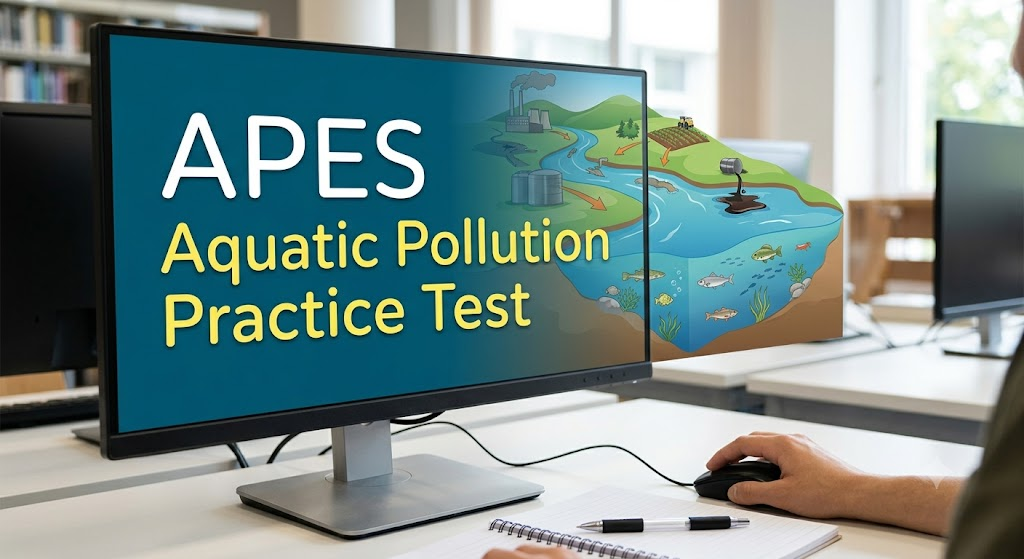
Additional Information
What the Course Entails and Exam Details
This specialized practice exam delves deeply into the sub-topic of aquatic pollution within the broader AP Environmental Science curriculum. Students are expected to have a strong foundational understanding of environmental concepts and the ability to apply this knowledge to real-world scenarios. The test covers a range of critical topics, including:
Types of Aquatic Pollutants: This includes heavy metals, organic compounds, nutrients (like nitrogen and phosphorus), and pathogens.
Sources and Transport: Students must identify point and non-point sources of pollution and understand how pollutants travel through water systems.
Ecosystem Impacts: The exam assesses understanding of how aquatic pollution affects marine life, food chains, and overall ecosystem health.
Human Health Risks: Students will learn about the potential dangers of contaminated water to human health, including waterborne diseases and toxic exposure.
Regulations and Policy: The test may cover relevant environmental laws and policies aimed at protecting water resources.
Mitigation Strategies: Students will explore various methods for preventing and cleaning up aquatic pollution, such as wastewater treatment and sustainable practices.
The AP Environmental Science Aquatic Pollution Practice Exam generally consists of a combination of multiple-choice questions and potentially free-response questions. Students will be required to apply critical thinking skills, analyze data, and demonstrate a comprehensive understanding of the course material.
What to Expect in the Final Exam
While this is a practice test, the structure is designed to simulate the official AP Environmental Science exam. Students can typically expect a time-constrained format with a specific passing score requirement. The actual exam will consist of both multiple-choice and free-response sections. The multiple-choice section will present various questions with specific multiple-choice options, assessing recall and application of knowledge. The free-response section may require students to analyze environmental problems, design experiments, and develop well-structured essays. Students are advised to practice time management during the practice exam to build their stamina and ensure they can complete both sections within the allotted time frame. The final exam results are generally reported on a scale of 1 to 5, with a score of 3 or higher typically considered a passing grade.
How to Study and Exam Centers
Preparation for the APES Aquatic Pollution Practice Exam involves a combination of studying textbook material, reviewing class notes, and taking practice questions. Students are encouraged to use a variety of resources, including online study guides, flashcards, and group study sessions. Reviewing past AP exam questions can provide valuable insights into the types of questions that may appear. It is crucial to focus on understanding key concepts, terms, and environmental principles. To further enhance their understanding, students can search for online forums and discussion groups to connect with other students and share study tips.
The final AP Environmental Science exam is typically administered at physical testing centers authorized by the College Board. Students should check with their high school guidance counselors or the College Board website for specific exam dates and locations in their area. It is essential to register for the exam well in advance and to familiarize yourself with the testing environment and procedures. The practice exam, however, can typically be taken online through various educational platforms.
Job Opportunities from the Course
A strong performance on the AP Environmental Science Aquatic Pollution sub-topic can open up a wide range of career opportunities in the environmental science field. Some of the potential job titles include:
Water Quality Analyst: Analyzes water samples to determine pollution levels and ensure compliance with environmental regulations.
Environmental Consultant: Provides advice to businesses and organizations on environmental issues, including pollution control and sustainable practices.
Conservation Scientist: Manages and protects natural resources, including water bodies and aquatic ecosystems.
Hydrologist: Studies the properties, distribution, and effects of water on the Earth's surface and in the soil.
Marine Biologist: Conducts research on marine organisms and their interactions with the aquatic environment.
Wastewater Treatment Operator: Manages and operates wastewater treatment plants to remove pollutants from sewage and industrial waste.
Environmental Educator: Educates the public about environmental issues, including aquatic pollution and conservation.
By excelling in the APES Aquatic Pollution sub-topic, students can lay a solid foundation for a successful career in a field that is crucial for the health of our planet and its inhabitants.
Frequently Asked Questions
Reviews
5.0
Based on 0 reviews
Leave a Review
No reviews yet. Be the first to review!