
Anesthesia Technician Practice Exam
$69.00
- Buy to unlock unlimited access to all Quiz questions.
- After purchase you can print a PDF of the whole quiz at any point. The PDF will contain the questions and the correct answers.
About this Exam
The Anesthesia Technician Practice Exam serves as a vital preparatory tool for individuals seeking certification or advancement in the field of anesthesia technology. This comprehensive practice assessment is specifically designed for aspiring and current anesthesia technicians who want to validate their knowledge, identify areas for improvement, and gain confidence before taking official certification examinations, such as those offered by the American Society of Anesthesia Technologists and Technicians (ASATT). The exam evaluates a candidate's understanding of the critical principles, equipment, and procedures essential for supporting anesthesia providers in various clinical settings. By engaging with this practice resource, healthcare professionals can significantly enhance their readiness for the realities of the operating room.
Ready to test your knowledge?
Buy Now to Access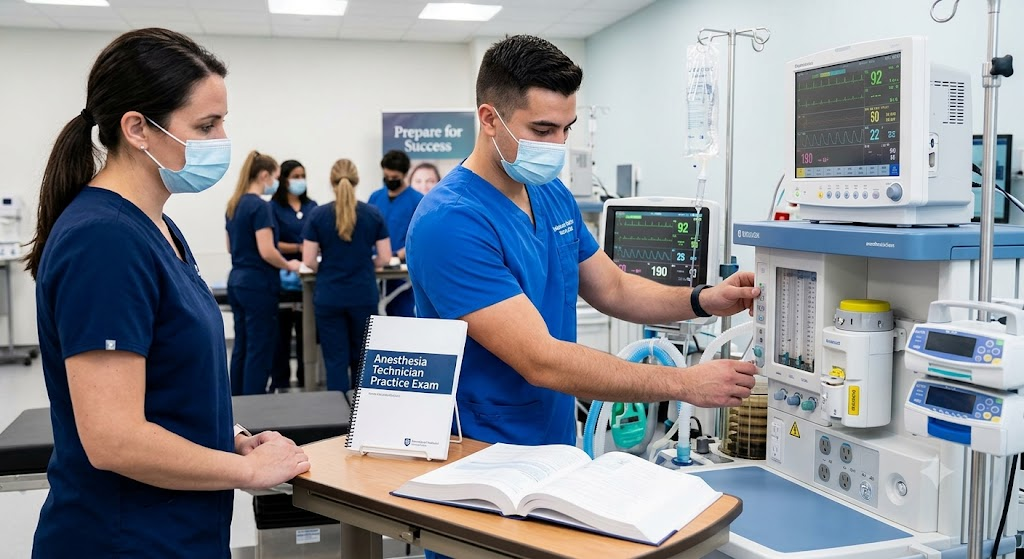
Additional Information
What the Course Entails and Exam Details
This practice exam covers a broad spectrum of topics essential to the daily responsibilities of an anesthesia technician. It meticulously evaluates proficiency in several core domains, including:
Anesthesia Equipment and Technology: Understanding the function, setup, and troubleshooting of anesthesia machines, monitors, and associated devices.
Pharmacology Fundamentals: Knowledge of common anesthetic agents, their classifications, indications, and potential side effects.
Patient Monitoring and Assessment: Interpreting vital signs, understanding invasive and non-invasive monitoring techniques, and recognizing patient physiological changes during anesthesia.
Infection Control and Safety Protocols: Adhering to sterile techniques, proper handling of hazardous materials, and maintaining a safe surgical environment.
Airway Management and Intubation Assistance: Familiarity with airway equipment, techniques for securing the airway, and assisting with intubation procedures.
Emergency Response and Crisis Management: Recognizing and responding effectively to critical situations and anesthesia-related emergencies.
The practice exam typically consists of multiple-choice questions modeled after the format and style of official certification tests. It is structured to provide immediate feedback, allowing candidates to understand the correct answers and the rationale behind them, thus facilitating effective learning and remediation.
What to Expect in the Final Exam
While the exact structure may vary slightly depending on the specific practice exam platform or official certification body, the final examination typically presents a rigorous test of knowledge and clinical understanding. Candidates can generally expect:
Exam Format: The most common format is a comprehensive, timed examination comprised entirely of multiple-choice questions. These questions are carefully crafted to test critical thinking and the application of knowledge to realistic clinical scenarios.
Passing Score Requirements: Candidates must achieve a predetermined minimum passing score to demonstrate competency. The specific passing threshold is established by the certifying organization or practice exam provider.
Time Limits: There is usually a set time limit to complete the entire examination. Time management is crucial, as candidates must efficiently progress through all questions within the allocated period.
Specific Rules: Standard testing rules, such as prohibitions against external aids, unauthorized communication, and other forms of academic dishonesty, are typically strictly enforced.
Understanding these expectations in advance is key to approaching the practice and official exams with confidence and a well-planned strategy.
How to Study and Exam Centers
Effective preparation is paramount to success on the Anesthesia Technician Practice Exam and subsequent certification. Candidates should adopt a multifaceted study approach:
Utilize a Variety of Study Resources: Supplement practice exam results with comprehensive textbooks, online courses, webinars, and educational videos focusing on anesthesia technology.
Engage in Focused Study Sessions: Prioritize areas of weakness identified through initial practice exam attempts. Create a structured study schedule and stick to it, dedicating specific time blocks to each core domain.
Review Rationale for Practice Answers: Carefully analyze the rationale provided for both correct and incorrect answers on the practice exam. This is crucial for deeply understanding the underlying concepts rather than simply memorizing answers.
Form Study Groups: Collaborating with peers can facilitate discussions, knowledge sharing, and peer teaching, which can reinforce learning and clarify complex topics.
Practice Under Exam Conditions: Simulate the actual exam experience by taking practice tests in a quiet, distraction-free environment and adhering strictly to the allotted time limit. This builds stamina and helps manage exam-day anxiety.
Regarding the exam locations for official certification tests (which this practice exam prepares you for), these are typically administered at authorized physical testing centers, such as Pearson VUE, which have locations nationwide. Some certifying bodies may also offer online proctored examinations, allowing candidates to take the test from a secure location with appropriate technology and monitoring. Practice exams themselves are most commonly delivered through online portals hosted by educational providers, professional organizations, or dedicated test preparation platforms, which are accessible from any computer with internet access.
Job Opportunities from the Course
Upon achieving certification and mastering the skills tested in this practice exam, graduates open doors to rewarding career paths in the dynamic healthcare environment. Key job titles and career opportunities include:
Anesthesia Technician (AT): The primary role, supporting anesthesia providers in hospitals, surgical centers, and other clinical facilities.
Anesthesia Technologist: A more advanced role often requiring higher levels of education and certification, with expanded responsibilities and higher earning potential.
Operating Room Assistant/Technician: Utilizing knowledge of sterile technique and OR protocols in a supporting capacity.
Clinical Sales Representative: Representing medical equipment manufacturers and educating healthcare providers on the use of anesthesia-related technology.
Education and Training Roles: Providing instruction and training to future anesthesia technicians in academic or clinical settings.
Research Assistant: Supporting clinical research studies related to anesthesia practices and technology.
Lead Anesthesia Technician/Supervisor: Taking on leadership and managerial responsibilities within an anesthesia department.
Mastering the content validated by this practice exam is a critical step towards securing these vital positions and advancing in the essential field of anesthesia technology.Here is your comprehensive study guide and SEO-optimized content, along with a custom image to accompany it.
Anesthesia Technician Practice Exam
1. Description
The Anesthesia Technician Practice Exam serves as a vital preparatory tool for individuals seeking certification or advancement in the field of anesthesia technology. This comprehensive practice assessment is specifically designed for aspiring and current anesthesia technicians who want to validate their knowledge, identify areas for improvement, and gain confidence before taking official certification examinations, such as those offered by the American Society of Anesthesia Technologists and Technicians (ASATT). The exam evaluates a candidate's understanding of the critical principles, equipment, and procedures essential for supporting anesthesia providers in various clinical settings. By engaging with this practice resource, healthcare professionals can significantly enhance their readiness for the realities of the operating room.
2. What the Course Entails and Exam Details
This practice exam covers a broad spectrum of topics essential to the daily responsibilities of an anesthesia technician. It meticulously evaluates proficiency in several core domains, including:
Anesthesia Equipment and Technology: Understanding the function, setup, and troubleshooting of anesthesia machines, monitors, and associated devices.
Pharmacology Fundamentals: Knowledge of common anesthetic agents, their classifications, indications, and potential side effects.
Patient Monitoring and Assessment: Interpreting vital signs, understanding invasive and non-invasive monitoring techniques, and recognizing patient physiological changes during anesthesia.
Infection Control and Safety Protocols: Adhering to sterile techniques, proper handling of hazardous materials, and maintaining a safe surgical environment.
Airway Management and Intubation Assistance: Familiarity with airway equipment, techniques for securing the airway, and assisting with intubation procedures.
Emergency Response and Crisis Management: Recognizing and responding effectively to critical situations and anesthesia-related emergencies.
The practice exam typically consists of multiple-choice questions modeled after the format and style of official certification tests. It is structured to provide immediate feedback, allowing candidates to understand the correct answers and the rationale behind them, thus facilitating effective learning and remediation.
3. What to Expect in the Final Exam
While the exact structure may vary slightly depending on the specific practice exam platform or official certification body, the final examination typically presents a rigorous test of knowledge and clinical understanding. Candidates can generally expect:
Exam Format: The most common format is a comprehensive, timed examination comprised entirely of multiple-choice questions. These questions are carefully crafted to test critical thinking and the application of knowledge to realistic clinical scenarios.
Passing Score Requirements: Candidates must achieve a predetermined minimum passing score to demonstrate competency. The specific passing threshold is established by the certifying organization or practice exam provider.
Time Limits: There is usually a set time limit to complete the entire examination. Time management is crucial, as candidates must efficiently progress through all questions within the allocated period.
Specific Rules: Standard testing rules, such as prohibitions against external aids, unauthorized communication, and other forms of academic dishonesty, are typically strictly enforced.
Understanding these expectations in advance is key to approaching the practice and official exams with confidence and a well-planned strategy.
4. How to Study and Exam Centers
Effective preparation is paramount to success on the Anesthesia Technician Practice Exam and subsequent certification. Candidates should adopt a multifaceted study approach:
Utilize a Variety of Study Resources: Supplement practice exam results with comprehensive textbooks, online courses, webinars, and educational videos focusing on anesthesia technology.
Engage in Focused Study Sessions: Prioritize areas of weakness identified through initial practice exam attempts. Create a structured study schedule and stick to it, dedicating specific time blocks to each core domain.
Review Rationale for Practice Answers: Carefully analyze the rationale provided for both correct and incorrect answers on the practice exam. This is crucial for deeply understanding the underlying concepts rather than simply memorizing answers.
Form Study Groups: Collaborating with peers can facilitate discussions, knowledge sharing, and peer teaching, which can reinforce learning and clarify complex topics.
Practice Under Exam Conditions: Simulate the actual exam experience by taking practice tests in a quiet, distraction-free environment and adhering strictly to the allotted time limit. This builds stamina and helps manage exam-day anxiety.
Regarding the exam locations for official certification tests (which this practice exam prepares you for), these are typically administered at authorized physical testing centers, such as Pearson VUE, which have locations nationwide. Some certifying bodies may also offer online proctored examinations, allowing candidates to take the test from a secure location with appropriate technology and monitoring. Practice exams themselves are most commonly delivered through online portals hosted by educational providers, professional organizations, or dedicated test preparation platforms, which are accessible from any computer with internet access.
Job Opportunities from the Course
Upon achieving certification and mastering the skills tested in this practice exam, graduates open doors to rewarding career paths in the dynamic healthcare environment. Key job titles and career opportunities include:
Anesthesia Technician (AT)
Anesthesia Technologist
Operating Room Assistant/Technician
Clinical Sales Representative
Education and Training Roles
Research Assistant
Lead Anesthesia Technician/Supervisor
Mastering the content validated by this practice exam is a critical step towards securing these vital positions and advancing in the essential field of anesthesia technology.
Frequently Asked Questions
Reviews
5.0
Based on 0 reviews
Leave a Review
No reviews yet. Be the first to review!