
Aircrew Fundamentals Block 2 Practice Test
$69.00
- Buy to unlock unlimited access to all Quiz questions.
- After purchase you can print a PDF of the whole quiz at any point. The PDF will contain the questions and the correct answers.
About this Exam
The Aircrew Fundamentals course is the foundational training program for individuals aspiring to become enlisted aircrew members in the United States military, particularly the Air Force. This course provides the essential knowledge and skills required before candidates move on to specialized initial qualification training for their specific aircrew roles. It is designed for newly enlisted airmen who have been selected for aviation careers, focusing on the core principles necessary for safe and effective flight operations. Block 2 represents a critical phase in this training, moving beyond general military knowledge into specific aviation concepts.
Ready to test your knowledge?
Buy Now to Access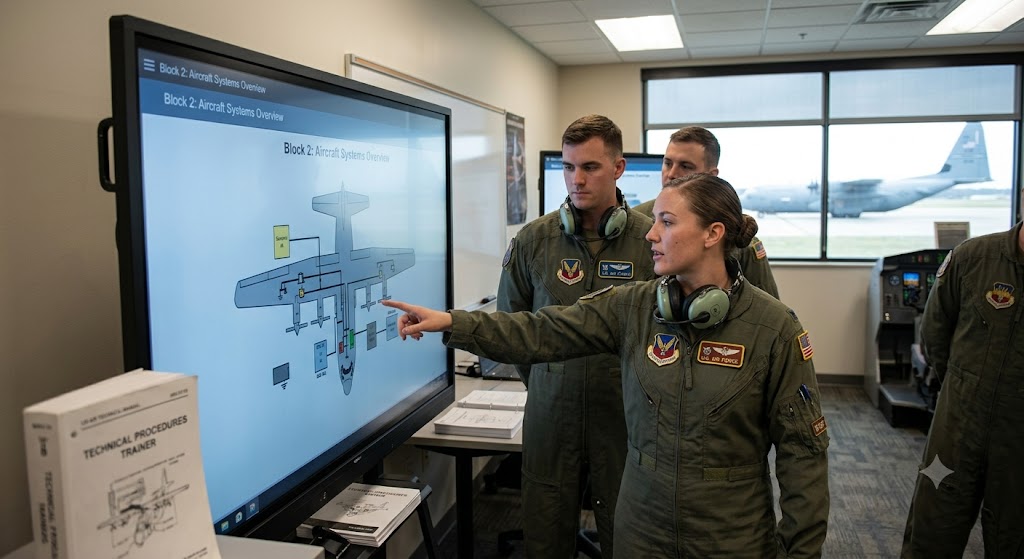
Additional Information
What the Course Entails and Exam Details
Block 2 of Aircrew Fundamentals dives into the technical
core of aviation. While specific curriculums may vary slightly, this section
typically covers:
- Aircraft
Systems Basics: An introduction to major aircraft systems, such as
electrical, hydraulic, and fuel systems, including basic troubleshooting
and normal operations.
- Aviation
Physiology: Understanding how flight affects the human body, including
the effects of altitude, G-forces, and spatial disorientation.
- Emergency
Procedures: Core principles for handling in-flight emergencies,
focusing on standardized responses and crew coordination.
- Communication
Procedures: Basic rules for using aircraft radios, interphone systems,
and standardized phraseology.
- Crew
Resource Management (CRM): An introduction to human factors in
aviation, emphasizing effective communication, leadership, and
decision-making within a flight crew.
What to Expect in
the Final Exam
The actual Aircrew Fundamentals Block 2 exam is typically a
formal, computer-based test consisting of multiple-choice questions. It
assesses a student’s retention of the technical material presented in the
block. Here’s what you can generally expect:
- Format:
Multiple-choice questions.
- Passing
Score: Military technical training often requires a high passing
score, typically 70% or 80%. Retests may be permitted but often result in
a capped final score.
- Time
Limit: There will be a set time limit, which is generally sufficient
but requires efficient time management.
- Security:
The exam is administered in a secure, proctored environment, and academic
integrity is strictly enforced.
How to Study and
Exam Centers
Preparation for this exam requires a structured approach
focusing on the provided training materials.
Actionable Study Strategies:
Master the CDCs/Handouts:
Your primary study resource is the material provided by your instructors (often
Career Development Courses or similar handouts). Know this material thoroughly.
Use Flashcards: Create
flashcards for key terms, acronyms, and specific systems components.
Practice with Sample
Questions: Utilizing this practice test and others like it is crucial for
familiarizing yourself with the types of questions and the pacing required.
Form Study Groups:
Collaborating with fellow classmates can help clarify difficult concepts and
reinforce learning.
Exam Centers:
This is not a public certification like Pearson VUE offers.
The actual exam is taken internally at the military installation where you
attend Aircrew Fundamentals training (e.g., Lackland Air Force Base).
Job Opportunities
from the Course
Successfully completing the Aircrew Fundamentals course is
the prerequisite that opens the door to specialized training for several
critical aircrew roles:
- Loadmaster:
Responsible for calculating aircraft weight and balance and supervising
the loading and unloading of cargo and passengers.
- Boom
Operator: Operates the aerial refueling boom to refuel other aircraft
in flight.
- Flight
Engineer: Monitors and operates complex aircraft systems (electrical,
mechanical, hydraulic) and assists pilots.
- Airborne
Mission Systems Specialist: Operates and maintains advanced electronic
defense and communication systems.
- Special
Operations Forces (SOF) Aircrew: Various specialized roles supporting
SOF aviation missions.
Frequently Asked Questions
Reviews
5.0
Based on 0 reviews
Leave a Review
No reviews yet. Be the first to review!