
AHA Pediatric Advanced Life Support (PALS) Practice Exam
$69.00
- Buy to unlock unlimited access to all Quiz questions.
- After purchase you can print a PDF of the whole quiz at any point. The PDF will contain the questions and the correct answers.
About this Exam
The American Heart Association (AHA) Pediatric Advanced Life Support (PALS) certification is a vital credential for healthcare professionals who respond to emergencies in infants and children. This certification, along with its comprehensive exam, validates a practitioner's ability to recognize and initiate advanced life support in critical pediatric conditions. The PALS course and the corresponding exam are designed for personnel in emergency medicine, intensive care, and critical care units, including physicians, nurses, paramedics, and other healthcare providers who need a deeper understanding of pediatric acute care management.
Ready to test your knowledge?
Buy Now to Access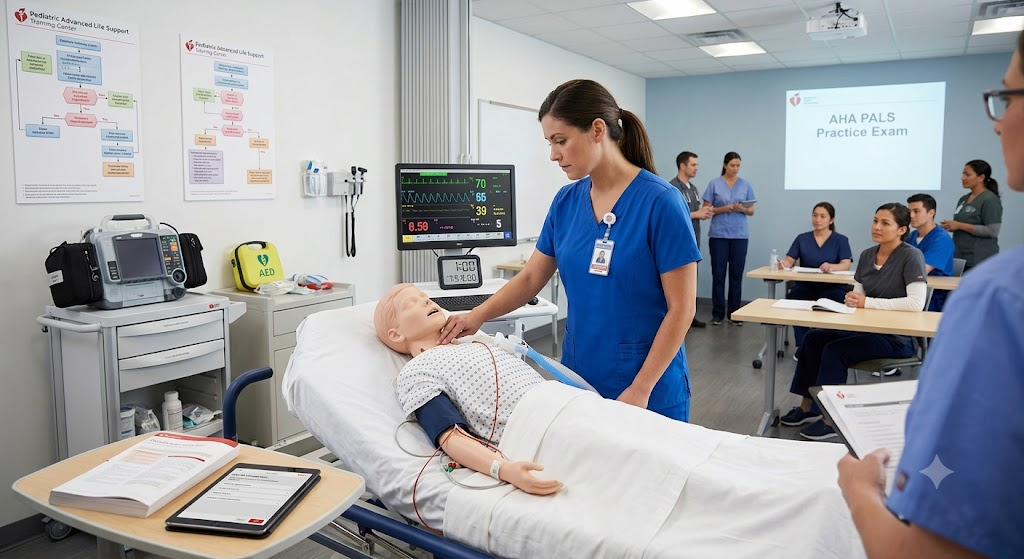
Additional Information
What the Course Entails and Exam Details
The AHA PALS course provides a structured curriculum that equips healthcare providers with the knowledge and practical skills required to effectively manage pediatric emergencies.
Core topics covered in the course include:
Pediatric Assessment: Mastering the Pediatric Assessment Triangle (PAT) and the evaluate-identify-intervene sequence for rapid visual, auditory, and hands-on evaluations.
Respiratory Emergencies: Recognizing and managing respiratory distress and respiratory failure in pediatric patients.
Shock Emergencies: Diagnosing and treating different types of shock, such as hypovolemic, distributive, cardiogenic, and obstructive shock.
Arrhythmia Recognition: Identifying and managing bradycardias, tachycardias, and cardiac arrest rhythms (PEA, Asystole, VF/pVT) in children.
Electrical Therapy: Utilizing defibrillation and synchronized cardioversion appropriately in pediatric scenarios.
Post-Resuscitation Care: Implementing immediate stabilization and transport strategies following a successful pediatric resuscitation.
The curriculum utilizes simulated pediatric emergencies to encourage active participation and critical thinking, focusing on dynamic skills stations and team dynamics.
What to Expect in the Final Exam
The comprehensive evaluation to earn your AHA PALS certification involves both a cognitive examination and a practical skills assessment.
The exam details typically include:
Cognitive Exam (Written): This component consists of multiple-choice questions derived from the official AHA PALS Provider Manual. To pass, candidates generally need to achieve a minimum score of 84% on this written portion.
Skills Stations (Practical): This segment requires candidates to demonstrate proficiency in various core skills through dynamic case scenarios, often called 'megacodes.' Participants must successfully manage pediatric respiratory and cardiac arrest scenarios within a simulated team environment, effectively leading the resuscitation team.
Format: The written exam is often administered on a computer at the training center, while the skills exam is proctored by an AHA instructor.
Rules: The PALS cognitive exam is usually closed-book, though recent updates may allow specific algorithm references (verify with your center). Passing both components (written and skills) is mandatory to obtain the two-year certification card.
How to Study and Exam Centers
Preparation for the AHA PALS exam demands consistent review of the official provider material and hands-on practice. Here are actionable study strategies:
Official Provider Manual: This is your primary resource. Dedicate ample time to studying the AHA PALS Provider Manual, emphasizing the evidence-based guidelines and treatment algorithms.
Practice with Purpose: Don’t just memorize definitions; practice using the Pediatric Assessment Triangle and moving through the algorithms with simulated scenarios. Practice with colleagues or mentors.
PALS Practice Exams: Actively use a variety of online PALS practice tests and quizzes. These resources help identify knowledge gaps and simulate the format of the written exam questions.
Review Pharmacology: Understand pediatric medication dosages, indications, and administration routes for drugs commonly used in resuscitation (e.g., Epinephrine, Amiodarone, Atropine).
Take a Preparatory Class: Many organizations offer pre-PALS workshop sessions specifically focused on ECG recognition and basic resuscitation skills before the full provider course.
Job Opportunities from the Course
Earning your AHA PALS certification validates critical, high-demand skills in acute pediatric care, opening significant career paths within healthcare systems. Professionals holding this certification are highly valued in the following roles and settings:
Registered Nurse (RN): Critical in Emergency Departments (ED), Pediatric Intensive Care Units (PICU), and Neonatal Intensive Care Units (NICU).
Paramedic/Advanced EMT: Essential for pre-hospital care and transport of critically ill children.
Respiratory Therapist (RT): Integral to managing respiratory emergencies and mechanical ventilation in pediatrics.
Physician Assistant (PA) and Nurse Practitioner (NP): Provide advanced assessment and management in emergency and acute settings.
Pediatric Hospitalist Physicians: Specialize in caring for hospitalized pediatric patients.
Anesthesia Providers: Vital for pediatric patients requiring sedation or anesthesia.
Flight Paramedic/Flight Nurse: Required for air medical transport teams treating pediatric patients.
Frequently Asked Questions
Reviews
5.0
Based on 0 reviews
Leave a Review
No reviews yet. Be the first to review!