
AFAP Board Practice Exam
$69.00
- Buy to unlock unlimited access to all Quiz questions.
- After purchase you can print a PDF of the whole quiz at any point. The PDF will contain the questions and the correct answers.
About this Exam
The AFAP Board Exam, administered by the American Fitness Accreditation Program, is a rigorous certification that serves as a cornerstone for aspiring health and fitness professionals. This comprehensive examination is designed to assess the knowledge, skills, and practical abilities required to become a Certified Personal Trainer (CPT) and other specialized fitness roles. It is specifically tailored for individuals dedicated to entering the health and wellness industry, ensuring they possess a foundational understanding of sports science, program design, and client safety. Whether you are a newcomer to the field or an experienced enthusiast seeking professional validation, the AFAP Board Exam is your key to a credible and impactful career.
Ready to test your knowledge?
Buy Now to Access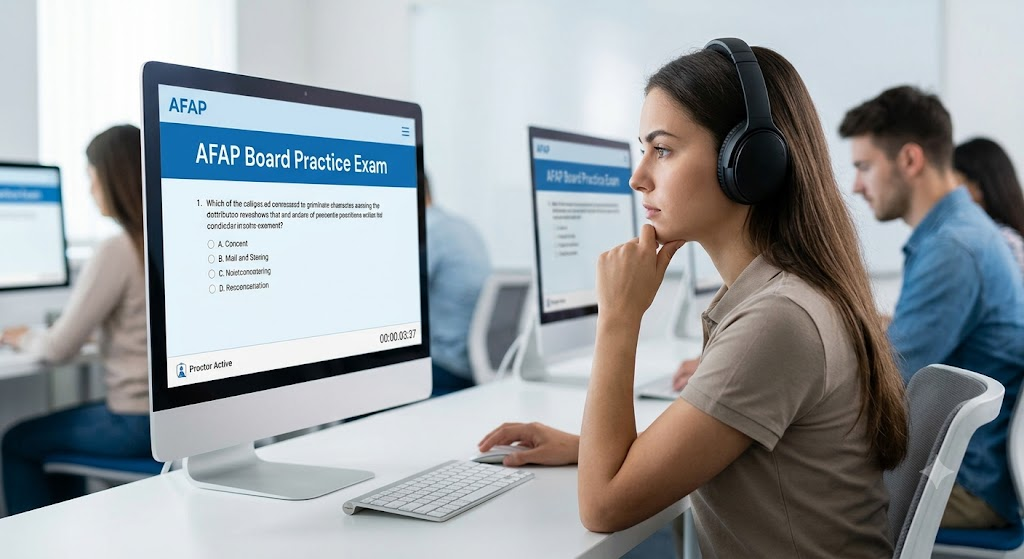
Additional Information
What the Course Entails and Exam Details
This certification course provides a deep dive into the core principles of fitness. The curriculum blends academic theory with practical application, focusing on several key domains:
Human Anatomy and Physiology: Understanding musculoskeletal, cardiorespiratory, and nervous system function.
Biomechanics and Kinesiology: Mastering the principles of human movement and correct exercise technique.
Client Assessment and Screening: Learning how to safely evaluate a client's current fitness level, health history, and goals.
Program Design and Implementation: Developing individualized, periodized training plans for a wide variety of populations.
Nutrition and Weight Management: Essential concepts of macronutrients, micronutrients, and hydration for performance and health.
Professional Responsibilities and Ethics: Building business acumen, adhering to scope of practice, and maintaining client confidentiality.
The exam itself is a structured assessment that requires candidates to demonstrate mastery in each of these areas.
What to Expect in the Final Exam
The final AFAP Board Exam is a comprehensive, multi-component test. To be successful, candidates must navigate a computer-based written portion and, depending on the specific track, a practical evaluation.
Format: The written exam primarily consists of multiple-choice questions (typically 120–150 questions), assessing theoretical knowledge. A separate, hands-on practical component is often required, where candidates must demonstrate exercise guidance, client coaching, and assessment techniques in a real-world setting, evaluated by a certified examiner.
Passing Score: The required passing score varies slightly by specific program version but generally falls around a scaled score of 70% or higher for both the written and practical sections. You must pass both to earn the certification.
Time Limits: Candidates are typically given 2 to 3 hours to complete the written portion. The practical exam has specific time slots for each station or scenario, adding up to roughly an additional 1 to 1.5 hours.
Rules: The exam is typically proctored. Physical exams are held at authorized testing centers. For online versions, secure proctoring software with live observation is mandatory. No open-book materials are allowed.
How to Study and Exam Centers
Preparation is paramount for the AFAP Board Exam. Here are actionable strategies to build your confidence and knowledge:
Leverage Official AFAP Resources: Utilize the comprehensive textbook, study guide, and practice quizzes provided as part of your course enrollment.
Focus on the Exam Blueprint: AFAP provides a content outline showing the weight of each domain. Prioritize your study time on high-weighted areas.
Take Full-Length Practice Exams: Simulate the real experience with timed, online AFAP Board Practice Exams. This helps with time management and identifies knowledge gaps.
Review Practical Skills: Don't just read about proper form. Practice all exercises and assessment techniques, preferably with a mentor or peer to give you feedback.
Create Flashcards: Master tricky anatomical terms, formulas (like target heart rate), and key definitions.
Exam Centers and How to Take the Exam: The AFAP Board Exam is accessible through multiple avenues:
Online Proctoring: For many candidates, the easiest path is via secure online proctoring, taken from your home computer through AFAP’s authorized partner platform.
Authorized Fitness Schools: Many fitness academies and colleges are certified AFAP partners and will host physical, proctored exam dates, especially for the practical component.
Specific Testing Centers: AFAP coordinates with national testing center networks to provide secure, in-person computer labs for the written portion of the exam. Contact AFAP directly to find the nearest location to you.
Job Opportunities from the Course
A certified professional with an AFAP credential unlocks a wide range of rewarding career paths. Some direct job titles and paths include:
Certified Personal Trainer (CPT): Working one-on-one with clients in gyms, studios, or private settings.
Group Fitness Instructor: Leading classes like HIIT, strength training, or yoga (additional specialized certs may apply).
Corporate Wellness Coordinator: Designing and implementing health programs within large companies.
Fitness Manager / Director: Overseeing personal training departments or gym operations.
Weight Management Specialist: Providing guidance on lifestyle and nutritional habits for sustainable health.
Online Fitness Coach: Coaching clients globally through digital platforms.
Corrective Exercise Specialist: Helping clients improve movement patterns and recover from imbalances (specialized track).
Performance Enhancement Specialist: Working with athletes on speed, agility, and power (specialized track).
Frequently Asked Questions
Reviews
5.0
Based on 0 reviews
Leave a Review
No reviews yet. Be the first to review!