
Advanced Airway and Ventilation Practice Test
$69.00
- Buy to unlock unlimited access to all Quiz questions.
- After purchase you can print a PDF of the whole quiz at any point. The PDF will contain the questions and the correct answers.
About this Exam
The Advanced Airway and Ventilation practice test is designed for high-level healthcare providers—including paramedics, critical care nurses, respiratory therapists, and emergency physicians—who must master complex airway management. This exam validates a clinician’s ability to assess, plan, and execute airway interventions under pressure, ranging from basic adjuncts to advanced surgical techniques and mechanical ventilation management. It is an essential step for those seeking to certify their expertise in resuscitation and critical care transport.
Ready to test your knowledge?
Buy Now to Access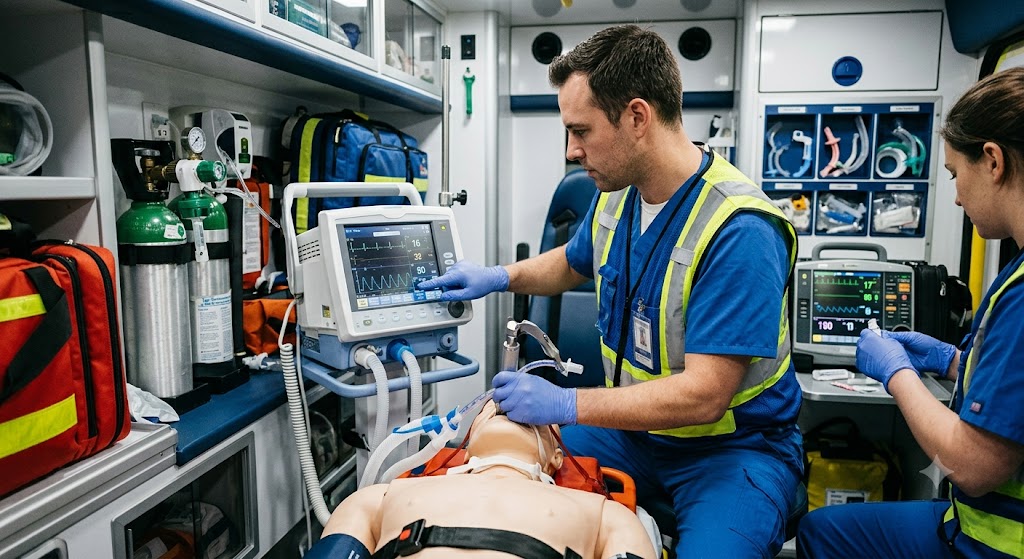
Additional Information
What the Course Entails and Exam Details
This comprehensive practice exam covers the full spectrum of
airway and ventilation management. Students will review difficult airway
algorithms, rapid sequence intubation (RSI) pharmacology, surgical airway
techniques (such as cricothyrotomy), and non-invasive ventilation strategies
like CPAP and BiPAP. A significant portion of the material focuses on initial
mechanical ventilator setup, ongoing troubleshooting, and the physiological
management of ventilated patients across diverse clinical scenarios.
What to Expect in the Final Exam
The final cognitive exam is typically a rigorous, timed
assessment delivered in a multiple-choice format. Candidates can expect
approximately 100 questions that test both theoretical knowledge and clinical
application. The passing standard is high, often requiring a minimum score of
80%, reflecting the critical nature of these skills. Depending on the specific
certifying body, this cognitive test is often paired with a separate, hands-on
psychomotor skills evaluation to confirm physical competency.
How to Study and Exam Centers
To prepare effectively, candidates should engage in targeted
retrieval practice. Using high-quality question banks—like this practice
test—is essential for identifying knowledge gaps and becoming familiar with the
style of challenging, scenario-based questions. Review current guidelines from
the American Heart Association (AHA) and the Difficult Airway Society. The
official, proctored exam is typically administered through authorized training
centers, university medical programs, or professional testing portals,
sometimes using remote proctoring technology.
Job Opportunities from the Course
Earning this advanced certification significantly enhances
career prospects in acute and critical care environments. It signals high-level
proficiency to employers across various medical settings.
- Critical
Care Paramedic
- Flight
Paramedic / Flight Nurse
- Emergency
Department Registered Nurse (RN)
- Intensive
Care Unit (ICU) Nurse
- Respiratory
Therapist (RRT)
- Tactical
Medical Provider
Frequently Asked Questions
Reviews
5.0
Based on 0 reviews
Leave a Review
No reviews yet. Be the first to review!