
Academic Block 1 UPT Phase 2.5 – Aerospace Physiology (AP 190) Practice Test
$69.00
- Buy to unlock unlimited access to all Quiz questions.
- After purchase you can print a PDF of the whole quiz at any point. The PDF will contain the questions and the correct answers.
About this Exam
Welcome to the definitive guide for the Academic Block 1 UPT Phase 2.5 – Aerospace Physiology (AP 190) Practice Test. This rigorous examination is a critical milestone for student pilots undergoing Undergraduate Pilot Training (UPT) in the United States Air Force. Designed specifically for aviators, the AP 190 course bridges the gap between theoretical human physiology and the extreme physical demands of flight. This exam ensures you possess the necessary knowledge to recognize, prevent, and manage physiological incidents in the high-performance environment, safeguarding both your life and the mission. Success in this block is mandatory for progression to flight operations.
Ready to test your knowledge?
Buy Now to Access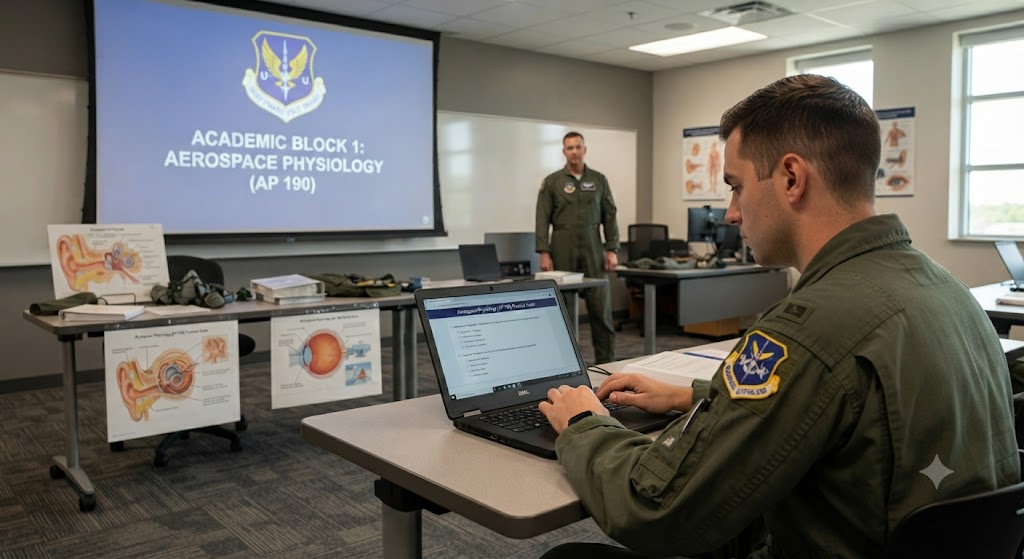
Additional Information
What the Course Entails and Exam Details
The Aerospace Physiology (AP 190) course is an intensive
curriculum that delves into the human body's response to the flight
environment. The syllabus covers a wide array of complex topics essential for
safe flight operations. Core subjects include the physics of the atmosphere and
gas laws (Boyle's, Henry's, Dalton's, Charles's Laws) as they relate to
pressure changes. The course provides in-depth training on hypoxia (types,
symptoms, and treatment), hyperventilation, trapped gas disorders, and
decompression sickness. Furthermore, students learn about the physiological
effects of G-forces (G-LOC, AGSM), spatial disorientation, vision in flight,
thermal stress, and the comprehensive use of oxygen equipment and survival
gear. The final exam rigorously tests your mastery of these critical
life-saving subjects.
What to Expect in the Final Exam
The AP 190 final exam is typically a proctored, closed-book,
multiple-choice examination administered via the UPT academic learning
management system. The exam is designed to be challenging, assessing not just
rote memorization but your ability to apply physiological concepts to
real-world in-flight scenarios. While the exact number of questions may vary
slightly by training wing, students can generally expect between 50 and 75
questions. A passing score of 85% or higher is strictly enforced, reflecting
the critical nature of the subject matter. You will typically be allotted a
specific timeframe, often 90 minutes, to complete the test. The questions often
utilize scenarios, requiring you to identify symptoms of hypoxia or the correct
G-awareness maneuver under pressure.
How to Study and
Exam Centers
To successfully prepare for the UPT Phase 2.5 Aerospace
Physiology Practice Test, a multi-faceted study approach is essential. First,
thoroughly review all official course materials, lecture slides, and the
Aerospace Physiology student handbook. Focus heavily on understanding the cause
and effect relationships of physiological events, rather than just
definitions. Utilize active recall techniques by using flashcards for key
definitions, gas laws, and symptoms. Creating mnemonic devices for the stages
of hypoxia or the types of spatial disorientation can be highly effective. Taking
the official AP 190 practice test is crucial; treat it as a real exam to
identify weak areas. Form study groups to quiz each other on emergency
scenarios. The final exam is administered on-base at your specific UPT training
wing (e.g., Columbus AFB, Laughlin AFB, Vance AFB, Sheppard AFB) within the
designated academic testing center.
Job Opportunities
from the Course
While passing the Aerospace Physiology (AP 190) exam is not
a standalone certification that grants a civilian job title, it is an
indispensable and mandatory component of earning your wings as a rated USAF
Aviator. This course is a foundational requirement for careers as an Air Force
Pilot or Combat Systems Officer (CSO). Successfully completing this block
unlocks the subsequent phases of flight training, ultimately leading to
qualification in specific aircraft weapon systems. The completion of AP 190
signifies that you are medically and physiologically qualified to handle the
rigors of military flight operations, paving the way for a career commanding
advanced aircraft such as the F-22, F-35, C-17, KC-135, or MQ-9 Reaper.
Frequently Asked Questions
Reviews
5.0
Based on 0 reviews
Leave a Review
No reviews yet. Be the first to review!