
AAERT Digital Reporter Equipment Practice Exam.
$69.00
- Buy to unlock unlimited access to all Quiz questions.
- After purchase you can print a PDF of the whole quiz at any point. The PDF will contain the questions and the correct answers.
About this Exam
The AAERT Digital Reporter Equipment Practice Exam is a crucial preparation tool designed for aspiring legal professionals seeking certification as an AAERT Certified Electronic Reporter (CER).
This practice test is tailor-made for individuals aiming to demonstrate their proficiency in the specialized equipment, software, and procedural knowledge required for digital court and deposition reporting.
Success in this arena validates your readiness for a career ensuring the accurate recording and delivery of legal proceedings in a modern, electronic format.
Sample Questions
Explanation:
Explanation:
Explanation:
Explanation:
Explanation:
Ready to test your knowledge?
Buy Now to Access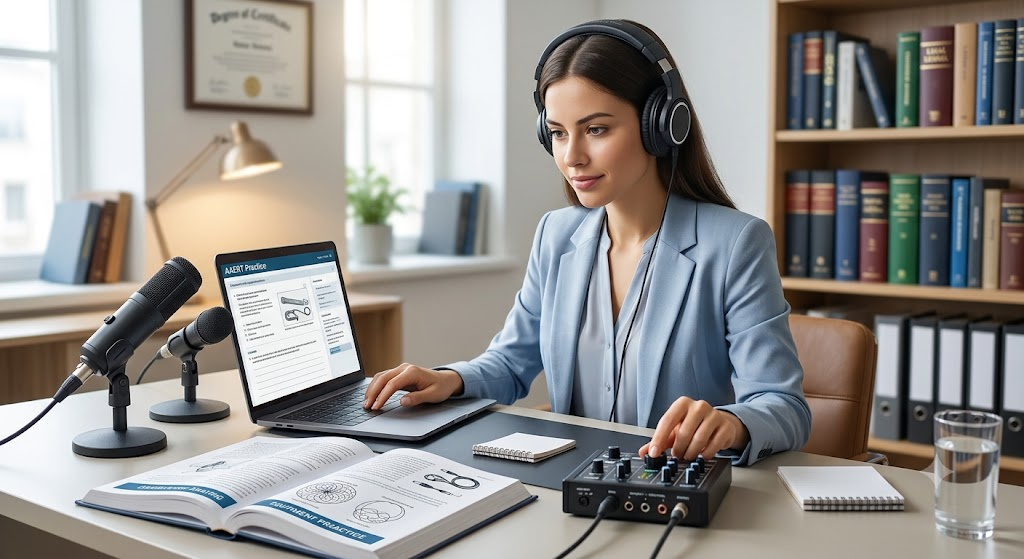
Additional Information
What the Course Entails and Exam Details
While not a formal course in itself, preparing for this practice exam requires knowledge across key areas essential for digital reporting:
Equipment Mastery: Understanding various types of microphones (cardioid, omni-directional, boundary, etc.), XLR cables, digital mixers, power sources, and proper setup for different recording environments.
Software Proficiency: Knowledge of modern digital reporting software functions, including multi-channel recording, confidence monitoring, and basic navigation.
Recording Procedures: Familiarity with AAERT best practices for audio quality, troubleshooting, annotations, speaker identification, and timestamping.
Procedural Knowledge: Understanding professional ethics, confidentiality rules, etiquette in courtroom and remote proceedings, and the wider role of the digital reporter within the legal system.
The exam details primarily relate to the practice format, which aims to mirror the knowledge expectations of the actual CER knowledge examination with a heavy emphasis on equipment and technical specifications.
What to Expect in the Final Exam
For this specific [AAERT Digital Reporter Equipment Practice Exam], you can typically expect the following:
Format: The primary component is a proctored multiple-choice knowledge assessment that tests your technical and procedural knowledge. Some versions may also include a simulated technical readiness check or practical simulation scenario.
Content Focus: Expect a heavy concentration on equipment types, audio quality principles, software functions, setup, and troubleshooting related to digital reporting. It is essentially a proctored test of your equipment readiness.
Passing Score: A passing score, often set at a high percentage (like 80% or higher), is required to demonstrate adequate competence in technical readiness, as determined by the testing body's standards. This practice exam is often non-negotiable for identifying issues.
Time Limit: There will likely be a specific time limit within which you must complete the examination.
Rules: Strict adherence to proctoring guidelines, technical requirements (internet speed, webcam, headset), and the integrity of the examination process are mandatory. The actual "Equipment Practice Exam" might be a critical, proctored step required before you can sit for the full certification knowledge exam, specifically to ensure technical compatibility and equipment readiness.
How to Study and Exam Centers
Effective study and successful completion require a combination of resources and practical practice:
Study Strategies:
Utilize Official AAERT Resources: Study the AAERT Best Practices Guide and the Exam Specification blueprint for the CER certification.
Practice with Real Equipment: Gain hands-on experience setting up, testing, and troubleshooting professional audio recording equipment (microphones, mixers, and software).
Use Practice Questions and Materials: Work through dedicated study guides, practice quizzes, and the practice exam itself. Many candidates find success through structured prep courses (offered by external schools, not AAERT directly).
Leverage the Practice Exam Itself: The AAERT considers a proctored practice test essential to identify and resolve any technical or knowledge gaps before the real certification attempts.
Exam Centers and Locations:
Online Portals: The main exam and the practice exam are typically administered online via specific proctored testing platforms (live proctors or AI-based systems). You can typically take them from a suitable, quiet location with reliable internet and equipment.
Physical Centers & Schools: AAERT might also authorize some physical testing centers or specific approved schools to administer the exams in person, especially the practical components. You should check the official AAERT website for the most up-to-date information on available testing formats and locations. Ensure your hardware and software meet all specified minimum requirements.
Job Opportunities from the Course
A successful AAERT Digital Reporter Equipment Practice Exam is a major step toward achieving the CER certification, which can unlock diverse and rewarding career paths within and adjacent to the legal field. Key job opportunities include:
Electronic Court Reporter
Deposition Reporter
Hearing Reporter (for administrative or public hearings)
Trial Technician
Digital Transcriptionist (complementary skill, often connected)
Remote Proceedings Coordinator
Legal Assistant or Secretary (with enhanced digital reporting skills)
Completing this vital step demonstrates your professional commitment and readiness for the precise technical demands of modern digital reporting.
Frequently Asked Questions
Reviews
5.0
Based on 0 reviews
Leave a Review
No reviews yet. Be the first to review!