
7B Wood Destroying Pests Practice Test
$69.00
- Buy to unlock unlimited access to all Quiz questions.
- After purchase you can print a PDF of the whole quiz at any point. The PDF will contain the questions and the correct answers.
About this Exam
The 7B Wood Destroying Pests category is a specialized certification for pest management professionals. It is specifically designed for individuals who will be conducting inspections and applying pesticides to control organisms that attack and compromise wood structures.
This exam is essential for anyone working in structural pest control, including:
Pest Control Operators (PCOs) specializing in termite and wood-boring beetle control.
Field Representatives conducting inspections for real estate transactions (often requiring the Wood Destroying Organisms or WDO report).
Applicators performing preventative and remedial treatments.
Passing this exam demonstrates a high level of competency in understanding the biology, habits, and proper control methods for pests like subterranean termites, drywood termites, carpenter ants, and wood-boring beetles.
Ready to test your knowledge?
Buy Now to Access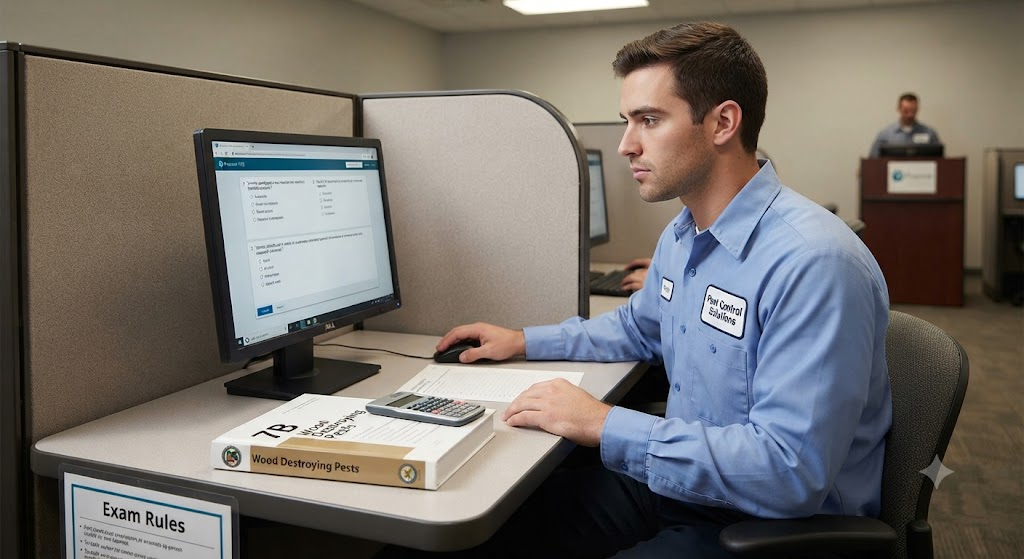
Additional Information
What the Course Entails and Exam Details
The curriculum for the 7B category is rigorous and covers several core domains. To pass the exam, you must demonstrate mastery of the following areas:
Pest Identification: You must be able to differentiate between various types of wood-destroying pests. This includes identifying the insects themselves (e.g., distinguishing winged termites from winged carpenter ants) and recognizing the distinct damage they cause (e.g., the different fecal pellets of drywood termites vs. subterranean shelter tubes).
Pest Biology and Behavior: A deep understanding of the life cycles, colony structure, and environmental needs of pests is crucial. You need to know when they swarm, where they nest, and how they interact with the structure.
Inspection Techniques: The exam will test your ability to perform a thorough inspection. This includes knowing where to look (crawlspaces, attics, mudsills, etc.) and what tools to use (flashlights, moisture meters, probes).
Control Methods: This is the heart of the course. You must be knowledgeable about the various treatment options, including:
Soil Treatments: Using liquid termiticides.
Fumigation: The process and safety requirements for tenting a structure.
Wood Treatments: Applying borates or other preservatives.
Mechanical/Physical Alterations: Removing infested wood or correcting moisture conditions.
Pesticide Safety and Labels: You must understand how to read and interpret pesticide labels, calculate dosages, handle chemicals safely, and protect yourself, the public, and the environment.
Laws and Regulations: This includes federal, state, and local regulations governing pesticide application, reporting, and WDO reporting standards.
What to Expect in the Final Exam
The format of the 7B Wood Destroying Pests exam can vary slightly by state or certifying body, but it generally follows a standard structure.
Format: The exam is almost always a closed-book, proctored multiple-choice test. It may be administered on a computer or using a traditional paper-and-pencil format. In some jurisdictions, it may be combined with a general core exam and other category exams (like 7A or 7C).
Number of Questions: The number of questions can range from 50 to 100, depending on the complexity of the exam in your region.
Time Limit: You will typically be given a set amount of time, often 2 to 3 hours, to complete the exam. This is generally sufficient if you are well-prepared.
Passing Score: The passing score is usually set at 70% or higher. This high bar ensures that only qualified individuals are licensed to perform this critical work.
What to Bring: You will need valid government-issued photo identification. You may be allowed to use a simple calculator for pesticide dosage calculations (check with your testing center). Cell phones, study materials, and notes are strictly prohibited.
How to Study and Exam Centers
Passing the 7B exam requires focused preparation. Relying solely on on-the-job experience is rarely enough.
Study the Official Manual: Your state’s Department of Agriculture or Structural Pest Control Board (SPCB) will provide an official study manual (often called the "Category 7B Manual" or similar). This is your primary resource. Read it cover-to-cover, multiple times.
Use a Comprehensive Practice Test: One of the most effective study strategies is to use a high-quality 7B Wood Destroying Pests Practice Exam. These practice tests simulate the actual exam environment, format, and difficulty. Taking practice tests helps you:
Identify knowledge gaps.
Get used to the wording of the questions.
Improve your time management skills.
Build confidence.
Focus on Weak Areas: Don't just keep taking the same quiz. After each practice test, review the questions you missed. Go back to the manual and deeply understand the correct answer and the reason why it is correct.
Understand the Label: Pay special attention to the section in your manual about reading pesticide labels. Many exam questions are pulled directly from sample label information.
Where to Take the Exam:
State-Approved Testing Centers: In many states, the exam is administered by a third-party testing service, such as Pearson VUE or PSI. You will need to create an account on their website, locate a testing center near you, and schedule your exam date.
Department of Agriculture Offices: Some state agricultural departments offer the exam directly at their regional offices.
Authorized Industry Schools: Sometimes, approved pest control associations or community colleges host certification workshops that conclude with the exam.
Job Opportunities from the Course
Successfully passing the 7B Wood Destroying Pests exam and obtaining your license opens the door to a stable and respected career path in the pest control industry. This certification is highly sought after because it involves specialized knowledge and is essential for real estate transactions.
Here are the specific job titles and career paths this certification unlocks:
Licensed Pest Control Operator (PCO): With this certification, you can own or operate a pest control business specializing in structural pests.
Branch 3 Field Representative: In states like California, this title authorizes you to act as an agent for a pest control company, conducting inspections, recommending treatments, and signing WDO reports.
Termite Technician/Applicator: You can work as a skilled technician, performing the actual treatments and applications for termite and wood-pest control.
WDO Inspector: You can specialize solely in performing Wood Destroying Organism inspections for homebuyers, sellers, and real estate agents. This is a critical and high-demand role in the housing market.
Sales Inspector: You can work for a pest control company, inspecting homes and businesses, identifying pest problems, and selling the company’s services.
Integrated Pest Management (IPM) Specialist: This certification enhances your ability to practice IPM in structural settings, focusing on long-term prevention and sustainable control of wood-destroying pests.
Preparing for the 7B exam is a significant step in your professional journey. By using the right study strategies and utilizing a comprehensive 7B Wood Destroying Pests Practice Test, you can pass with flying colors and launch a successful career in structural pest control.
Frequently Asked Questions
Reviews
5.0
Based on 0 reviews
Leave a Review
No reviews yet. Be the first to review!