
West Virginia CDL General Knowledge Test Simulator
$69.00
- Buy to unlock unlimited access to all Quiz questions.
- After purchase you can print a PDF of the whole quiz at any point. The PDF will contain the questions and the correct answers.
About this Exam
The West Virginia Commercial Driver's License (CDL) General Knowledge Test is the essential first step for anyone aspiring to operate commercial motor vehicles professionally within the Mountain State. This comprehensive written exam is designed for individuals wishing to obtain a Class A, Class B, or Class C CDL. It assesses your foundational understanding of the laws, safety regulations, and operational practices required to safely handle a commercial vehicle. Whether your goal is to traverse the interstate in a tractor-trailer or maneuver a delivery truck through city streets, successfully navigating this test is prerequisite to moving on to vehicle-specific endorsements and skills training.
Ready to test your knowledge?
Buy Now to Access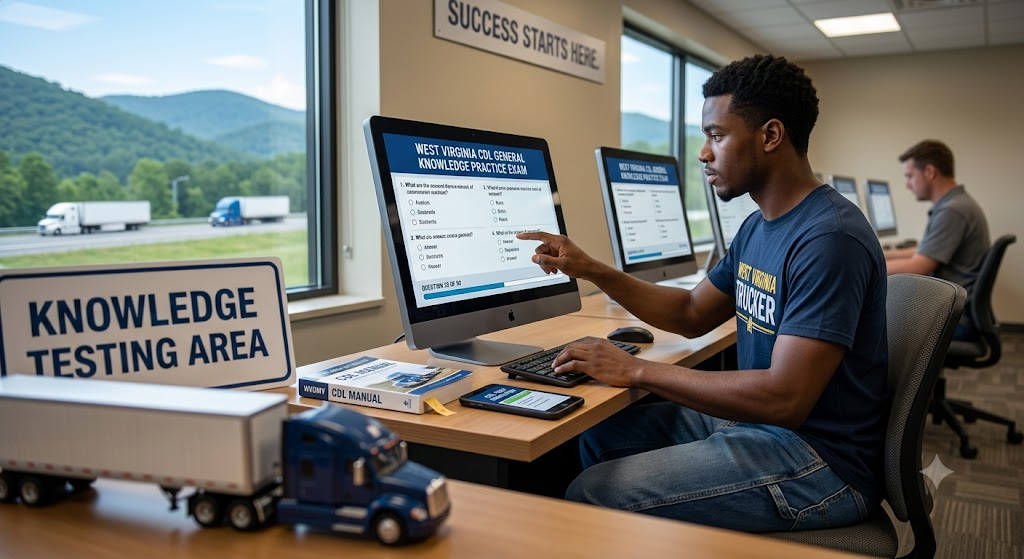
Additional Information
What the Course Entails and Exam Details
This examination is not a course, but rather a robust evaluation of the core concepts detailed in the official West Virginia CDL Manual. Proper preparation entails a deep study of several critical domains. These key knowledge areas include:
Safe Driving Practices: Maintaining safe following distances, managing speed and space, the importance of visual search, and seeing and communicating with other drivers.
Vehicle Inspection: Understanding the thorough pre-trip, en-route, and post-trip inspection processes to identify potential safety defects before they become hazards.
Basic Vehicle Control: Mastering the fundamentals of shifting gears, braking, and backing maneuvers.
Cargo Management: The principles of loading, distributing, and securing cargo safely, and an introduction to hauling hazardous materials.
Adverse Driving Conditions: Adjusting driving techniques for night driving, winter weather, fog, and steep, winding West Virginia mountain roads.
Emergency Procedures and Regulations: Protocols for handling vehicle breakdowns, accidents, railroad-highway crossings, and knowledge of Federal Motor Carrier Safety Regulations.
What to Expect in the Final Exam
The final exam for the West Virginia CDL General Knowledge is a computerized knowledge test typically administered at a official West Virginia Division of Motor Vehicles (WVDMV) location. Here are the specific details of what you can expect:
Format: The exam consists entirely of multiple-choice questions.
Number of Questions: There are 50 questions on the test.
Passing Score: A minimum score of 80% is required to pass, meaning you must answer at least 40 of the 50 questions correctly.
Time Limit: While an official, fixed time limit is not always designated, applicants are typically expected to complete the exam within a reasonable timeframe, often approximately 60 minutes.
Validity: Upon successfully passing, you will earn your Commercial Learner's Permit (CLP), which is valid for 180 days and allows you to begin practicing your skills behind the wheel under the supervision of a licensed CDL holder.
How to Study and Exam Centers
Effective preparation is the key to passing on your first attempt. Your study regimen should blend thorough reading with active testing.
The Official Manual: The West Virginia CDL Manual is your primary and most reliable source of information. It contains all the potential questions you might face. Read it from cover to cover and review key sections multiple times.
West Virginia CDL General Knowledge Test Simulator: Utilize online practice tests that specifically target the WV General Knowledge curriculum. A simulator mimics the actual exam environment, helps you identify weak areas, and builds test-day confidence. Aim to consistently achieve scores of 90% or higher on these simulators before booking your actual test.
Create a Routine: Dedicate specific times each day to study, focusing on one major chapter or section at a time. This steady progress is more effective than cramming.
Exam Centers:
To take the computerized knowledge test, you must visit a standard WVDMV Regional Office. It is highly recommended to check the WVDMV website for specific testing hours and to schedule an appointment if possible to reduce wait times. Be prepared to provide proper identification, proof of residency, and your current non-commercial driver's license.
Job Opportunities from the Course
Passing the CDL General Knowledge test and obtaining your learner's permit unlocks the door to a diverse and rewarding career in the transportation industry. Depending on the class of CDL and any endorsements you eventually earn, you can pursue a variety of specific job titles:
Tractor-Trailer Truck Driver (Class A): Operates large commercial combinations to haul freight across regional, national, or local routes.
Delivery and Route Driver (Class A/B): Manages a specific territory, delivering diverse cargo to retail and commercial clients.
Bus Driver (Class B/C with Endorsements): Provides essential public, school, or charter transportation services.
Cement Mixer or Dump Truck Operator (Class B): A critical role in the construction industry, moving materials from supply centers to job sites.
Tanker Truck Driver (Class A/B with N Endorsement): Specializes in the safe transport of liquids and gases, which often commands higher wages.
Hazmat Truck Driver (Class A/B with H Endorsement): A highly regulated position for transporting hazardous materials, which has a strong demand for skilled professionals.
Success on the West Virginia CDL General Knowledge Test is the cornerstone of a new professional path, providing a vital service that keeps the state and national economy moving.
Frequently Asked Questions
Reviews
5.0
Based on 0 reviews
Leave a Review
No reviews yet. Be the first to review!