
Ucaa Pilot Practice Test & Exam Prep | Uganda
$69.00
- Buy to unlock unlimited access to all Quiz questions.
- After purchase you can print a PDF of the whole quiz at any point. The PDF will contain the questions and the correct answers.
About this Exam
Earning your pilot license from the Uganda Civil Aviation Authority (UCAA) is a prestigious achievement, opening doors to a dynamic career in aviation within Uganda and internationally. UCAA certifications are designed for individuals with a passion for flight, ranging from recreational pilots to those aiming for commercial airline careers. Whether you are pursuing a Private Pilot License (PPL), Commercial Pilot License (CPL), or Airline Transport Pilot License (ATPL), rigorous theoretical knowledge and practical skill assessments are mandatory. Achieving these certifications validates that a pilot meets the high safety and operational standards set by UCAA, aligned with international aviation regulations, ensuring competence in navigating Uganda's airspace and beyond.
Ready to test your knowledge?
Buy Now to Access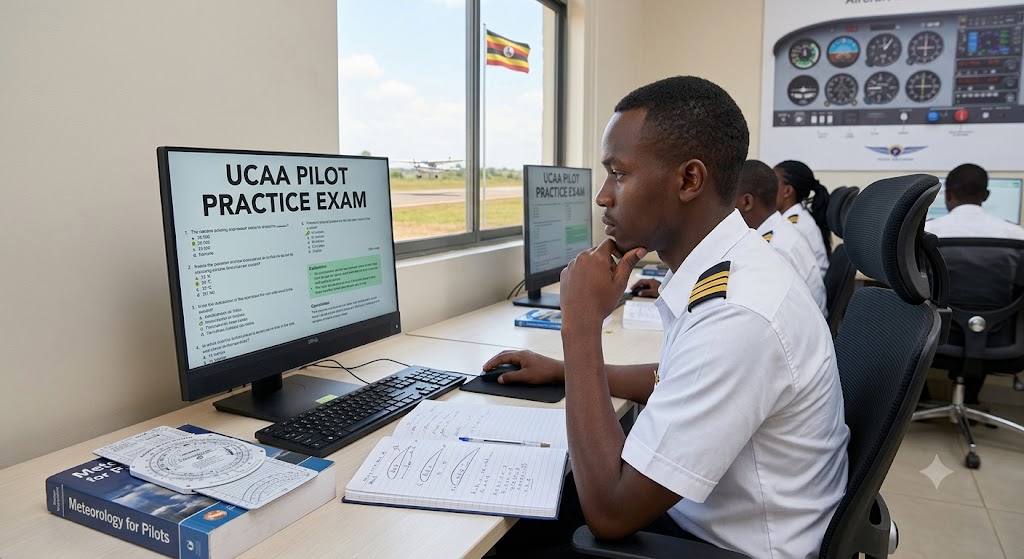
Additional Information
What the Course Entails and Exam Details
The UCAA pilot training and certification process involves a comprehensive syllabus covering critical areas of aviation knowledge. Coursework and subsequent theoretical exams delve deeply into subjects such as Air Law, focusing on regulations relevant to flight operations in Ugandan airspace and international standards. Students also study Aircraft General Knowledge, encompassing aircraft systems, engines, instruments, and airframes. The syllabus includes Meteorology for understanding weather patterns and hazards, Navigation for precise flight planning and execution, and Human Performance to manage physical and psychological challenges. Furthermore, candidates must master Flight Performance & Planning, Operational Procedures, Principles of Flight, and Communication protocols. These core topics form the foundation of a pilot's expertise, demanding thorough study and dedication.
What to Expect in the Final Exam
The final UCAA pilot theoretical exams are structured assessments demanding a high level of preparedness. Candidates typically face a series of computer-based multiple-choice examinations covering the diverse subjects outlined in the syllabus. Each subject exam has specific time limits, requiring quick and accurate thinking under pressure. To pass, students generally must achieve a minimum score, often around 70% or higher, on each subject. These exams are known for their rigor, designed to test a deep understanding of concepts rather than rote memorization. It is crucial for candidates to be familiar with the exact format and regulations specific to UCAA testing, which may include strict policies on permitted materials, identification requirements, and scheduled testing windows.
How to Study and Exam Centers
Preparing for UCAA pilot exams requires a structured and consistent study approach. Utilize official UCAA syllabi and recommended textbooks as primary resources. Create a dedicated study schedule, allocating ample time to review each subject thoroughly. Actively engage with the material by taking notes, creating flashcards, and utilizing UCAA pilot practice tests to identify knowledge gaps and refine test-taking strategies. Joining study groups with fellow students can provide valuable support and alternate perspectives. When ready for the actual exams, candidates must schedule testing through official channels provided by UCAA or authorized partners. UCAA theoretical exams are typically conducted at designated testing centers, which may include approved flight training organizations (ATOs), dedicated aviation academies, or the UCAA headquarters themselves, depending on the specific certification and testing schedule. Always verify the most current procedures and locations directly with the Uganda Civil Aviation Authority or your training institution.
Job Opportunities from the Course
Successfully obtaining a pilot license from the Uganda Civil Aviation Authority unlocks a multitude of exciting career paths in the aviation industry.
Airline Pilot
Charter Pilot
Flight Instructor
Cargo Pilot
Aerial Survey Pilot
Corporate Pilot
Private Pilot (recreational flying)
Medevac/Air Ambulance Pilot
Agricultural Pilot (Crop Dusting)
Ferry Pilot
Frequently Asked Questions
Reviews
5.0
Based on 0 reviews
Leave a Review
No reviews yet. Be the first to review!