
TSA Foundations of Information Technology Practice Exam
$69.00
- Buy to unlock unlimited access to all Quiz questions.
- After purchase you can print a PDF of the whole quiz at any point. The PDF will contain the questions and the correct answers.
About this Exam
The TSA Foundations of Information Technology exam is a fundamental assessment designed primarily for middle and high school students who are members of the Technology Student Association (TSA). This comprehensive test validates essential knowledge across a broad spectrum of IT concepts, serving as an excellent entry point for students interested in pursuing technology careers. It assesses understanding of core components, digital systems, and logical processes, offering a valuable certification for early skill verification in the rapidly evolving field of Information Technology. This exam is ideal for students who want to build a solid foundation and explore diverse roles within IT, from network administration to software development and cybersecurity.
Ready to test your knowledge?
Buy Now to Access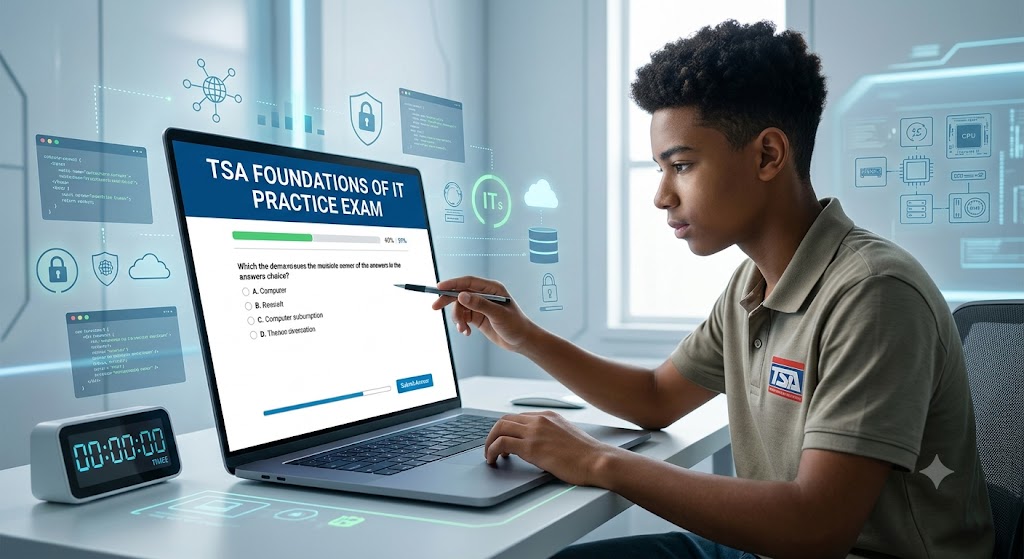
Additional Information
What the Course Entails and Exam Details
The curriculum preparing for the TSA Foundations of IT exam covers a diverse array of topics critical for understanding how modern information systems operate. Key areas typically include fundamental computer architecture, outlining the roles of major components like CPUs, memory, storage, and motherboards. Participants will dive into operating system concepts, learning about different platforms, basic command structures, and file management practices. Essential networking principles, such as understanding IP addresses, basic routing, wireless communication, and different network types (LAN, WAN), are fundamental parts of the syllabus. Furthermore, students are introduced to critical cybersecurity principles, focusing on recognizing common threats, practicing safe browsing habits, and understanding data privacy importance. Beyond hardware and software, basic programming logic, flowcharting, and an introduction to simple coding concepts might also be included, ensuring a well-rounded grasp of digital literacy and technological fluency.
What to Expect in the Final Exam
The TSA Foundations of IT final exam is typically administered as a multiple-choice test, although some versions may include other question formats such as true/false or matching scenarios. Students should be prepared for approximately 50 to 100 questions covering all the core topics outlined in the syllabus. There is usually a strict time limit for the exam, often ranging from 60 to 90 minutes, requiring efficient time management and a quick recall of knowledge. While specific passing scores can vary by state and year, a typical requirement is achieving a score of 70% or higher to receive certification. The exam environment is structured and proctored, emphasizing academic integrity and ensuring a fair assessment of each participant's technical understanding. It is crucial to review the most current official TSA guidelines for precise exam format and rules, as these can be updated periodically.
How to Study and Exam Centers
Effectively preparing for the TSA Foundations of Information Technology exam requires a combination of comprehensive study and practical application. Leverage official TSA materials, textbooks, and online resources that align with the specific exam syllabus. Creating detailed flashcards for key terms, concepts, and acronyms is highly beneficial for memorization. Utilizing practice exams and sample questions is critical to understanding the question style, managing time effectively, and identifying areas needing further review. Many students find form studies within their TSA chapters to be an excellent collaborative tool. Hands-on practice, such as exploring computer settings, experimenting with basic networking configurations, or practicing simple coding exercises, reinforces theoretical knowledge. The exam itself is typically administered during regional, state, or national TSA conferences and competitions, where designated testing areas are set up and proctored. Your TSA advisor will provide specific information on when and where the exam will take place and manage the registration process. There are generally no public testing centers like Pearson VUE for this specific high school/middle school exam, as it is integral to the TSA competitive event structure.
Job Opportunities from the Course
Achieving the TSA Foundations of Information Technology certification marks an exceptional starting point for a vast range of future career paths. While this certification itself is foundational, it equips students with the validated knowledge necessary to pursue advanced training and entry-level positions in the IT field. Common job titles and career trajectories that this solid foundation can lead toward include:
IT Support Technician: Diagnosing hardware and software issues and providing technical assistance.
Junior Network Administrator: Assisting with network setup, maintenance, and security under senior guidance.
Help Desk Analyst: The first point of contact for resolving user technical issues via phone or email.
Entry-Level Cybersecurity Analyst: Monitoring systems for security breaches and implementing protective measures with further specialization.
Web Developer: Designing and creating websites, leveraging fundamental coding and design principles.
Software Developer Trainee: Building and testing applications, applying basic programming logic.
Data Entry Specialist / Data Analyst Assistant: Managing and interpreting data, building on digital literacy and logical skills.
Technical Sales Representative: Selling technology products and services, supported by a clear understanding of technical specifications.
Frequently Asked Questions
Reviews
5.0
Based on 0 reviews
Leave a Review
No reviews yet. Be the first to review!