
TSA Forensic Technology Practice Test
$69.00
- Buy to unlock unlimited access to all Quiz questions.
- After purchase you can print a PDF of the whole quiz at any point. The PDF will contain the questions and the correct answers.
About this Exam
The TSA Forensic Science competition is a thrilling, fast-paced event designed for middle and high school students who are passionate about solving puzzles and applying scientific principles to real-world mysteries. Part of the broader Technology Student Association (TSA) curriculum, this event challenges teams to step into the shoes of forensic investigators. It provides a unique platform for aspiring young scientists, law enforcement officers, and crime scene technicians to demonstrate their skills in analyzing mock crime scenes, processing evidence, and writing comprehensive reports.
Ready to test your knowledge?
Buy Now to Access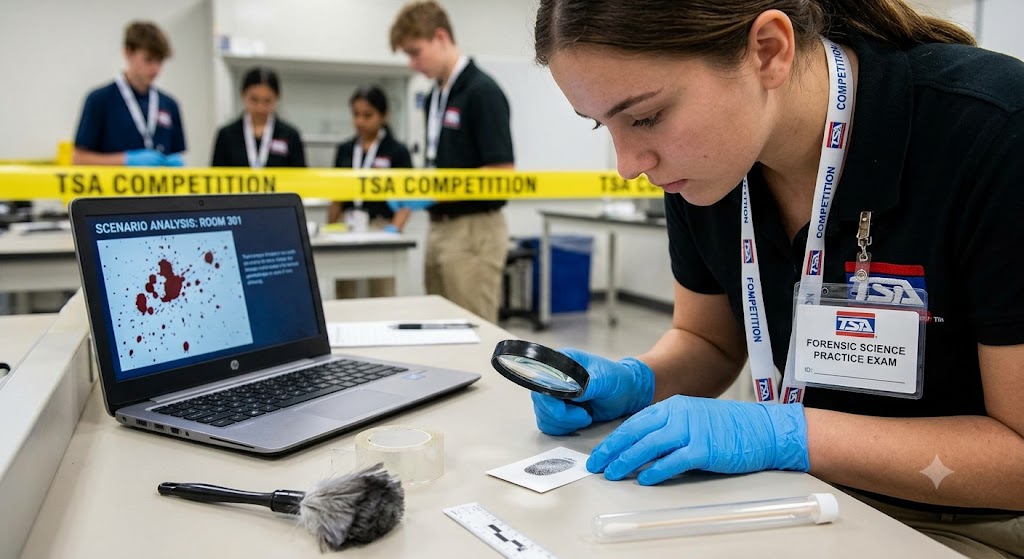
Additional Information
What the Course Entails and Exam Details
This competition is integrated into high school Career and Technical Education (CTE) pathways, serving as a hands-on application of forensic technology and theory. The course of study and competition prep cover a diverse range of foundational skills. Students will learn the entire investigative process, from the initial survey of a crime scene to the final synthesis of evidence. Key topics include. crime scene documentation (sketching, diagramming, and note-taking), evidence collection techniques (lifting latent fingerprints, gathering trace evidence, and maintaining the chain of custody), and the underlying science behind methods such as DNA profiling, forensic anthropology, and forensic entomology. A deep understanding of basic forensic science theory and analysis of crime scene scenarios is essential for success.
What to Expect in the Final Exam
The final "exam" for this competition takes place in multiple stages at TSA conferences. To qualify, students first complete a written test. This preliminary round is an individual or averaged-team exam, focusing on general forensic science knowledge, theory, and terminology. The test often includes multiple-choice questions on topics like serology, ballistics, and toxicology. Those who advance to the semifinal round participate in the main event. a mock crime scene. Semifinalist teams are given a specific scenario and limited time (typically 20 minutes) to process the scene. They must demonstrate three to four specific techniques for evidence collection, such as lifting a print or identifying a fiber. The final component is a comprehensive written crime scene analysis report, which synthesizes the team’s observations, findings, and evidence processing.
How to Study and Exam Centers
Preparation requires a mix of theoretical study and practical application. Begin by mastering a standard high school or introductory college forensic science textbook, paying close attention to the methodology of processing a crime scene and the 'chain of custody'. Make use of online resources, flashcards, and practice quizzes to solidify your knowledge of forensic theory. Create a 'CSI toolkit' as specified by current TSA guidelines and practice setting up and processing mock crime scenes with your teammates. Focus on speed, precision, and minimizing contamination. It is essential to practice writing detailed, non-subjective forensic reports. Unlike a typical standardized test, the 'Exam Centers' for the TSA Forensic Science competition are the designated locations of local, state, and national TSA conferences. The written portion may be administered online or in a quiet room at the event venue.
Job Opportunities from the Course
While this competition is for educational purposes, the rigorous skills developed can set you on a path towards a rewarding career in criminal justice and forensic science. By participating, you gain foundational knowledge and hands-on experience that are highly relevant to the following career paths.
Forensic Science Technician
Crime Scene Investigator
Evidence Custodian
Digital Forensics Analyst
Forensic Anthropologist
Biometric Examiner
Law Enforcement Officer (Federal, State, or Local)
Medical Examiner (requires extensive medical school)
Frequently Asked Questions
Reviews
5.0
Based on 0 reviews
Leave a Review
No reviews yet. Be the first to review!