
TSA Culinary Arts Practice Test
$69.00
- Buy to unlock unlimited access to all Quiz questions.
- After purchase you can print a PDF of the whole quiz at any point. The PDF will contain the questions and the correct answers.
About this Exam
The TSA Culinary Arts certification is a rigorous assessment designed for students enrolled in high school or career and technical education programs focusing on hospitality and culinary arts. This examination serves as a benchmark, validating that aspiring chefs possess the fundamental knowledge and essential practical skills required for success in the dynamic culinary industry. It is designed for students seeking to demonstrate their proficiency to potential employers or to advance into post-secondary culinary programs. By earning this certification, students showcase their commitment to professionalism and their readiness for entry-level kitchen roles.
Ready to test your knowledge?
Buy Now to Access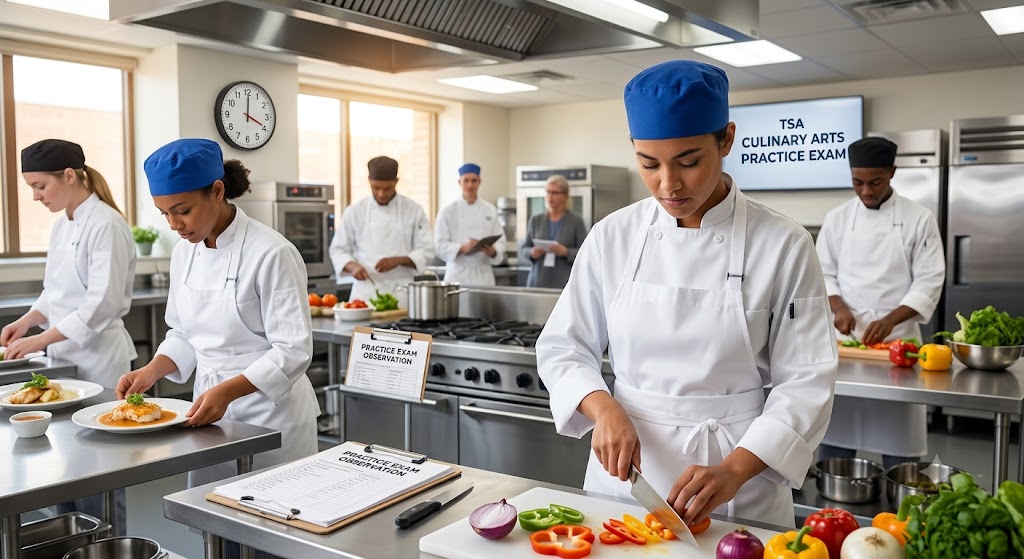
Additional Information
What the Course Entails and Exam Details
This comprehensive course curriculum covers a wide spectrum of culinary fundamentals, providing a strong theoretical and practical foundation. Core areas of focus include stringent food safety and sanitation principles, incorporating HACCP guidelines, which are paramount in any professional kitchen. Students master kitchen math, including measurements, yield calculations, and recipe conversions, essential for precision and cost control. The course extensively covers culinary terminology, equipment identification and proper usage, as well as fundamental cooking techniques, ranging from knife skills and stock preparation to various dry and moist heat cooking methods for proteins, vegetables, and starches. Furthermore, topics such as menu planning, basic nutrition, and professional workplace dynamics are integrated to prepare students for the demands of a modern culinary environment. The entire program culminates in two key examination components: a written knowledge test and a comprehensive practical skills assessment.
What to Expect in the Final Exam
The TSA Culinary Arts Final Exam is a multi-faceted evaluation that rigorously tests both conceptual understanding and hands-on proficiency. Candidates must successfully complete two distinct segments: The written portion consists of multiple-choice questions meticulously crafted to assess understanding of food safety, kitchen operations, culinary principles, and professional standards within strict time constraints. A passing score, which typically ranges from 70% to 80?pending on the specific state's implementation of the TSA standards, is required to advance. The critical practical performance assessment requires candidates to execute specific, pre-determined culinary tasks in a controlled kitchen environment within designated time limits. This hands-on evaluation demands precision in knife skills (such as various cuts like dice, julienne, and batonnet), the preparation of fundamental dishes (like mother sauces, a soup, or a key entrée component), and an unwavering adherence to safety and sanitation protocols. Evaluators judge candidates on technique, accuracy, consistency, final product quality, and strict compliance with all safety and sanitation rules, with absolute zero tolerance for safety violations. Candidates are also expected to dress in full, clean professional culinary attire and bring specific, required tools for the practical exam.
How to Study and Exam Centers
Preparing for the TSA Culinary Arts Exam requires a dedicated approach that balances theoretical knowledge with relentless practical application. Actionable study strategies include utilizing official TSA study guides and reviewing textbooks from accredited culinary programs. Repeatedly practice the essential practical skills outlined in the exam standards; mastering knife cuts and fundamental preparations until they become second nature is crucial for success under timed pressure. Consider performing mock practical exams with peers or instructors to simulate the real test environment, ensuring you can execute each task efficiently and safely within the allotted time. Online practice tests, such as the one referenced by the title, are invaluable tools for familiarizing yourself with the format and content of the written exam, allowing you to identify and address knowledge gaps.
The written and practical exams are typically administered through the student’s participating high school or technical education center which hosts TSA Competitive Events. The practical portion necessitates a properly equipped professional kitchen laboratory within an authorized testing location. Students should coordinate with their culinary instructors or school administration to register for the exam, which is often held at specified times throughout the academic year.
Job Opportunities from the Course
Earning the TSA Culinary Arts certification significantly enhances a student's employability and provides a direct pathway into diverse entry-level roles within the food service industry. Successful completion unlocks career opportunities such as: Line Cook or Prep Cook Garde Manger Cook Pastry Assistant Institutional Cook (in settings like schools, hospitals, or corporate cafeterias) Food Service Manager Trainee Catering Assistant Fast Food Service Associate Dishwasher or Kitchen Porter (often providing an essential gateway to promotion within the kitchen hierarchy)
Frequently Asked Questions
Reviews
5.0
Based on 0 reviews
Leave a Review
No reviews yet. Be the first to review!