
TExES Vocabulary Practice Test
$69.00
- Buy to unlock unlimited access to all Quiz questions.
- After purchase you can print a PDF of the whole quiz at any point. The PDF will contain the questions and the correct answers.
About this Exam
Prepare effectively for your Texas Examinations of Educator Standards (TExES) with this focused practice test. This resource is designed for future Texas teachers across various disciplines and grade levels. The ability to understand and effectively use professional and academic vocabulary is crucial for all educators, impacting student comprehension, instructional quality, and professional communication. Mastering the terminology tested on the TExES ensures you can confidently articulate educational concepts, analyze student needs, and demonstrate content mastery. Candidates preparing for exams such as ELAR 4-8, EC-6 Core Subjects, and diverse content-area certifications can benefit significantly from reinforcing their vocabulary skills with targeted practice.
Ready to test your knowledge?
Buy Now to Access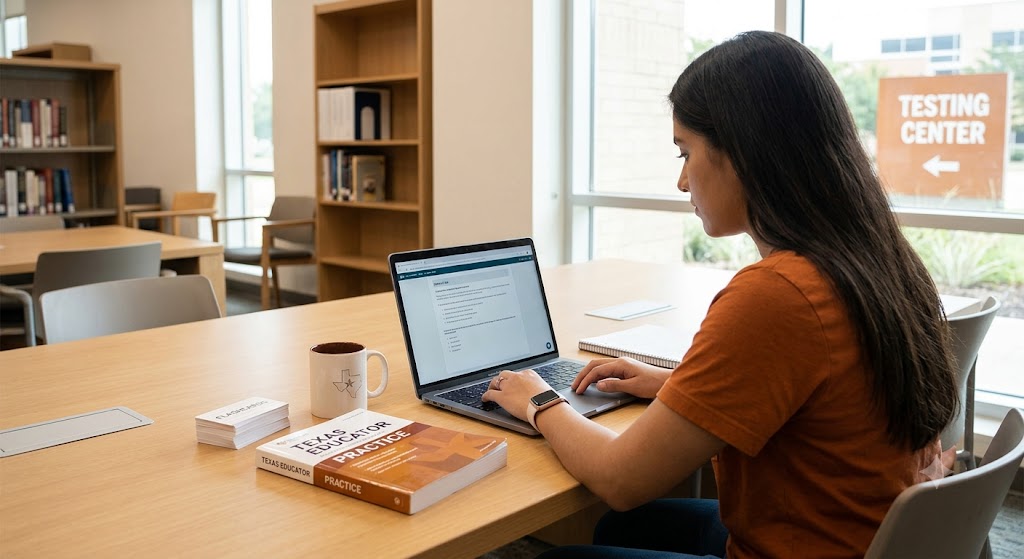
Additional Information
What the Course Entails and Exam Details
This preparation goes beyond simple word lists, covering the broad range of vocabulary tested across multiple TExES exams. You will encounter terminology essential for general academic proficiency and professional educator interactions. Practice materials specifically address reading comprehension, identifying context clues, and understanding synonyms and antonyms. Candidates must also become familiar with specific prefixes, suffixes, and root words common in educational literature. Crucially, it includes the specialized language of teaching, such as instructional strategies, assessment methods, and classroom management terminology. Practice tests simulate how this knowledge is applied in real testing scenarios.
What to Expect in the Final Exam
While vocabulary questions are integrated within broader content and pedagogy exams, understanding the typical structure is vital. TExES exams are computer-based tests, utilizing a multiple-choice format. You may encounter stand-alone vocabulary questions, such as defining terms or using context clues. Alternatively, vocabulary proficiency will be embedded within complex reading passages or scenario-based questions. The overall passing score for most TExES exams is 240 on a scale of 100-300. Exams have fixed time limits, often spanning several hours, and strict testing procedures are enforced, consistent with professional licensure standards. Preparation requires speed and accuracy under these constraints.
How to Study and Exam Centers
Effective preparation requires a combination of strategies to build a deep understanding of terms. Engage in active reading across educational journals, textbooks, and Texas-specific policy documents. Use digital or physical flashcards to systematically review definitions and usage. Focus on etymology to understand how prefixes, suffixes, and root words alter meanings in unfamiliar terms. Incorporate multiple timed practice tests to simulate actual exam conditions and identify specific areas of weakness. The official TExES exams are administered primarily through authorized testing centers, typically via Pearson VUE locations throughout Texas and nationally. Registration is completed through the official TExES website. Some educator preparation programs or authorized schools may also serve as physical testing centers.
Job Opportunities from the Course
A passing score on relevant TExES exams, which assess essential vocabulary proficiency, is the key step to becoming a certified educator in Texas. Completing this process opens numerous professional pathways within the state's school systems.
Here are specific job titles and career paths available:
Elementary School Teacher (e.g., EC-6 Core Subjects) - Leads instruction in multiple subject areas in diverse grade levels.
Middle School Teacher (e.g., ELAR 4-8) - Specializes in specific content areas, with critical vocabulary needs in English Language Arts and Reading.
High School Teacher - Content specialists in fields like Mathematics, Science, Social Studies, or Foreign Languages.
Special Education Teacher - Works with students with diverse learning needs, utilizing specialized instructional vocabulary.
English as a Second Language (ESL) Teacher - Focuses on language acquisition and instruction for English language learners.
Bilingual Education Teacher - Delivers content instruction in both English and another language.
Instructional Coach or Mentor - Guides other educators in teaching strategies and professional development.
Curriculum Specialist - Designs and develops educational content and programs.
School Administrator (with experience and further certification) - Leads schools and educational organizations.
Adult Education Teacher - Provides instruction and workforce skills to adult learners.I have generated a comprehensive guide for the TExES Vocabulary Practice Test based on your requirements. This article covers essential exam details, study strategies, and career paths, all formatted for ease of use and optimized for educational purposes.
Frequently Asked Questions
Reviews
5.0
Based on 0 reviews
Leave a Review
No reviews yet. Be the first to review!