
Term 8 Crane Signals Practice Test
$69.00
- Buy to unlock unlimited access to all Quiz questions.
- After purchase you can print a PDF of the whole quiz at any point. The PDF will contain the questions and the correct answers.
About this Exam
The Term 8 Crane Signals certification is a crucial qualification designed for personnel responsible for communicating with crane operators on construction sites. This certification validates a signalperson's competence in using standard hand signals, voice commands, and safety protocols required for safe and efficient crane operations. It is essential for individuals working as riggers, signalpersons, or construction laborers who regularly assist with lifting activities involving various types of cranes. This comprehensive exam ensures that personnel understand how to provide clear, accurate directions to the crane operator, thereby minimizing risks and enhancing overall job site safety.
Ready to test your knowledge?
Buy Now to Access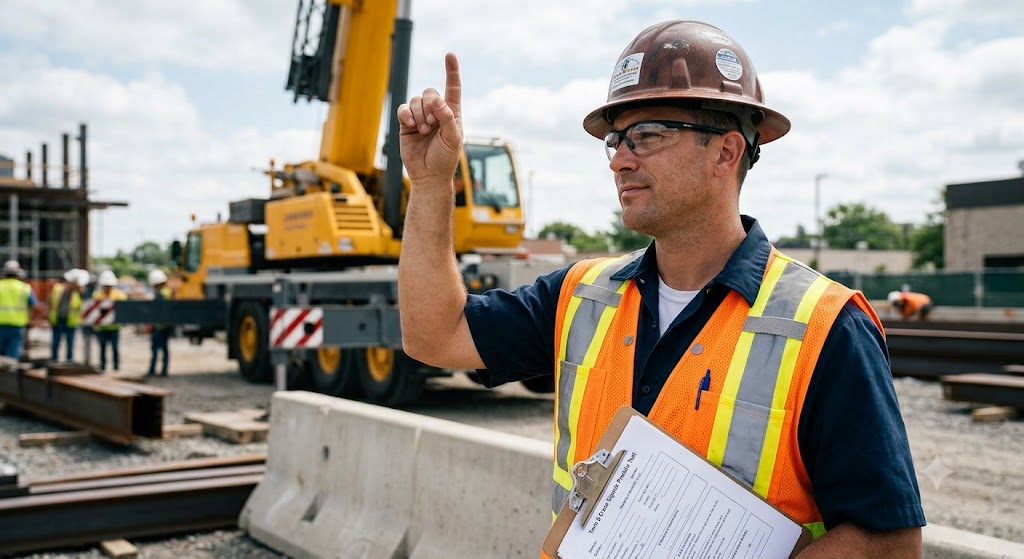
Additional Information
What the Course Entails and Exam Details
This specialized certification program covers an expansive set of topics beyond basic hand signals. The core syllabus includes:
Mastery of all standard hand signals for mobile and tower cranes, as defined by safety standards.
In-depth knowledge of voice command procedures and protocols.
Protocols for radio communication, including non-standard signals and emergency procedures.
Understanding of boom angles, lifting capacities, and the impact of environmental factors on a lift.
Clear communication of load weight, center of gravity, and potential hazards.
Safety requirements and responsibilities for signal persons and crane crews.
Site-specific considerations for various types of cranes.
The comprehensive program culminates in a definitive final examination that assesses both theoretical knowledge and practical application. Candidates must demonstrate not only knowledge of correct signals but also the ability to apply them in a logical and safe sequence.
What to Expect in the Final Exam
The final exam is a structured assessment, typically composed of multiple components:
Written Examination: A timed, multiple-choice test evaluating theoretical knowledge. This usually includes approximately 50 to 70 questions covering all aspects of crane signaling standards, regulatory compliance, communication protocols, and safety practices.
Practical Assessment: An essential part of the certification involves a practical evaluation, where candidates must correctly execute a series of signals under the direct observation of an authorized examiner. This assessment focuses on clarity, accuracy, and safe practices during a simulated lift.
Passing Score: To successfully earn the certification, candidates typically require a passing score, often set around 70% or higher for the written exam and a specific level of proficiency in the practical part (e.g., 'Pass' vs. 'Fail' based on strict safety criteria).
Time Limit: Both the written and practical components have designated time limits. Candidates are expected to manage their time effectively.
The exam maintains strict professional standards. Cell phones and reference materials are prohibited.
How to Study and Exam Centers
Preparation for the Term 8 exam requires a combination of targeted study and hands-on practice. Consider the following highly effective strategies:
Review Official Standards: Thoroughly study the relevant ASME/ANSI and OSHA standards for crane signaling. Understand the precise definitions and rules.
Utilize Authorized Materials: Obtain the official study guide and any training materials provided by your certification body.
Take Practice Tests: Consistent practice with sample exams, like the one this guide supports, is invaluable for familiarizing yourself with the written exam's format and identifying knowledge gaps.
Form Study Groups: Collaborating with peers or mentors who are also preparing for or have taken the exam can provide additional perspectives and practical insights.
Conduct Mock Practical Tests: If possible, practice signaling with an experienced rigger or crane operator to get real-time feedback on your performance.
Exam Centers: The final, official exam must be taken at an authorized testing provider. These are typically:
Authorized Training Schools: Many vocational schools and training academies specializing in crane and rigging courses are official exam centers.
Specific Physical Testing Facilities: Recognized certifying bodies often partner with physical testing centers (e.g., specific Pearson VUE or specialized industrial safety centers).
To schedule your exam, you must first register with your chosen certification body, which will provide a list of authorized centers near you. Always verify that a location is authorized.
Job Opportunities from the Course
A certification like "Term 8 Crane Signals" significantly enhances a professional's qualifications and opens doors to several rewarding career paths in heavy industry and construction:
Crane Signal Person (Specialist)
Master Rigger / Rigging Supervisor
Construction Foreman / Site Superintendent
Heavy Equipment Safety Coordinator
Lift Director / Project Manager for Heavy Lifts
Logistics Coordinator in Manufacturing or Industrial Facilities
Safety Trainer / Instructor in Crane Operations and Signaling
Quality Control Inspector in Construction and Heavy Engineering
Frequently Asked Questions
Reviews
5.0
Based on 0 reviews
Leave a Review
No reviews yet. Be the first to review!