
Tennessee Septic Systems Installation Practice Test
$69.00
- Buy to unlock unlimited access to all Quiz questions.
- After purchase you can print a PDF of the whole quiz at any point. The PDF will contain the questions and the correct answers.
About this Exam
The Tennessee Septic Systems Installation Practice Exam is a critical stepping stone for professionals seeking to become a licensed Subsurface Sewage Disposal System (SSDS) Installer in the state. This credential, issued by the Tennessee Department of Environment and Conservation (TDEC), validates that individuals possess the essential knowledge required to construct, install, alter, extend, or repair septic systems safely and according to state regulations. It is designed for aspiring installers, construction workers looking to specialize, and those aiming to start their own wastewater management business, ensuring they are well-prepared to uphold public health and environmental standards.
Sample Questions
Explanation:
Explanation:
Explanation:
Explanation:
Explanation:
Ready to test your knowledge?
Buy Now to Access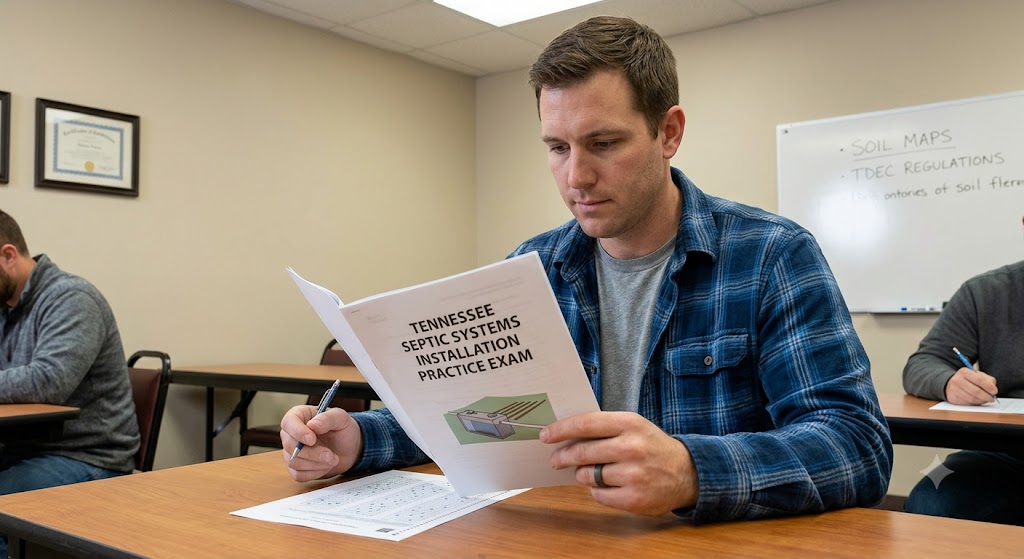
Additional Information
What the Course Entails and Exam Details
While Tennessee does not mandate completion of a formal preparatory course before taking the exam, candidates are expected to demonstrate a high level of proficiency through independent study. The foundation of this certification lies in a comprehensive understanding of the Tennessee Regulations Governing Septic Systems. The Fleming Training Center (FTC) provides advanced voluntary training, and various professional organizations offer helpful septic installation schools, which many find beneficial. The exam itself is a targeted evaluation focused on critical industry competencies, ensuring licensees can translate theoretical knowledge into practical, safe installations. Key components include regulatory compliance, technical installation standards, and essential field assessment techniques.
What to Expect in the Final Exam
The final exam is a comprehensive assessment that tests your mastery of the state's technical and regulatory requirements. It consists of multiple-choice questions—typically around 50—covering a broad spectrum of topics. You can expect questions regarding soil and site evaluation, system design and layout, conventional and alternative installation methods, and operational and maintenance procedures. The test is time-limited, designed to be completed in a set window (e.g., two hours), requiring focused effort. A passing score of 70% or higher is required to demonstrate competence and move forward in the licensing process. It is a closed-book examination, emphasizing the need for thorough preparation and memorization of critical facts and regulations.
How to Study and Exam Centers
Effective preparation is key to success on the Tennessee Septic Systems Installation exam. The primary study resource must be the official TDEC Tennessee Regulations Governing Septic Systems. Aspirants should create a detailed study plan, allocating dedicated time to understand soil types, percolation rates, setback requirements, and specific construction standards for both conventional and alternative systems. Taking simulated practice exams that mimic the format and difficulty of the actual test is highly recommended for building confidence and identifying weak areas. It is also beneficial to utilize educational resources from professional organizations, such as Onsite Wastewater Professionals. To take the exam, you must contact your local Environmental Field Office (EFO) to schedule a testing appointment. These exams are administered locally and are not generally available through third-party vendors like Pearson VUE, which primarily handles computer-based testing for other professions.
Job Opportunities from the Course
Obtaining your license through this practice test unlocks essential career paths within the wastewater and construction sectors. This certification is a prerequisite for launching a successful career as an independent operator or as a vital team member in established firms. Key job titles and roles unlocked by this license include:
Licensed Subsurface Sewage Disposal System (SSDS) Installer
Septic System Technician
Wastewater Management Specialist (specializing in on-site systems)
Septic Installation and Maintenance Company Owner/Operator
This credential serves as a foundational element, allowing you to legally and confidently advance in the specialized field of onsite wastewater systems in Tennessee.
Frequently Asked Questions
Reviews
5.0
Based on 0 reviews
Leave a Review
No reviews yet. Be the first to review!