
Tenable Security Center (SC) Specialist Practice Test
$69.00
- Buy to unlock unlimited access to all Quiz questions.
- After purchase you can print a PDF of the whole quiz at any point. The PDF will contain the questions and the correct answers.
About this Exam
The Tenable Security Center (SC) Specialist certification is designed for cybersecurity professionals who manage and utilize Tenable's vulnerability management platform, Security Center. This specialist-level certification validates a candidate's expertise in installing, configuring, and operating Tenable Security Center to assess vulnerability data, analyze risks, and effectively manage their organization's security posture.
The ideal candidate for this exam is a security administrator, vulnerability management analyst, or network engineer responsible for the day-to-day operation and maintenance of Tenable Security Center. Achieving this certification demonstrates proficiency in a widely-used industry tool and can lead to expanded responsibilities within the organization.
Ready to test your knowledge?
Buy Now to Access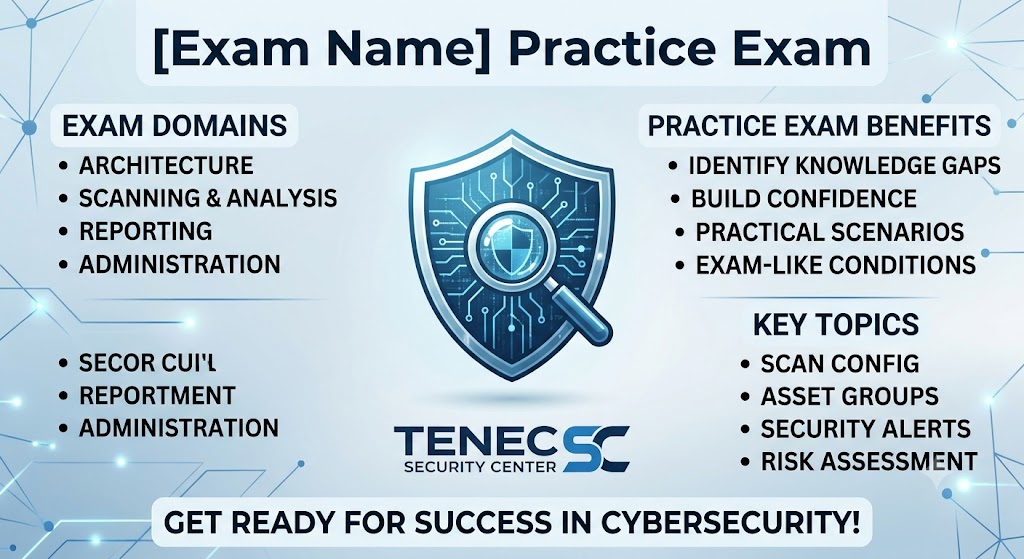
Additional Information
What the Course Entails and Exam Details
The Tenable Security Center Specialist exam covers a comprehensive range of topics essential for effectively managing and utilizing the platform. The curriculum focuses heavily on key functional areas, including:
Security Center Architecture and Components: Understanding the role of the Tenable Security Center console, Nessus scanners, and data repositories.
Installation and Initial Configuration: Deploying Tenable Security Center on a supported operating system and performing post-installation setup.
Scanning and Data Collection: Configuring active scans (credentialed and non-credentialed), managing scan schedules, and interpreting scan results.
Vulnerability Analysis and Reporting: Utilizing the analysis tools within Security Center, including filters, queries, and customizable reports.
Asset Management and Grouping: Defining static and dynamic asset groups to manage systems effectively.
Administration and Maintenance: Creating and managing user accounts, permissions, and groups; performing platform updates; and ensuring data retention policies.
Agent Management: Deploying and managing Tenable Nessus Agents for scanning hosts in dynamic or remote environments.
Continuous Monitoring: Integrating external data sources and analyzing real-time data to identify security risks.
The exam assesses both theoretical knowledge and practical skills related to the above domains.
What to Expect in the Final Exam
The Tenable Security Center Specialist exam is a proctored, online test designed to measure a candidate's practical competence. While specific exam details can change, the standard format generally includes:
Format: Multiple-choice questions and potentially some performance-based scenario questions where candidates must demonstrate hands-on knowledge.
Number of Questions: Approximately 50 to 60 questions.
Time Limit: Usually 75 minutes (1 hour and 15 minutes) to complete the entire exam.
Passing Score: The passing score is determined based on the statistical properties of the exam questions. Candidates receive their score report immediately upon completion.
Rules: The exam is closed-book, and candidates are not allowed access to any external resources, notes, or digital devices during the testing period.
The certification is typically valid for two years, after which recertification is required, often by retaking the most current version of the exam.
How to Study and Exam Centers
Preparation is crucial for success on the Tenable Security Center Specialist exam. Candidates should consider a multi-pronged approach combining formal training with hands-on experience and targeted study:
Official Tenable Training: Enrolling in the official Tenable Security Center Specialist training course is highly recommended. This course is specifically designed to cover all exam objectives and provides hands-on labs for practical learning. Tenable offers both virtual instructor-led training and on-demand options.
Hands-on Experience: There is no substitute for actual experience using Tenable Security Center in a production or lab environment. Practice installing, configuring, and running scans; creating reports; and managing assets. This is the most effective way to prepare for the practical questions.
Review Official Documentation: The Tenable Security Center User Guide, Administrator Guide, and other technical documentation on the Tenable website are invaluable resources. Focus on understanding key concepts, common administrative tasks, and troubleshooting procedures.
Utilize Practice Exams: Practice tests, such as the one referenced in this article's title, can help identify knowledge gaps and simulate the exam experience. However, do not rely solely on these as they are not a replacement for comprehensive study and experience.
Online Forums and Communities: Engaging with the Tenable user community on forums and social media can provide insights, tips, and answers to common questions from other experienced professionals.
Exam Centers
The Tenable Security Center Specialist exam is administered through a professional test proctoring platform. Candidates usually register for the exam directly through Tenable's training portal or a designated third-party testing service.
The exam can typically be taken in two ways:
Online Proctored: This allows you to take the exam from the comfort of your home or office. A live proctor will monitor you via your webcam and microphone to ensure the integrity of the testing environment. You must have a stable internet connection and meet the technical requirements for the online proctoring software.
In-Person Testing Centers: While the primary delivery method is online proctoring, some organizations might offer proctored exam sessions as part of broader training events or within corporate facilities. This is less common and usually arranged through the employer or training provider.
Always refer to the official Tenable training and certification pages for the most up-to-date information regarding registration and exam delivery options.
Job Opportunities from the Course
A Tenable Security Center Specialist certification is a valuable credential that can enhance your career in the cybersecurity field. Organizations across various industries are seeking skilled professionals who can manage their vulnerability management programs effectively. The following job titles and career paths are directly related to the skills validated by this certification:
Vulnerability Management Analyst
Cybersecurity Administrator
Network Security Engineer
Security Operations Center (SOC) Analyst
Information Security Specialist
Incident Response Analyst
IT Security Compliance Officer
Cybersecurity Consultant
IT Manager (with a focus on security)
Network Administrator
Frequently Asked Questions
Reviews
5.0
Based on 0 reviews
Leave a Review
No reviews yet. Be the first to review!