
Temporomandibular Joint (TMJ) Practice Test
$69.00
- Buy to unlock unlimited access to all Quiz questions.
- After purchase you can print a PDF of the whole quiz at any point. The PDF will contain the questions and the correct answers.
About this Exam
The TMJ Practice Exam Specialist resource is a comprehensive diagnostic tool designed for healthcare professionals—including dentists, physical therapists, and specialists in orofacial pain—aiming to validate their expertise in the diagnosis and management of Temporomandibular Joint Disorders (TMD).
This practice exam serves as a robust preparation aide, mirroring the complexity of official certification assessments. It is engineered for those who have completed foundational coursework in occlusion, craniofacial anatomy, or dental sleep medicine and are seeking to solidify their clinical reasoning before attempting licensure or specialty board examinations. By utilizing this resource, practitioners can identify knowledge gaps and refine their approach to patient care in this specialized field.
Ready to test your knowledge?
Buy Now to Access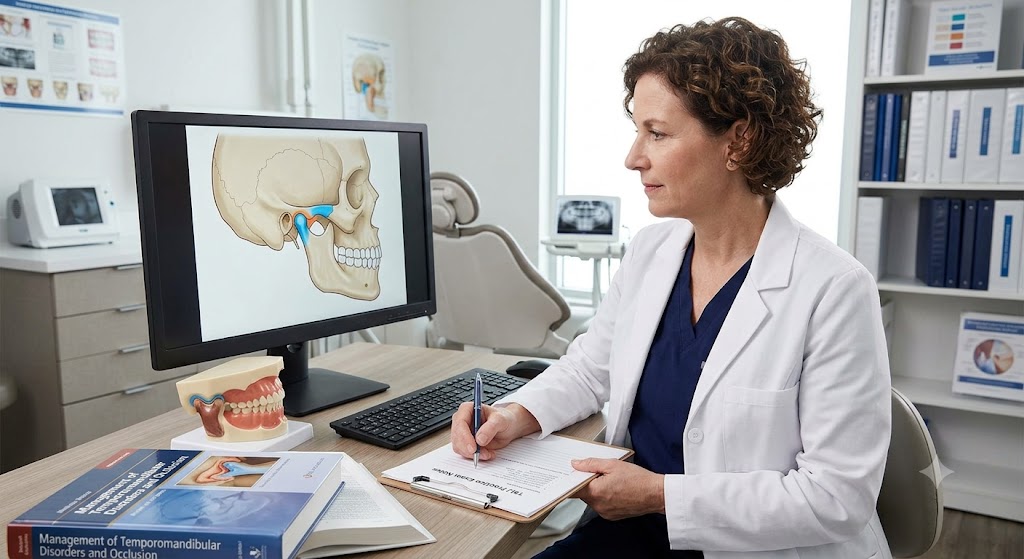
Additional Information
What the Course Entails and Exam Details
This examination focuses on the comprehensive interdisciplinary management of TMD. It covers critical theoretical and practical domains necessary for specialized practice.
The core syllabus and skills validated include:
Craniofacial Anatomy and Physiology: Detailed knowledge of the temporomandibular joint structure, masticatory muscles, ligaments, and associated nerve pathways (specifically the trigeminal nerve).
Pathophysiology of TMD: Understanding the etiology of extracapsular (myofascial) versus intracapsular (disc displacements, arthritis) disorders.
Diagnostic Protocols: Mastery of clinical examination techniques, taking relevant patient history, and interpreting imaging modalities (CBCT, MRI) for joint assessment.
Treatment Modalities: Validating knowledge of reversible therapies (splint therapy, physical therapy, pharmacology) versus irreversible interventions (occlusal adjustment, surgery).
Differential Diagnosis: Differentiating TMD from other sources of orofacial pain, such as trigeminal neuralgia, migraines, and dental pathology.
What to Expect in the Final Exam
The final practice examination is designed to be rigorous, simulating the environment and pressure of a professional board setting.
Format: The exam consists of 100 multiple-choice questions. A significant portion of these are case-based scenario questions, requiring the application of clinical knowledge to a presented patient history, physical findings, and imaging.
Time Limit: Candidates are allotted 120 minutes (2 hours) to complete the examination, demanding efficient time management.
Passing Score: A passing score of 75% or higher is recommended to demonstrate proficiency and readiness for official specialty examination.
Specific Rules: This is a closed-book examination. When taken via authorized online portals, it may be subject to remote proctoring, prohibiting the use of external aids or reference materials during the active testing window.
How to Study and Exam Centers
Effective preparation requires a combination of didactic review and practical application.
Actionable Study Strategies:
Synthesize Resources: Do not rely on one text. Combine standard dental texts on occlusion (like Okeson’s) with physical therapy guides on craniofacial treatment.
Focus on Case Studies: The exam heavily emphasizes clinical application. Review documented case studies, focusing on the diagnostic rationale and the sequential selection of treatment modalities.
Anatomy Review: Use detailed anatomical models (like the one shown above) and interact with imaging software to improve your ability to identify pathology on joint scans.
Take Timed Practice Runs: Utilize this practice test in a timed setting to build stamina and acclimatize to the pacing required.
Exam Centers and Access:
This practice examination is administered primarily through specialized online educational portals and dental continuing education (CE) platforms. It is not typically taken at generalized testing centers like Pearson VUE. Instead, professionals register through authorized dental schools, orofacial pain academies, or accredited CE providers. Upon registration, the exam is accessed via a secure web link, allowing candidates to take the test from their private office or home computer, provided the technical requirements for secure proctoring are met.
Job Opportunities from the Course
Validating your expertise through this comprehensive practice and subsequent official certification significantly enhances career trajectory within dentistry and physical therapy.
TMD/Orofacial Pain Specialist (Dental Practice): Lead the diagnostic and treatment department within a large group practice or specialty clinic.
Specialized Physical Therapist (Craniofacial Focus): Establish yourself as a preferred referral choice for dentists treating TMD patients.
University Clinical Instructor: Teach undergraduate or postgraduate courses on occlusion and TMD management.
Consultant for Dental Sleep Medicine: Expertise in the TMJ is vital when managing patients using mandibular advancement devices (MADs) for sleep apnea.
Associate Dentist in Prosthodontics: Enhances competitiveness for positions requiring complex restorative and occlusal rehabilitation.
Frequently Asked Questions
Reviews
5.0
Based on 0 reviews
Leave a Review
No reviews yet. Be the first to review!