
TEEX Fire Midterm Practice Exam
$69.00
- Buy to unlock unlimited access to all Quiz questions.
- After purchase you can print a PDF of the whole quiz at any point. The PDF will contain the questions and the correct answers.
About this Exam
The TEEX Fire Midterm is a critical assessment for students enrolled in comprehensive firefighting training programs offered by the prestigious Texas A&M Engineering Extension Service (TEEX). Designed for aspiring and early-career firefighters, this exam marks a significant milestone in their journey towards professional certification. It evaluates a candidate's grasp of foundational fire service principles and practices necessary for safe and effective operations. Mastering this midterm is a key indicator of readiness for the advanced challenges ahead.
Ready to test your knowledge?
Buy Now to Access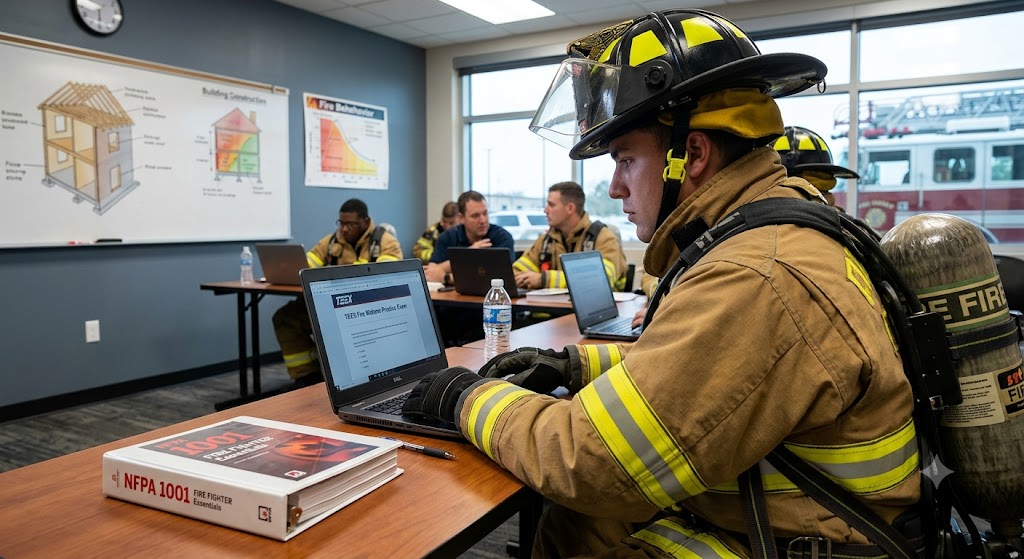
Additional Information
What the Course Entails and Exam Details
A typical TEEX comprehensive course, such as the Blended or Face-to-Face Fire Academy, covers a wide array of theoretical and practical subjects. Core topics evaluated in the midterm often align with NFPA 1001 standards and 'Essentials of Fire Fighting' curricula. Expect questions on: fire behavior and dynamics, firefighter safety and survival, personal protective equipment (PPE), fire department communications, building construction, portable fire extinguishers, ropes and knots, fire hoses and nozzles, and search and rescue techniques. The midterm typically assesses knowledge across these fundamental areas through a mix of cognitive and, sometimes, basic practical skills demonstrations.
What to Expect in the Final Exam
While this practice resource focuses on your upcoming midterm, it's essential to understand the bigger picture. The final exam in a comprehensive TEEX fire training program is cumulative, assessing knowledge and skills from the entire course. You should expect a multi-component evaluation: a written section often featuring complex multiple-choice and scenario-based questions, along with extensive practical skills assessments. These practicals might include timed tasks, live fire evolutions, and equipment mastery. A minimum passing score is always required, and students must demonstrate high proficiency across all areas to receive their final certification.
How to Study and Exam Centers
Maximize your preparation with our comprehensive practice exam, simulating real test conditions to identify your strengths and weaknesses. Focus on your weakest subjects and prioritize reviewing the official 'Essentials of Fire Fighting' manuals and current NFPA standards. Form study groups to discuss key concepts and, most importantly, dedicate significant time to physical skills practice (dressing in gear, deploying hoses, knot tying). For the physical and online requirements, refer to the official TEEX student portal or training guidelines. Midterm written components may be taken online through a learning management system, while practical skills must be demonstrated and verified at an authorized physical testing center or designated TEEX training facility.
Job Opportunities from the Course
Successfully navigating these critical assessments within your TEEX course positions you to unlock a dynamic and rewarding career path in the fire service. Job opportunities vary based on specializations and your chosen trajectory. Specific roles include:
Municipal Firefighter
Wildland Firefighter / Smoke Jumper
Industrial Firefighter
Airport Firefighter (ARFF)
Emergency Medical Technician (EMT)
Fire Investigator / Fire Inspector
Fire Safety Instructor / Educator
Emergency Management Professional
Frequently Asked Questions
Reviews
5.0
Based on 0 reviews
Leave a Review
No reviews yet. Be the first to review!