
Technical Writing Practice Exam
$69.00
- Buy to unlock unlimited access to all Quiz questions.
- After purchase you can print a PDF of the whole quiz at any point. The PDF will contain the questions and the correct answers.
About this Exam
The Technical Writing Certification Practice Exam is an essential tool designed for aspiring and current technical communicators seeking to validate their skills and advance their careers. This comprehensive exam preparation resource evaluates proficiency in conveying complex technical information clearly and effectively to diverse audiences. It is ideal for individuals aiming to secure entry-level technical writing positions or professionals looking to formalize their experience with a recognized credential, demonstrating their mastery of industry best practices.
Ready to test your knowledge?
Buy Now to Access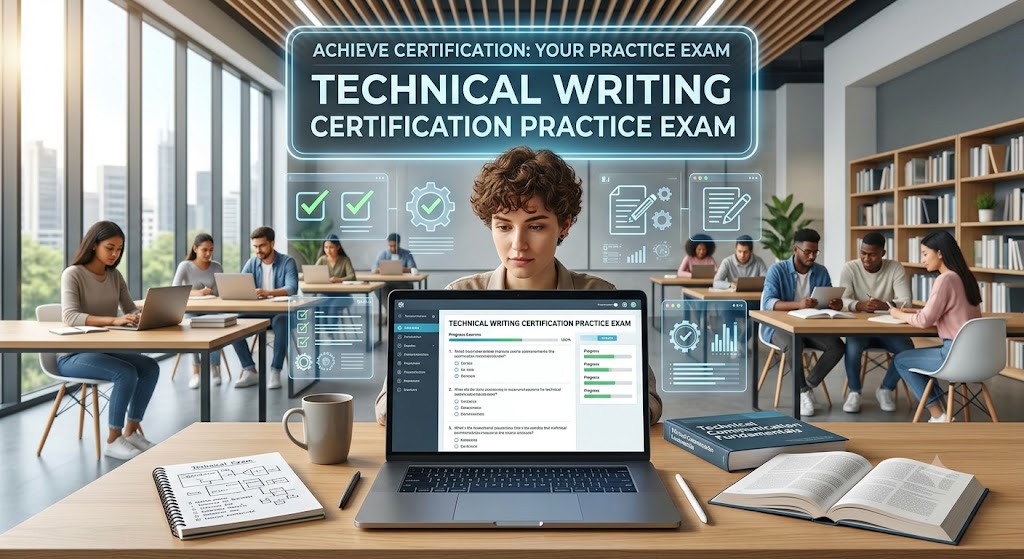
Additional Information
What the Course Entails and Exam Details
This practice exam mirrors the structure and content areas commonly found in leading technical writing certification programs. Candidates preparing for the final certification can expect coverage in several core competency areas.
The exam details and syllabus typically focus on:
Audience Analysis: Determining user needs, skill levels, and information requirements.
Document Planning and Design: Structuring information logically and utilizing effective page layouts.
Technical Editing: Applying clarity, conciseness, grammar, and style guidelines (e.g., Microsoft Manual of Style).
Content Development: Writing various technical documents, including user manuals, white papers, API documentation, and online help systems.
Usability Testing: Understanding methods for evaluating the effectiveness of technical documentation.
Tools and Technologies: Familiarity with common technical communication tools (e.g., MadCap Flare, Adobe RoboHelp, Markdown) and version control systems.
What to Expect in the Final Exam
The actual final certification exam is designed to be a rigorous assessment of both theoretical knowledge and practical application. Candidates should be prepared for a challenging evaluation under timed conditions.
Format: Most certification exams are computer-based and primarily feature multiple-choice questions. Some exams also incorporate practical components, requiring candidates to complete short writing assignments or edit sample technical text.
Time Limit: Candidates are usually allotted between 90 and 120 minutes to complete the exam.
Passing Score: A passing score generally ranges from 70% to 75%.
Proctoring: Exams are typically proctored, either in person at a designated testing center or online via remote proctoring services.
How to Study and Exam Centers
Preparation is crucial for success on the certification exam. Beyond utilizing practice exams, candidates are encouraged to engage in comprehensive study.
Actionable Study Strategies:
Review core textbooks and style guides relevant to technical communication.
Complete hands-on writing projects and build a portfolio to practice practical application.
Engage with online communities and professional organizations, such as the Society for Technical Communication (STC).
Utilize this practice exam repeatedly to identify knowledge gaps and get accustomed to the question formats and time constraints.
Exam Centers and Registration:
The final certification exam is typically administered through major professional testing networks. Candidates can register and schedule their exams at authorized Pearson VUE or Prometric testing centers globally. Many certifying bodies also offer the option for online proctored exams, allowing candidates to take the test from the convenience of their home or office.
Job Opportunities from the Course
Earning a technical writing certification unlocks numerous career opportunities across diverse industries, including software development, engineering, healthcare, and manufacturing. The demand for skilled professionals who can bridge the gap between technical experts and end-users continues to grow.
Common job titles and career paths accessible with this certification include:
Technical Writer
Information Developer
Documentation Specialist
Technical Content Strategist
API Documentation Writer
Instructional Designer
Grant Writer (with relevant experience)
Content Editor (Technical)
Frequently Asked Questions
Reviews
5.0
Based on 0 reviews
Leave a Review
No reviews yet. Be the first to review!