
TDLR Weaving and Braid Extensions Practice Test
$69.00
- Buy to unlock unlimited access to all Quiz questions.
- After purchase you can print a PDF of the whole quiz at any point. The PDF will contain the questions and the correct answers.
About this Exam
The Texas Department of Licensing and Regulation (TDLR) Hair Weaving Specialist license is a dedicated pathway for beauty professionals to legally offer specialized hair augmentation services in Texas. This certification is specifically designed for individuals who want to master the art of intricate braiding, various extension installation techniques, and wig services. Whether you are an aspiring braid artist, a technician specializing in sew-ins, microlinks, and tape-ins, or a professional focusing on wig customization and solutions for hair loss, this licensure establishes your expertise and ensures compliance with state safety and sanitation standards.
Ready to test your knowledge?
Buy Now to Access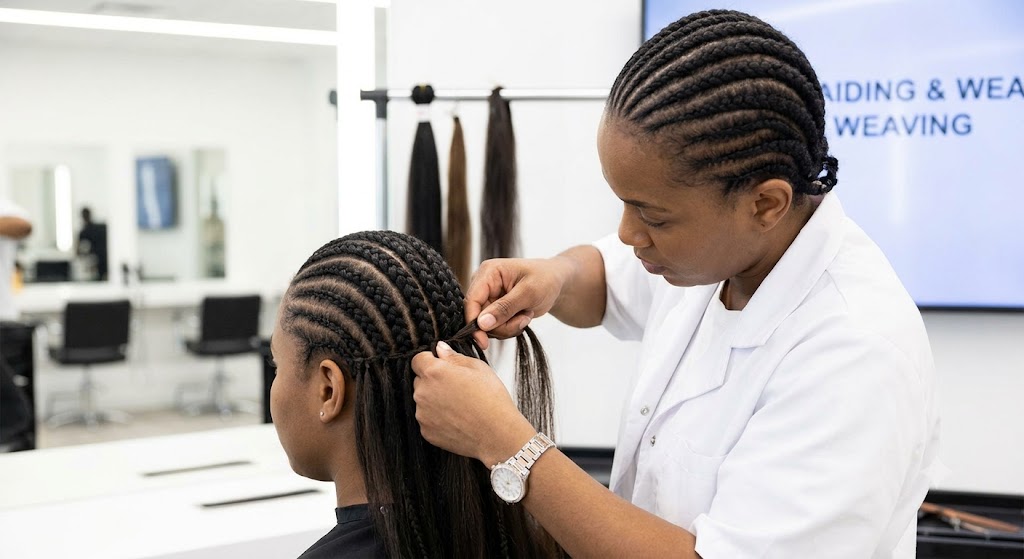
Additional Information
What the Course Entails and Exam Details
To become a licensed Hair Weaving Specialist in Texas, you must first complete a mandatory program consisting of at least 300 clock hours of instruction from a TDLR-licensed beauty school. The comprehensive curriculum covers essential theoretical and practical knowledge, including infection control, safety procedures, scalp anatomy, and client consultation. On the technical side, you will master foundation skills like cornrows, box braids, two-strand twists, and coils. From there, you will advance to a wide range of installation methods, such as traditional sew-ins, feed-in cornrows, stitch braids, bonded applications, tape-ins, microlinks, K-tips, lace closures, and full wig customization. The course prepares you for all phases of service, from natural hair preparation to secure removal, and often includes business and marketing training.
What to Expect in the Final Exam
The final step to earning your license involves passing two separate examinations: a computerized written exam and a hands-on practical exam. You become eligible to schedule these through a third-party vendor (currently PSI) only after completing all training requirements.
The written exam is a multiple-choice format that evaluates your knowledge of core concepts. It is administered on a computer and typically consists of 100 scored questions, covering topics like Licensing and Regulation (Texas law and rules), Infection Control (sanitation, disinfection, safety), and Hair and Scalp Care (anatomy, conditions, consultations). You will likely be given approximately two hours to complete this section.
The practical exam is a timed assessment where you demonstrate your technical skills on a mannequin or live model in a testing environment. It is divided into multiple sections, which have specific procedures and safety criteria that proctors use to score your performance. Expect to be tested on critical skills, such as a proper "blood exposure incident" response, correct setup and sanitation, the creation of a foundation braid base, specific extension installation (e.g., sew-in section, tape-in section), and proper removal techniques. Both the written and practical exams typically require a passing score of 70 percent to receive your license.
How to Study and Exam Centers
Effective preparation is key to success. Your best resource is the 300-hour course itself, so be attentive in class and make the most of every hands-on hour. Create a comprehensive checklist for your practical exam kit and practice packing and repacking it until it becomes second nature. Utilize the textbooks and digital resources, like Milady CIMA, provided by your school. Your school is also required to administer mock written and full mock practical exams, which are invaluable for simulating the real testing pressure and identifying your weak areas. Additionally, taking online practice tests specifically for the TDLR Weaving and Braid Extensions exam will help you become familiar with the multiple-choice question phrasing.
When you are ready, you will schedule your exams with the designated vendor, PSI. The computerized written exam can be taken online or at any approved PSI testing center located throughout Texas. The hands-on practical exam must be completed in person at a specific PSI testing site. You will receive scheduling instructions via email after your school verifies your completed hours and eligibility to TDLR.
Job Opportunities from the Course
Earning a TDLR Hair Weaving Specialist license unlocks numerous career paths in the thriving hair extension and braiding industry. You can work as an employee in a salon, start your own independent business, or take your skills into high-demand areas. Specific job titles include:
Licensed Hair Weaving Specialist
Professional Braider / Braid Stylist
Hair Extension Technician / Specialist
Wig Customization Specialist
Lace Front / Closure Installer
Freelance Session Stylist for TV, Film, and Fashion
Entrepreneur / Salon Owner focusing on Braids and Extensions
Hair Loss Solutions Provider using Extension Methods
Traveling/Platform Artist and Educator for Brands
Content Creator/Influencer in the Protective Style Community
Wig Store/Extension Boutique Consultant
Frequently Asked Questions
Reviews
5.0
Based on 0 reviews
Leave a Review
No reviews yet. Be the first to review!