
TDLR Cosmetology Practice Test
$69.00
- Buy to unlock unlimited access to all Quiz questions.
- After purchase you can print a PDF of the whole quiz at any point. The PDF will contain the questions and the correct answers.
About this Exam
The Texas Department of Licensing and Regulation (TDLR) Cosmetology Operator license is the essential credential for individuals seeking to practice professional cosmetology services in the state of Texas. This certification verifies that you have met the required training hours and possess the fundamental knowledge and skills to perform various beauty services safely and effectively. It is designed for aspiring hairstylists, nail technicians, and estheticians who have completed an accredited cosmetology program and are ready to officially enter the beauty industry in Texas.
Ready to test your knowledge?
Buy Now to Access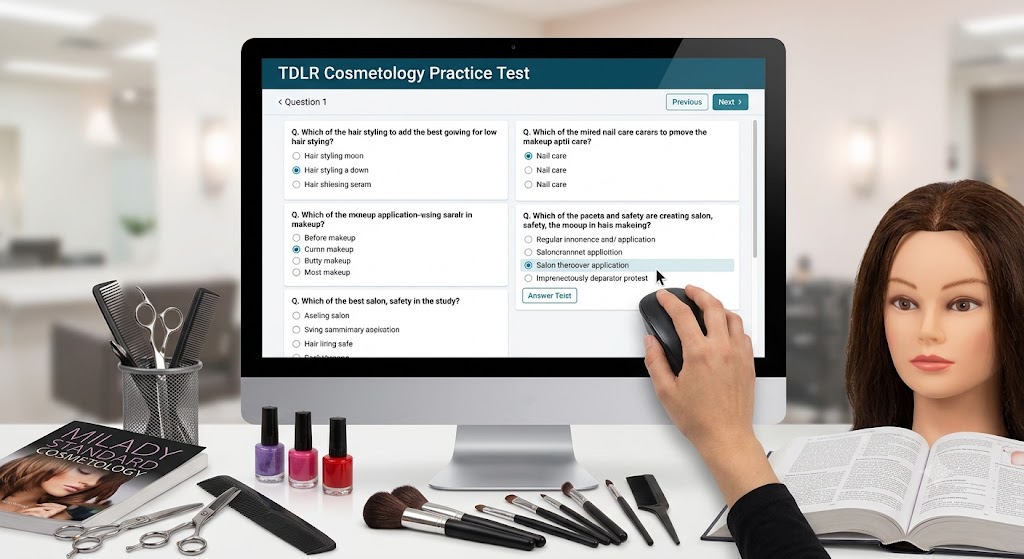
Additional Information
What the Course Entails and Exam Details
Becoming a licensed cosmetologist in Texas requires completing a comprehensive training program at an approved school, typically involving 1,000 to 1,500 hours of instruction (depending on when the training was started). This curriculum covers a wide array of topics, including:
Hair care, cutting, styling, coloring, and chemical services.
Skincare treatments, facials, and makeup application.
Nail care, manicures, and pedicures.
Sanitation, sterilization, and safety procedures.
Texas state cosmetology laws and regulations.
What to Expect in the Final Exam
The TDLR Cosmetology licensure process consists of two primary components: a written examination and a practical examination. Candidates must pass both parts to obtain their license.
Written Exam:
The written exam is a computer-based, multiple-choice test administered by PSI Services. It assesses your theoretical knowledge of cosmetology concepts, safety practices, and Texas state rules. Key topics covered include:
Licensing and Regulation
Infection Control
Hair and Scalp Care
Chemical Services
Skincare
Nail Care
You will generally need a score of 70% or higher to pass. You are given a specific time limit (usually around 1 hour and 45 minutes) to complete the test.
Practical Exam:
The practical exam is a hands-on assessment where you demonstrate your technical skills in a proctored environment. You are required to bring your own supplies and a mannequin head. During this exam, you will perform specific services, which may include:
Initial Setup and Client Protection
Shampooing
Haircutting
Hair Styling (e.g., thermal styling, permanent waving)
Chemical Waving and Relaxing
Hair Coloring and Highlighting
Foil Highlighting
Facials
Manicuring
Like the written exam, the practical exam requires a passing score of 70% or higher.
How to Study and Exam Centers
Preparing for both the written and practical exams is crucial for success.
Study Strategies:
Review Your Textbooks: Thoroughly study the textbooks used in your cosmetology program (e.g., Milady or Pivot Point). Focus on sanitation protocols and the core concepts mentioned in the exam content outline.
Practice with Mock Exams: Utilize TDLR cosmetology practice tests online to familiarize yourself with the format and types of questions asked on the written exam. This helps identify areas where you need further study.
Review TDLR Rules and Regulations: Familiarize yourself with the specific Texas laws and regulations governing cosmetology, as these are frequently tested.
Practical Rehearsal: Practice the practical exam procedures repeatedly on a mannequin. Time yourself for each service to ensure you can complete the tasks within the allotted time during the actual exam. Pay strict attention to sanitation and safety procedures throughout your practice.
Exam Centers:
Both the written and practical examinations are administered by PSI Services under contract with the TDLR.
Written Exam: Written exams are held at numerous PSI testing centers located across Texas. You must register and schedule your written exam directly through the PSI website.
Practical Exam: Practical exams are also administered at designated PSI testing locations. You can schedule your practical exam once you have successfully passed the written portion.
Detailed information regarding registration, scheduling, exam fees, and testing locations can be found on the official TDLR website and the PSI candidate information bulletin.
Job Opportunities from the Course
Earning your TDLR Cosmetology Operator license opens the door to a variety of rewarding career paths in the vibrant Texas beauty industry. Potential job opportunities include:
Hairstylist/Colorist
Barber (requires additional training/licensure in some cases, but cosmetology license covers some barbering services)
Nail Technician
Esthetician/Skincare Specialist
Makeup Artist
Salon Manager
Salon Owner
Beauty School Instructor (with additional experience and licensure)
Cosmetic Sales Representative
Image Consultant
Frequently Asked Questions
Reviews
5.0
Based on 0 reviews
Leave a Review
No reviews yet. Be the first to review!