
TCOLE Code of Criminal Procedure (CCP) Practice Exam
$69.00
- Buy to unlock unlimited access to all Quiz questions.
- After purchase you can print a PDF of the whole quiz at any point. The PDF will contain the questions and the correct answers.
About this Exam
The TCOLE Code of Criminal Procedure (CCP) exam is a critical requirement for individuals seeking licensure as peace officers in the state of Texas. It is designed to evaluate a candidate's understanding of the Texas Code of Criminal Procedure, which dictates the legal guidelines and processes that law enforcement must follow. This exam ensures that officers possess the necessary knowledge to uphold the law, respect constitutional rights, and effectively carry out their duties within the Texas legal framework. Passing this exam is a standard step for cadets in law enforcement academies and out-of-state officers seeking Texas certification.
Ready to test your knowledge?
Buy Now to Access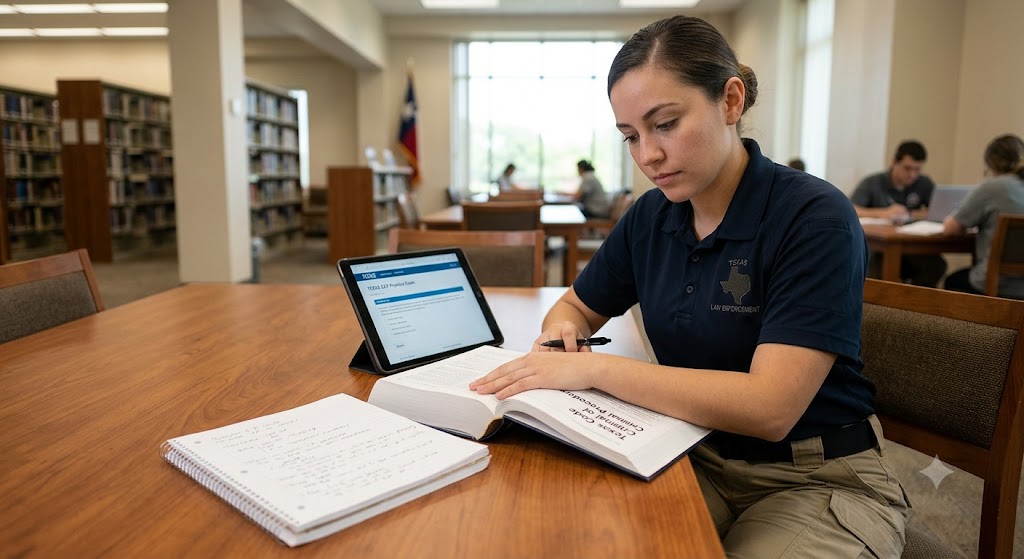
Additional Information
What the Course Entails and Exam Details
The curriculum covering the TCOLE CCP focuses extensively on the statutory rules governing the administration of criminal justice in Texas.
Core topics typically include:
Arrest, Search, and Seizure: Detailed study of legal requirements for arrests with and without warrants, as well as lawful search and seizure procedures under Texas law and the U.S. Constitution.
Court Processes and Procedures: Understanding the stages of a criminal case, from initial appearance and bail to trial proceedings and sentencing.
Rights of the Accused: Comprehensive knowledge of the constitutional and statutory rights guaranteed to individuals accused of crimes in Texas.
Duties and Powers of Peace Officers: Clarification of the legal authority, responsibilities, and limitations placed upon law enforcement officers.
Warrants and Subpoenas: Procedures for obtaining and executing arrest warrants, search warrants, and subpoenas.
What to Expect in the Final Exam
While this article supports preparation through a practice exam, the official TCOLE CCP licensing exam adheres to specific standards.
Format: The official exam is typically a computer-based, multiple-choice assessment.
Time Limit: Candidates are usually allotted a specific timeframe (often around 2-3 hours) to complete the exam.
Passing Score: A minimum score of 70% is generally required to pass the TCOLE licensing exams.
Retakes: TCOLE policies dictate the number of times an individual can attempt the exam within a certain period.
The TCOLE CCP Practice Exam is designed to simulate this environment, offering similar multiple-choice questions to help you gauge your readiness and identify areas needing further study.
How to Study and Exam Centers
How to Study
Effective preparation for the TCOLE CCP exam requires consistent effort and a strategic approach:
Utilize Practice Exams: Regularly taking TCOLE CCP practice exams is crucial. This helps you become familiar with the question format, manage your time effectively, and reinforce your knowledge of the code.
Study the Source Material: Deeply review the actual Texas Code of Criminal Procedure. Practice exams are excellent, but understanding the foundational text is essential.
Review Academy Materials: If you are currently in a law enforcement academy, focus heavily on the CCP curriculum provided by your instructors.
Form Study Groups: Collaborating with fellow cadets or officers can provide new perspectives and help clarify complex legal concepts.
Exam Centers
The official TCOLE licensing exams are not typically taken at public commercial testing centers like Pearson VUE. Instead, they are administered through:
TCOLE-Approved Law Enforcement Academies: Most cadets take their licensing exams directly through the academy where they received their training.
Licensed Training Providers: Certain law enforcement agencies or educational institutions licensed by TCOLE may also serve as testing sites for authorized individuals.
Job Opportunities from the Course
Successfully passing the TCOLE CCP exam and obtaining licensure opens the door to numerous law enforcement careers within the state of Texas.
Specific job titles include:
Texas Peace Officer
Police Officer (Municipal Departments)
Deputy Sheriff (County Sheriff's Offices)
Texas State Trooper (Department of Public Safety)
Constable Deputy
Investigator (District Attorney Offices)
Special Agent (Various State Agencies)
Frequently Asked Questions
Reviews
5.0
Based on 0 reviews
Leave a Review
No reviews yet. Be the first to review!