
TCFP Incident Commander Practice Exam
$69.00
- Buy to unlock unlimited access to all Quiz questions.
- After purchase you can print a PDF of the whole quiz at any point. The PDF will contain the questions and the correct answers.
About this Exam
The TCFP (Texas Commission on Fire Protection) Incident Commander certification is a critical credential for fire service professionals aiming to lead emergency response operations. This certification validates that an individual possesses the advanced knowledge, skills, and decision-making abilities required to effectively command and manage complex incidents. It is specifically designed for fire officers and experienced personnel transitioning into command roles where they will be responsible for personnel safety, resource allocation, and overall strategic objectives during emergency calls.
Ready to test your knowledge?
Buy Now to Access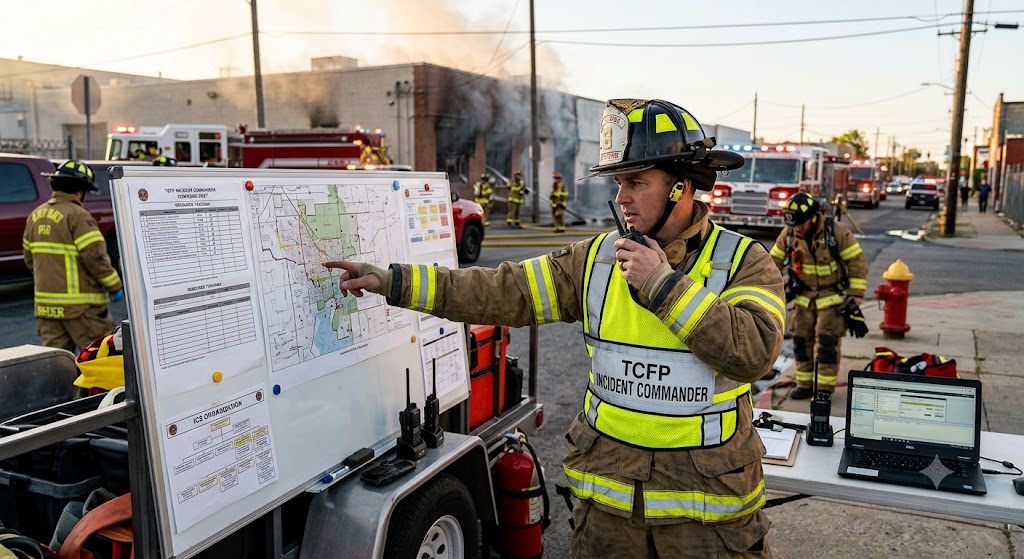
Additional Information
What the Course Entails and Exam Details
This certification course is typically based on NFPA (National Fire Protection Association) standards, particularly NFPA 1021: Standard for Fire Officer Professional Qualifications. The curriculum focuses heavily on tactical operations, strategic planning, the Incident Command System (ICS), safety management, and effective resource management. The prerequisite for taking the Incident Commander exam is often the completion of the Fire Officer II certification and designated ICS courses (e.g., ICS 300 and 400).
What to Expect in the Final Exam
The final TCFP Incident Commander certification process consists of two primary components that candidates must successfully complete:
Written Examination: Candidates must pass a comprehensive written exam. This exam typically includes around 100 multiple-choice questions covering cognitive knowledge areas based on the NFPA standards and Texas administrative code. A passing score of at least 70% is generally required to pass the written section.
Skills Evaluation (Practical): This is a critical component where candidates must demonstrate proficiency in managing a simulated emergency scenario. Candidates are evaluated on their ability to establish command, perform a size-up, implement the Incident Action Plan (IAP), manage resources, and address safety issues. This is a pass/fail evaluation conducted by TCFP-approved examiners.
How to Study and Exam Centers
Preparation for this rigorous certification requires a dedicated study plan.
Review Recommended Textbooks: Study the current editions of IFSTA (International Fire Service Training Association) or other major publishers' manuals referenced by TCFP. Focus on chapters related to command, strategy, and tactics.
Utilize Practice Exams: Take high-quality practice exams, like this TCFP Incident Commander Practice Exam. This helps you become familiar with the question formatting and identify knowledge gaps.
Focus on the Skills: Don't neglect practical preparation. Review the TCFP skills sheets for the Incident Commander certification, which outline exactly what actions are required during the practical evaluation. Practice running scenarios with colleagues or participating in departmental drills.
Study NFPA Standards: Ensure you have a deep understanding of NFPA 1021 and 1561.
Exam Centers: TCFP written examinations are administered at various regional testing sites across Texas, often located at fire academies or community colleges. Candidates register for exams through the TCFP FIDO (Firefighter Integrated Data Online) portal. The practical skills evaluations are typically organized by the training facility or department conducting the course and must be proctored by designated TCFP examiners.
Job Opportunities from the Course
Obtaining the TCFP Incident Commander certification signifies that you are qualified for advanced leadership roles within the fire service. This certification is frequently a requirement for promotion or assignment to command positions, including:
Battalion Chief
District Chief
Assistant Fire Chief
Deputy Fire Chief
Fire Chief
Specialized Incident Command roles within large agencies
Frequently Asked Questions
Reviews
5.0
Based on 0 reviews
Leave a Review
No reviews yet. Be the first to review!