
TCEQ On-Site Sewage Facilities (OSSF) Practice Exam
$69.00
- Buy to unlock unlimited access to all Quiz questions.
- After purchase you can print a PDF of the whole quiz at any point. The PDF will contain the questions and the correct answers.
About this Exam
The Texas Commission on Environmental Quality (TCEQ) On-Site Sewage Facilities (OSSF) licensing program is essential for professionals dedicated to protecting public health and the environment through proper wastewater management. This certification is designed for individuals who plan, install, alter, repair, or operate on-site sewage facilities, commonly known as septic systems. Whether you are aiming to become an Installer, Designated Representative, Site Evaluator, or Maintenance Provider, this exam is the critical gateway to ensuring regulatory compliance and environmental safety in areas without access to centralized sewer systems. This practice exam offers a comprehensive review to prepare candidates for the challenges of the actual licensing test.
Ready to test your knowledge?
Buy Now to Access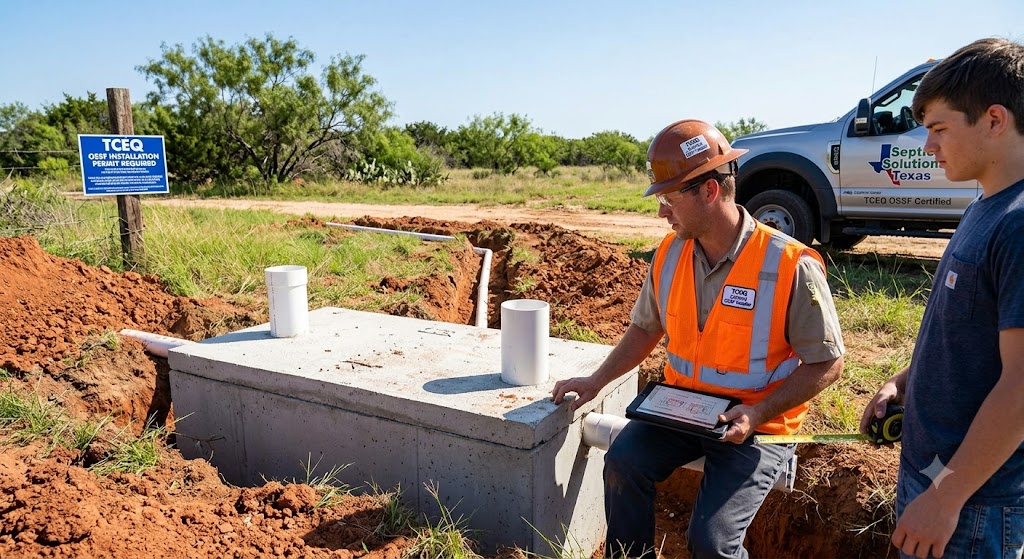
Additional Information
What the Course Entails and Exam Details
The path to TCEQ OSSF certification involves thorough training and examination across several key domains. Required pre-licensing courses cover a broad range of topics, ensuring that candidates possess the necessary technical and regulatory knowledge. The core areas of study include Texas administrative codes and regulations regarding OSSFs (specifically 30 TAC Chapter 285), understanding diverse system types from conventional septic tanks to advanced aerobic treatment units, and secondary treatment processes. You will also learn about planning and system design principles, installation procedures and best practices, inspection requirements, and maintenance protocols to ensure long-term system functionality and public safety.
What to Expect in the Final Exam
The final licensing exam for the TCEQ OSSF program is a rigorous assessment administered via computer-based testing (CBT). Candidates should expect a multiple-choice format designed to evaluate both theoretical knowledge and practical application of OSSF regulations and practices. A minimum passing score of 70% is typically required to succeed. The time limit for the exam varies depending on the specific license classification but generally ranges from three to four hours. The test is strictly proctored, and candidates are generally not permitted to bring outside reference materials into the testing environment.
How to Study and Exam Centers
Effective preparation for the TCEQ OSSF exam begins with the completion of the mandatory TCEQ-approved training courses. Once coursework is finalized, students are encouraged to engage in a systematic review of the material. A highly effective study strategy involves a deep dive into the official TCEQ Chapter 285 rules, which form the regulatory foundation of the exam. Utilizing detailed study guides provided by training organizations and consistently taking practice exams, such as this one, is crucial to building confidence, improving time management, and identifying areas where further study is needed. The primary method for taking the licensing exam is through computerized testing (CBT) at authorized Pearson VUE test centers located across the state of Texas.
Job Opportunities from the Course
Earning a TCEQ OSSF certification opens a variety of career paths within the essential field of decentralized wastewater management. Different licensing tiers correspond to specific professional roles:
OSSF Installer I (OSSF-I): Authorized to install standard on-site sewage systems, typically conventional septic systems.
OSSF Installer II (OSSF-II): Licensed to install all approved types of OSSF systems, including complex and aerobic treatment systems.
OSSF Site Evaluator (SE): Certified to perform critical pre-construction site assessments and soil analyses required for system planning and design.
OSSF Designated Representative (DR): Typically employed by local governmental entities or authorized agents to review plans, issue permits, and conduct inspections to enforce TCEQ regulations.
OSSF Maintenance Provider (MP): Authorized to provide required maintenance and testing for specific advanced OSSF systems, ensuring continued compliance.
Frequently Asked Questions
Reviews
5.0
Based on 0 reviews
Leave a Review
No reviews yet. Be the first to review!