
TCAT Aircraft Fabric Covering Practice Test
$69.00
- Buy to unlock unlimited access to all Quiz questions.
- After purchase you can print a PDF of the whole quiz at any point. The PDF will contain the questions and the correct answers.
About this Exam
The [TCAT Aircraft Fabric Covering Practice Exam] is an essential preparatory tool for aviation professionals seeking to master the art and science of fabric covering and repair. Developed to align with the standards of the Tennessee College of Applied Technology (TCAT) and FAA regulations, this exam is designed for individuals pursuing careers as Airframe Mechanics, Aviation Maintenance Technicians, and Aircraft Restoration Specialists. It validates the critical knowledge and practical skills required to maintain the safety and integrity of fabric-covered aircraft, a niche yet vital sector in general aviation and vintage aircraft preservation.
Ready to test your knowledge?
Buy Now to Access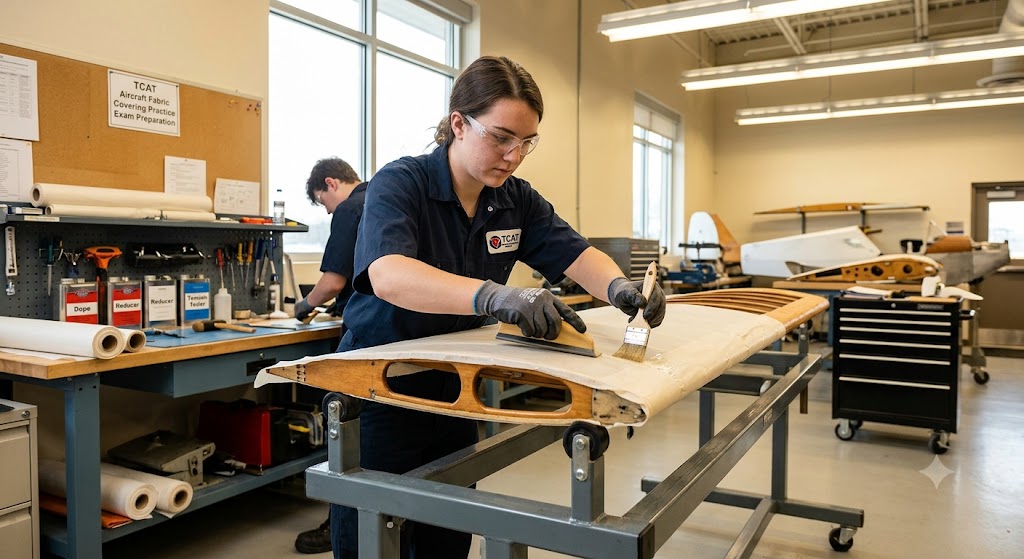
Additional Information
What the Course Entails and Exam Details
The course and subsequent exam cover a comprehensive range of topics from initial surface preparation to the final inspection of completed work. Students will be tested on their understanding of:
Types of Aircraft Fabrics and Materials: Grade A cotton, polyester (e.g., Ceconite, Poly-Fiber), glass fiber, and their specific properties and applications.
Fabric Covering Systems and Processes: Detailed knowledge of approved systems, including dopes (nitrate and butyrate), adhesives, thinners, and rejuvenators. Techniques like the blanket method and the envelope method.
Structural Preparation: Cleaning, priming, and applying anti-chafe tape to metal and wood structures before covering.
Application Techniques: Measuring, cutting, applying fabric, heat shrinking, and rib stitching.
Finishing Processes: Applying multiple coats of dope, sanding, and applying final finishes and painting, including UV protection.
Inspection and Testing: Methods for evaluating fabric condition, tensile strength testing, identifying common defects, and ensuring regulatory compliance.
Regulatory Framework: Familiarity with 14 CFR Part 43 and other relevant FAA regulations concerning aircraft fabric covering and major alterations.
The exam itself consists of two primary components: a written knowledge test and a practical skills evaluation.
What to Expect in the Final Exam
The final certification exam is a two-part process designed to ensure both theoretical and hands-on competency.
Written Knowledge Test: This segment typically consists of multiple-choice questions covering all the theoretical topics outlined above. Expect questions to focus on regulatory interpretation, material identification, safety precautions, and troubleshooting procedures. You will need a strong conceptual understanding of why specific methods and materials are used. The time limit and number of questions vary by specific program but are generally designed to be completed within a few hours.
Practical Skills Evaluation: The core of the certification involves a practical test in a workshop environment. Candidates must demonstrate proficiency in several key tasks, such as:
Preparing a small airframe structure (e.g., a test panel or control surface) for covering.
Applying a fabric covering using an approved method.
Demonstrating proper rib stitching techniques.
Applying finishing tapes and grommets.
Executing a sample repair, such as a doped-on patch.
Performing a fabric inspection and identifying defects.
Passing Score and Time Limits: While specific details may vary slightly by TCAT campus, a typical passing score is 70% or higher on both the written and practical portions. Time limits are reasonable but demand efficiency and confidence.
How to Study and Exam Centers
Effective preparation is key to success on the TCAT Aircraft Fabric Covering exam.
Study Official Documentation: The FAA's Advisory Circular AC 43.13-1B, "Acceptable Methods, Techniques, and Practices - Aircraft Inspection and Repair" is the definitive text. Additionally, study the specific installation and repair manuals provided by major fabric system manufacturers like Poly-Fiber, Ceconite, and Stewart Systems.
Create and Practice with Practice Panels: Build small wood or metal frames and practice the entire process multiple times: covering, shrinking, stitching, doping, and repairing. Hands-on muscle memory is essential for the practical exam.
Attend Workshops: If available, EAA/SportAir or similar hands-on workshops on fabric covering provide invaluable experience and personalized instruction.
Utilize Online Resources and Practice Tests: Take advantage of practice exams, video tutorials, and forums to reinforce your knowledge and identify areas needing improvement.
Exam Centers: The final certification exam is typically administered at authorized TCAT campuses with dedicated aviation maintenance facilities. Contact your local TCAT or an FAA-approved testing organization for a current list of testing locations and to schedule your exam.
Job Opportunities from the Course
Graduates who successfully earn their TCAT Aircraft Fabric Covering certification unlock a range of specialized opportunities within the aviation industry, especially in general aviation and vintage aircraft support. Job titles and career paths include:
Airframe and Powerplant (A&P) Mechanic: Specialized in fabric-covered aircraft.
Aircraft Restoration Specialist: Focusing on the historical preservation of classic aircraft.
Aviation Maintenance Technician (AMT): Working at general aviation repair stations.
General Aviation Repair Station Specialist: Handling a high volume of fabric repairs and recovering.
Light-Sport Aircraft (LSA) Maintenance Technician: Specializing in the maintenance of LSA with fabric-covered structures.
Frequently Asked Questions
Reviews
5.0
Based on 0 reviews
Leave a Review
No reviews yet. Be the first to review!