
TC Blue seal Practice Exam
$69.00
- Buy to unlock unlimited access to all Quiz questions.
- After purchase you can print a PDF of the whole quiz at any point. The PDF will contain the questions and the correct answers.
About this Exam
The TC Blue Seal certification, often a prerequisite for specialized operating engineers and refrigeration operators, is a vital credential that validates your technical mastery of high-capacity cooling systems. It is specifically designed for professionals working with stationary refrigeration, air conditioning, and process cooling plants, often in industrial, large commercial, or institutional settings. Earning this certificate demonstrates a proven understanding of the thermodynamics, safe operating procedures, and regulatory requirements necessary to manage complex, high-pressure equipment. For HVACR technicians looking to advance their career into plant management or operation, this practice exam is an essential step in proving they possess the specialized skills and knowledge to keep critical systems running safely and efficiently.
Ready to test your knowledge?
Buy Now to Access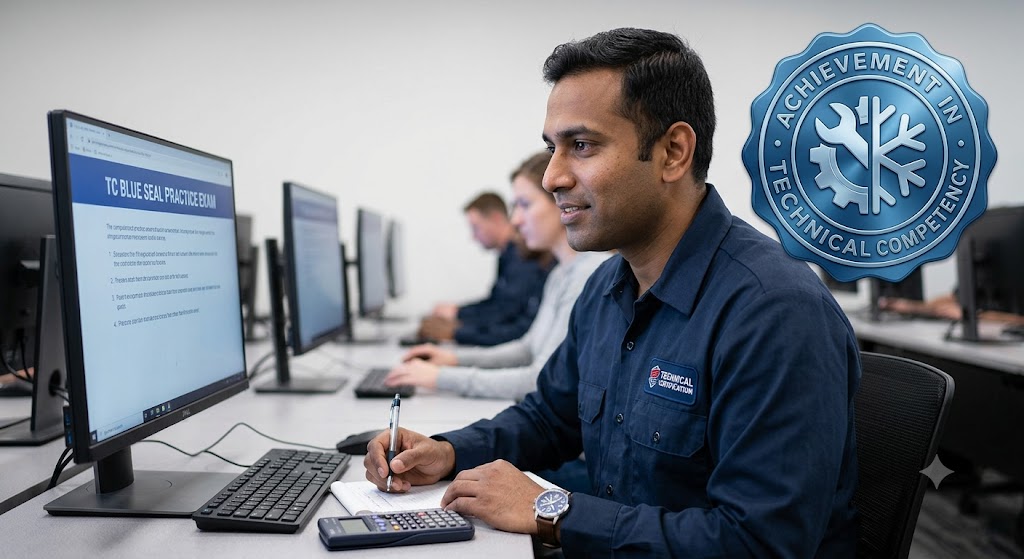
Additional Information
What the Course Entails and Exam Details
This comprehensive practice program is built around the core technical competencies required for modern refrigeration operations. While not a formal taught "course" in a traditional sense, the practice exam mirrors the required syllabus of actual state and provincial licensing exams. The content covers an intricate understanding of the vapor compression refrigeration cycle and alternative absorption systems, particularly those using ammonia (R-717). Students must demonstrate knowledge of physics and chemistry basics, including the primary Gas Laws (Boyle's, Charles's, and the Ideal Gas Law), as well as a thorough comprehension of physical properties of common refrigerants, their safety classifications (e.g., ASHRAE 34), and environmental regulations. Furthermore, the exam evaluates the operator's ability to troubleshoot and manage specific components, such as vertical and centrifugal compressors, various types of condensers and evaporators, and essential auxiliary apparatus like oil separators and king valves.
What to Expect in the Final Exam
The actual final exam for the TC Blue Seal operator's license is typically a rigorous, proctored session. It is generally a closed-book examination composed primarily of standardized multiple-choice questions, ranging in number from 50 to over 100, depending on the jurisdiction. The time limit for completing the exam is usually two to three hours. A passing score is typically set at 70% or 75%, meaning you must have a solid, confident grasp of the entire range of technical topics. The questions can test both theoretical knowledge (calculating total force on a piston given specific cylinder pressure) and practical application (identifying proper piping pitch to avoid oil trapping). Be prepared for direct questions that assess your situational judgment regarding system safety, such as appropriate leak-testing procedures for ammonia systems.
How to Study and Exam Centers
Effective preparation is key to conquering the Blue Seal test, as it is non-intuitive and highly technical. Your best strategy is an iterative process using high-quality practice exams, such as this one, to simulate the actual test environment and format. Do not just memorize answers; instead, use every question you miss as a prompt to dive deeper into official reference manuals, such as the ASHRAE Handbooks and the applicable electrical and mechanical codes for your region. Many students also find it beneficial to enroll in specialized, preparatory technical courses offered by trade schools or operators' unions. The final, official examination is generally administered by state or provincial departments of labor, licensing boards, or through specialized, authorized testing center networks such as Pearson VUE, which provide secure, computerized testing locations nationwide.
Job Opportunities from the Course
A valid TC Blue Seal Refrigeration Operator Certificate dramatically increases your employability and opens doors to diverse, high-paying career paths in the stationary engineering and facility management sectors. A credential of this caliber makes you a preferred candidate for organizations that operate major cooling infrastructure, including manufacturing plants, cold storage facilities, chemical processing industries, data centers, and massive commercial complexes like hospitals or university campuses.
Specific job titles unlocked by this certification include:
Chief Operating Engineer
Lead Refrigeration Plant Operator
Facility Engineer
Industrial Maintenance Manager
Refrigeration Systems Specialist
Operations Manager for Cold Storage
Process Cooling Technician
Frequently Asked Questions
Reviews
5.0
Based on 0 reviews
Leave a Review
No reviews yet. Be the first to review!