
T-1A Jayhawk Instrument/Navigation Phase (XPW) IT Practice Test
$69.00
- Buy to unlock unlimited access to all Quiz questions.
- After purchase you can print a PDF of the whole quiz at any point. The PDF will contain the questions and the correct answers.
About this Exam
The T-1A Jayhawk Instrument/Navigation Phase (XPW) represents a critical milestone for student pilots in the United States Air Force or Navy, particularly those in the Specialized Undergraduate Pilot Training (SUPT) multi-engine track. This rigorous phase transitions pilots from visual flight rules (VFR) to mastering the complex environment of instrument flight rules (IFR). The associated IT Practice Test is specifically designed for military student pilots and is an essential academic check, ensuring they possess the deep knowledge of procedures, regulations, and navigation systems required to safely and effectively operate the T-1A Jayhawk in low-visibility conditions.
Ready to test your knowledge?
Buy Now to Access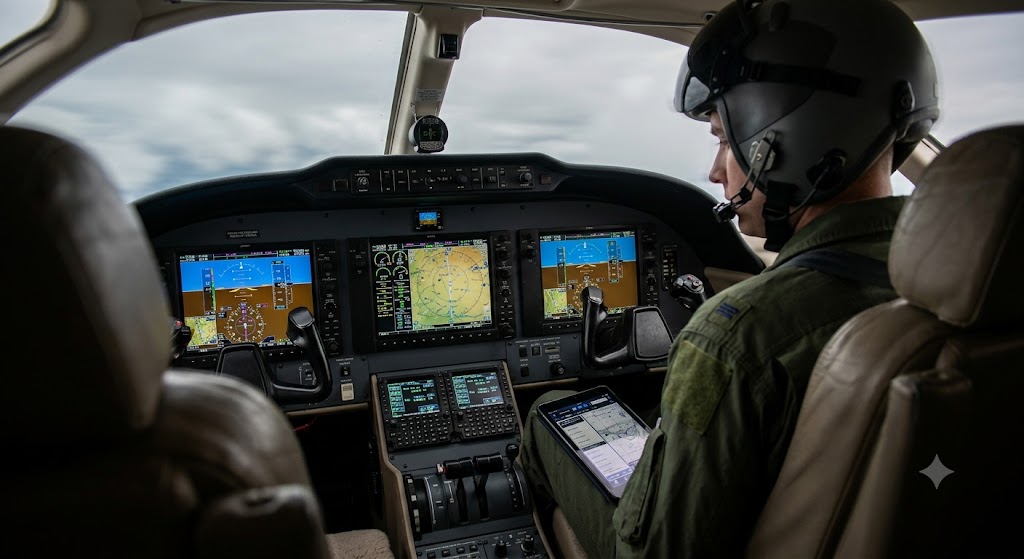
Additional Information
What the Course Entails and Exam Details
The academic course supporting the XPW phase delves deeply into the core principles of instrument flight and advanced navigation. Students focus on mastering IFR procedures, flight planning using instrument charts, interpreting weather information, and understanding air traffic control communications within the instrument environment. A heavy emphasis is placed on the precise use of the T-1A aircraft’s avionics and flight management systems for instrument approaches, departures, and en-route navigation. The exam details typically cover standard military academic procedures, testing comprehension of official flight manuals, Air Force Instructions (AFIs), and standard operating procedures.
What to Expect in the Final Exam
The XPW IT final exam is administered as a comprehensive multiple-choice test, designed to simulate the high-pressure decision-making required in the cockpit. While specific question counts and time limits can vary by training squadron, students can generally expect a challenging exam consisting of 50 to 100 questions. A rigorous minimum passing score, often around 85%, is required, reflecting the safety-critical nature of instrument flight training. The exam is typically closed-book, meaning students must have internalized the procedures and knowledge rather than relying on references.
How to Study and Exam Centers
Effective preparation for the XPW IT Practice Test and the final exam requires a disciplined approach. Students are encouraged to rigorously review official Air Force Manuals (AFMAN 11-217, Vol 1 & 3 are crucial), squadron-specific study guides, and the T-1A flight manual. Active study methods, such as creating detailed flashcards for instrument procedures, regulations, and avionics operations, are highly effective. Utilizing practice tests, such as this one, is essential for identifying knowledge gaps, becoming familiar with the question format, and building test-taking stamina. Group study sessions focusing on discussing complex scenarios and procedural interpretations can also be very beneficial. Since this is military training, examinations are not administered at public testing centers; they are conducted in-house within the academic training squadrons or dedicated testing facilities on the specific military installation where the SUPT training is taking place.
Job Opportunities from the Course
Successfully navigating the T-1A Jayhawk Instrument/Navigation Phase is a fundamental requirement for earning military pilot wings. While not a direct certification for civilian employment, this training is the foundation for a successful career as a military aviator. Upon completion of SUPT, pilots may transition to various high-demand operational roles flying multi-engine aircraft across the branches of the military. These opportunities include:
Air Force Airlift/Mobility Pilot (e.g., C-17, C-5, C-130)
Air Force Tanker Pilot (e.g., KC-135, KC-46)
Navy Maritime Patrol Pilot (e.g., P-8 Poseidon)
Marine Corps Transport Pilot (e.g., KC-130)
Flight Instructor (subsequent to operational experience)
Frequently Asked Questions
Reviews
5.0
Based on 0 reviews
Leave a Review
No reviews yet. Be the first to review!