
Systems Theory and Family Therapy Practice Exam
$69.00
- Buy to unlock unlimited access to all Quiz questions.
- After purchase you can print a PDF of the whole quiz at any point. The PDF will contain the questions and the correct answers.
About this Exam
The Systems Theory Family Therapy Certification is designed for licensed mental health professionals, including Marriage and Family Therapists, Professional Counselors, Social Workers, and Psychologists. It validates an advanced understanding of the underlying principles and practices that govern systemic family therapy, focusing on interpersonal dynamics, communication patterns, and systemic change within relationships. By demonstrating proficiency in these areas, professionals gain recognized expertise that enhances their ability to effectively diagnose and treat individuals, couples, and families within a holistic, relational context. This examination serves as a critical step for those seeking specialization in this crucial field.
Ready to test your knowledge?
Buy Now to Access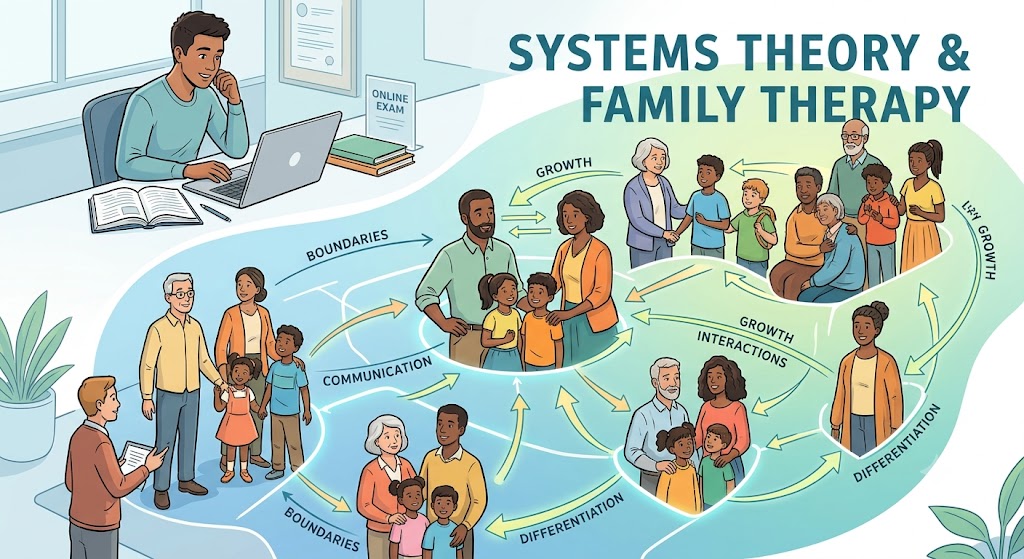
Additional Information
What the Course Entails and Exam Details
The qualifying program or course typically covers a wide range of essential topics within systems theory and its application to family therapy. Candidates are expected to master fundamental concepts like feedback loops, boundaries, homeostasis, hierarchy, and differentiation. Various historical and contemporary models of family therapy are studied, including Structural, Strategic, Bowenian, Solution-Focused, Narrative, and Milan systemic approaches, focusing on their origins, key techniques, and distinct therapeutic stances. Ethical considerations and cultural competence in working with diverse families are also integral parts of the syllabus. The course aims to develop skills in system assessment, treatment planning, and implementing systemic interventions.
What to Expect in the Final Exam
The comprehensive final exam for systems theory and family therapy practice often follows a structured, multiple-choice format, although some variations may exist depending on the specific certifying body or educational institution. Candidates can typically anticipate between 50 to 100 questions covering theoretical knowledge, conceptual understanding, and practical application scenarios. The examination usually has a time limit, often ranging from 90 to 120 minutes, requiring efficient time management. A passing score is established by the examining board, generally requiring achievement within a specific percentage range, such as 70% or 80%. Stringent testing guidelines and procedures are standard, with candidates possibly needing to present valid identification and follow strict rules regarding electronic devices and study materials.
How to Study and Exam Centers
Preparation for the Systems Theory Family Therapy practice exam involves a dedicated study regimen. Thoroughly reviewing major theoretical models and their primary authors, understanding key concepts and interventions, and focusing on practical application through case studies are effective strategies. Utilizing practice exams and sample questions specifically designed for this subject area is highly recommended to become familiar with the question types and formatting. Flashcards for key terms, participating in study groups, and reviewing relevant ethical guidelines can further enhance preparation. The exam itself is administered through various official channels. This may include major proctoring services like Pearson VUE, specialized online testing portals provided by the certification body, or physical testing centers located at authorized universities, colleges, or private testing facilities. Check with the specific program for locations and booking details.
Job Opportunities from the Course
A certification in systems theory and family therapy opens doors to numerous career paths within the mental health field. Many professionals utilize their specialized knowledge to advance their careers in established roles or transition into focused practice.
Licensed Marriage and Family Therapist (LMFT): Specialize in treating couples and families, with a recognized focus on systemic interventions and assessments.
Couples Counselor / Therapist: Focus specifically on relationship issues, applying systemic principles to help partners navigate conflict and improve communication.
Child and Family Therapist: Work with children and adolescents within the context of their family system, addressing behavioral and emotional challenges systemically.
Private Practice Therapist: Establish or enhance a private therapy practice with specialized expertise in couples and family therapy, attracting clients seeking relationship-focused care.
Clinical Supervisor: Supervise and mentor other mental health professionals, particularly those seeking licensure or specializing in family systems.
Mental Health Clinic Director/Administrator: Manage clinics and agencies, ensuring family-centered care and supervising clinical programs with a systemic perspective.
Academic Faculty/Researcher: Teach family therapy courses at universities, supervise student clinicians, or conduct research on family dynamics and therapeutic outcomes.
Corporate Consultant / Organizational Psychologist: Apply systems thinking to organizational structures, team dynamics, and conflict resolution within business settings.
School Counselor / School Social Worker: Assist students and their families with academic, social, and emotional challenges using a family-based approach.
Frequently Asked Questions
Reviews
5.0
Based on 0 reviews
Leave a Review
No reviews yet. Be the first to review!