
Sutures and Wound Repair/ General Surgery (ABSA) Practice Test
$69.00
- Buy to unlock unlimited access to all Quiz questions.
- After purchase you can print a PDF of the whole quiz at any point. The PDF will contain the questions and the correct answers.
About this Exam
The General Surgery (ABSA) examination is a rigorous certification process designed for surgeons seeking to validate their knowledge and technical skills in various surgical procedures, with a significant emphasis on sutures and wound repair. This examination is intended for medical professionals specializing in surgery, ensuring they possess the necessary expertise to manage complex wounds and perform effective closures. Achieving this certification demonstrates a commitment to high standards of patient care and a mastery of essential surgical techniques, making it a critical step for career advancement in the field of general surgery.
Ready to test your knowledge?
Buy Now to Access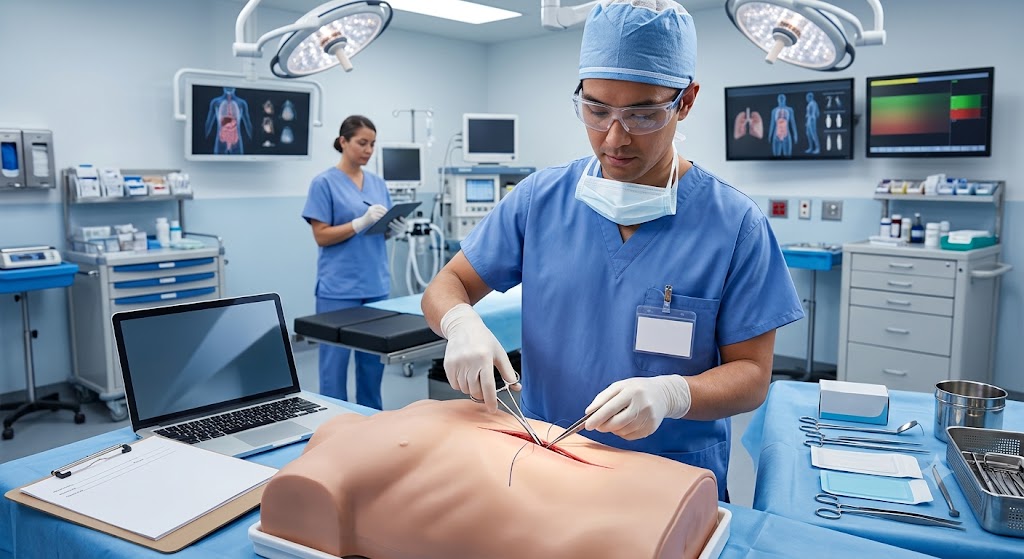
Additional Information
What the Course Entails and Exam Details
This examination covers a comprehensive syllabus that includes the fundamental principles of wound healing, the properties of different suture materials, and the application of various wound closure techniques. Candidates must exhibit proficiency in selecting appropriate sutures for specific tissues and closure situations, understanding the mechanics of wound repair, and managing complications associated with healing. The ABSA examination evaluates both theoretical knowledge through a series of structured questions and practical skills through hands-on assessments, requiring candidates to demonstrate their ability to perform sutures with precision and efficiency.
What to Expect in the Final Exam
The final examination typically consists of a combined format, featuring a written section with multiple-choice questions and a practical component. The multiple-choice section tests candidates on their understanding of anatomy, physiology of wound healing, and surgical principles. The practical assessment requires candidates to perform various suturing and wound repair techniques on simulated tissue models, evaluated by experienced examiners. To pass, candidates must meet specific minimum score requirements in both sections, ensuring they possess a comprehensive command of the material and the necessary technical proficiency.
How to Study and Exam Centers
Effective preparation for the ABSA examination involves a strategic blend of studying comprehensive surgical textbooks and engaging in practical skill-building sessions. Candidates should utilize review materials that cover the exam syllabus in detail, practice suture techniques on synthetic models or animal tissue, and participate in workshops offered by surgical training programs. Additionally, taking practice tests can help candidates become familiar with the exam format and identify areas for further study. The ABSA examination is typically administered at authorized testing centers and surgical training facilities, ensuring a standardized testing environment for all candidates.
Job Opportunities from the Course
A certification from the ABSA in Sutures and Wound Repair opens doors to numerous rewarding career paths within the medical field. Certified professionals are highly sought after in hospitals, surgical centers, and trauma units, where their specialized skills are essential for patient recovery.
Job opportunities include:
General Surgeon
Trauma Surgeon
Surgical Resident
Surgical Physician Assistant
Advanced Practice Nurse Specialist in Surgery
Wound Care Specialist
Surgical Education Coordinator
Frequently Asked Questions
Reviews
5.0
Based on 0 reviews
Leave a Review
No reviews yet. Be the first to review!